In shortSeochon is the old neighborhood between Gyeongbokgung's west wall and Inwangsan. Start at Gyeongbokgung Station Exit 2, build a coin lunchbox at Tongin Market, visit the Park No-soo Art Museum, then walk up to Suseongdong valley and either climb Inwangsan or ride a bus to the Yun Dong-ju Literary Museum. Avoid Mondays, when both museums close.
Key facts
- Korean name
- 서촌 (Seochon), the west side of GyeongbokgungNaver Map
- Start
- Gyeongbokgung Station (Line 3), Exit 2
- Tongin Market coins
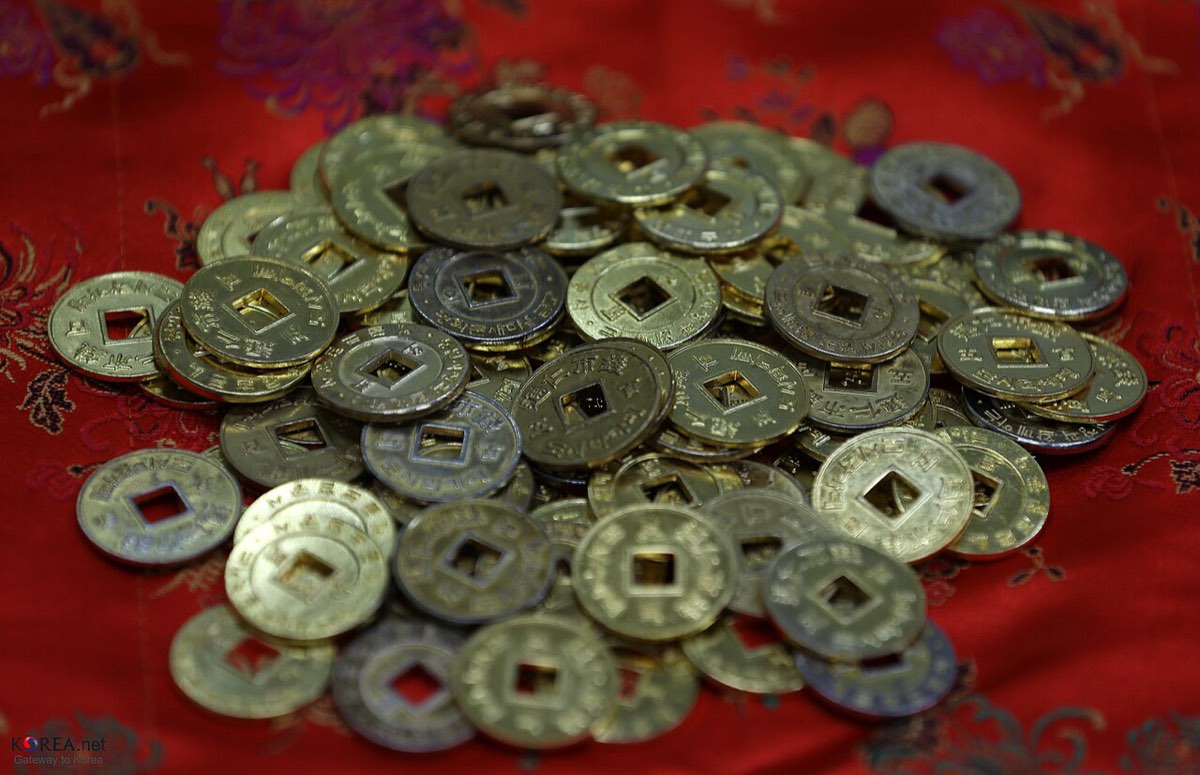
- 엽전 (yeopjeon), worth KRW 500 each
- Park No-soo Art Museum
- 10:00–18:00, closed Mondays; adults KRW 3,000
- Yun Dong-ju Literary Museum
- 10:00–18:00 (closed 13:30–14:00), closed Mondays; free
- Inwangsan wall trail
- 4.0 km, about 2.5 hours (Donuimun site to Changuimun)
- Map search terms
- 통인시장, 박노수미술관, 수성동계곡, 윤동주문학관Naver Map
Checked Oct 20, 2026 against the official sources listed at the end of this guide.
Clerks, poets and painters: who lived west of the palace
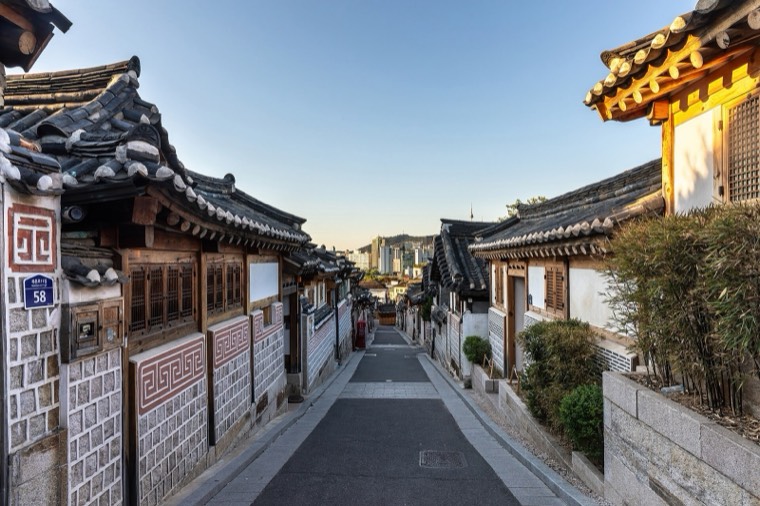
Seochon (서촌, west village) is the informal name for the slope between Gyeongbokgung's west wall and Inwangsan (인왕산), taking in neighborhoods such as Hyoja-dong, Sajik-dong, Tongin-dong, Nuha-dong and Okin-dong. In late Joseon it was known as Sangchon or Udae, and the Seoul City Wall office notes that its closeness to the palace and government offices made it home to many lower-ranking officials and clerks rather than the grand families of Bukchon.
That social mix produced something distinctive. Toward the end of Joseon, intellectuals from outside the yangban elite organized poetry clubs here, and the area became a center of what Koreans call yeohang or wihang literature, writing by the middle classes. Earlier, the valleys at the foot of Inwangsan had been celebrated scenic spots, and after the dynasty's founding royal relatives and influential families built retreats here.
The twentieth century layered on more. During the colonial period the Governor-General's official residence stood in the area, as did mansions of pro-Japanese aristocrats such as Yun Deok-yeong's Byeoksusanjang. In modern times poets Yi Sang and Yun Dong-ju, and painters including Yi Jung-seop, Cheon Gyeong-ja and Lee Sang-beom, lived or worked here. Today the houses are a jumble of 1930s urban hanok, modern brick villas and small apartment buildings, which is exactly why the neighborhood still feels lived in.
Why Seochon feels nothing like Bukchon
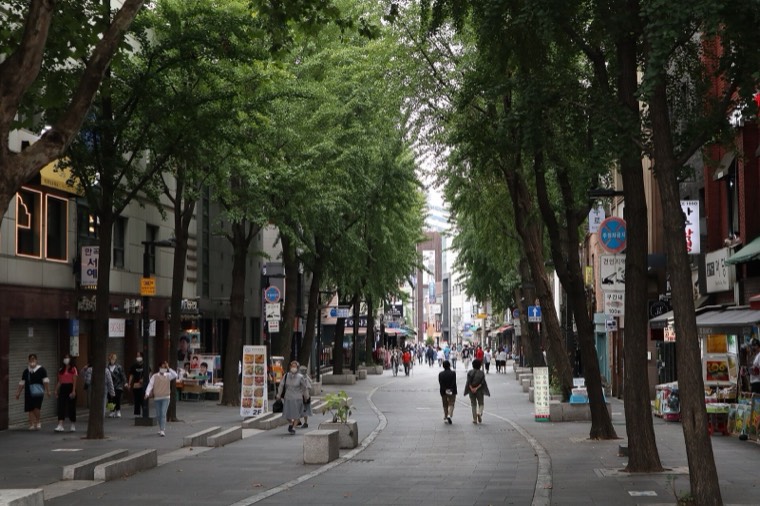
Bukchon presents hanok in concentrated rows on a hillside; Seochon scatters them among laundromats, family diners, a market and corner bakeries. There is no single postcard lane, and the district's tourist-hour zones are drawn around Bukchon, not here. What you get instead is the texture of an older Seoul neighborhood: alleys that follow buried streams, tiled roofs glimpsed between villas, and a mountain rising directly behind the last houses.
Choose Seochon if you have already seen a palace and want to understand how Seoul lives, if you like literature and small museums, or if you would rather eat at a market than queue for a café. Skip it if your priority is the classic rows of hanok rooftops, which Bukchon does better, or if steep walking is difficult for you, since the best parts lie uphill toward Inwangsan.
The courtesy rules are the same as anywhere residential. Keep voices down in the lanes, do not photograph into homes, and give way to residents, delivery riders and the small village buses that squeeze through. Seochon has so far avoided the friction that led to Bukchon's rules; visitors who behave like guests help keep it that way.
Tongin Market and the coin lunchbox
Tongin Market (통인시장) opened in June 1941 as a public market for Japanese residents during the colonial period; after the Korean War it became a market for Korean street vendors. Today it has more than seventy shops, mostly food stalls and groceries, along a covered lane at 18 Jahamun-ro 15-gil, about 500 meters from Gyeongbokgung Station Exit 2. Individual shops keep their own hours within a broad 7:00 to 21:00 window.
The market's best-known feature is the dosirak café (도시락카페), a coin-operated lunchbox system. You buy old-style coins called yeopjeon (엽전), each worth KRW 500, at the café, collect a tray, then walk the lane and trade coins for small portions at participating stalls before sitting down in the café to eat. A Seoul city report from 2025 describes exchanging KRW 10,000 for 20 coins and notes that unused coins can be refunded.
Check the schedule before you go, because official listings disagree. The café runs from late morning until mid-afternoon, and coin sales stop earlier, around 15:00 on weekdays and 16:00 on weekends according to the 2025 report. Visit Seoul and the 2025 report both close the café on the third Sunday of each month but disagree on the weekly day off: Visit Seoul says Monday, though its own hours line runs Wednesday to Monday, while the report gives Tuesday. The market's listed number is +82-507-1378-0940; aim to arrive by 11:30 to beat the lunch crowd.
Here is a typical first round, in order. Walk the whole lane once before spending anything. Then pick two or three items: the market's signature gireum tteokbokki (기름떡볶이), rice cakes stir-fried in oil with chili rather than simmered in sauce; a couple of jeon, savory pancakes; and a side or two of japchae or seasoned vegetables. Twenty coins, the KRW 10,000 bundle described in the city's 2025 report, is a sensible starting budget for one person; you can always buy more.
- At the café counter: 엽전 주세요 (yeopjeon juseyo), coins, please.
- At a stall, pointing: 이거 몇 개예요? (igeo myeot gaeyeyo), how many coins is this?
- To order: 이거 주세요 (igeo juseyo), this one, please.
- If you have leftover coins, ask at the café: 환불돼요? (hwanbul dwaeyo), can I get a refund?
A painter's house, a poet's yard and a bookstore front
The Park No-soo Art Museum (박노수미술관) at 34 Okin 1-gil is the best single building in Seochon. Park No-soo was an ink painter who kept traditional subjects but rendered them with spare brushwork, bold touches and startling color. He bought this house in 1973 and lived here until the end of 2011, when, already ill, he agreed to donate it with his works to Jongno-gu. He died in February 2013, before the museum was ready, and it opened that September.
The house is an exhibit in itself. Built around 1937 for a daughter of Yun Deok-yeong, it is a leading example of the colonial-era culture house, a Korean–Western eclectic design, and it is designated a Seoul heritage building. Galleries keep the names of the rooms Park used, from reception room to studio and attic. Hours are 10:00 to 18:00 with last entry at 17:30; it closes on Mondays, January 1 and the days of Seollal and Chuseok. Adult admission is KRW 3,000, and no more than 15 visitors are allowed inside at once, so expect a short wait.
Nearby, Yi Sang's House (이상의 집) marks where the modernist poet and writer Yi Sang (1910–1937) lived from about age three for some twenty years, in his uncle's house. The large property was later split into small hanok, and in 2009 a heritage trust saved part of it through public donations. It now serves as a small memorial space, so check its hours before planning around it.
In Nuha-dong, look for the faded front of Daeoh Bookstore (대오서점), opened in 1951 by a couple, Jo Dae-sik and Kwon O-nam, who combined syllables of their names for the sign. Seoul city reporting says it stopped selling books in 2016 and has since operated as a café behind the original facade. Treat it as a streetscape to admire in passing rather than a shop to plan around.
Suseongdong Valley, painted by Jeong Seon and rescued from apartments
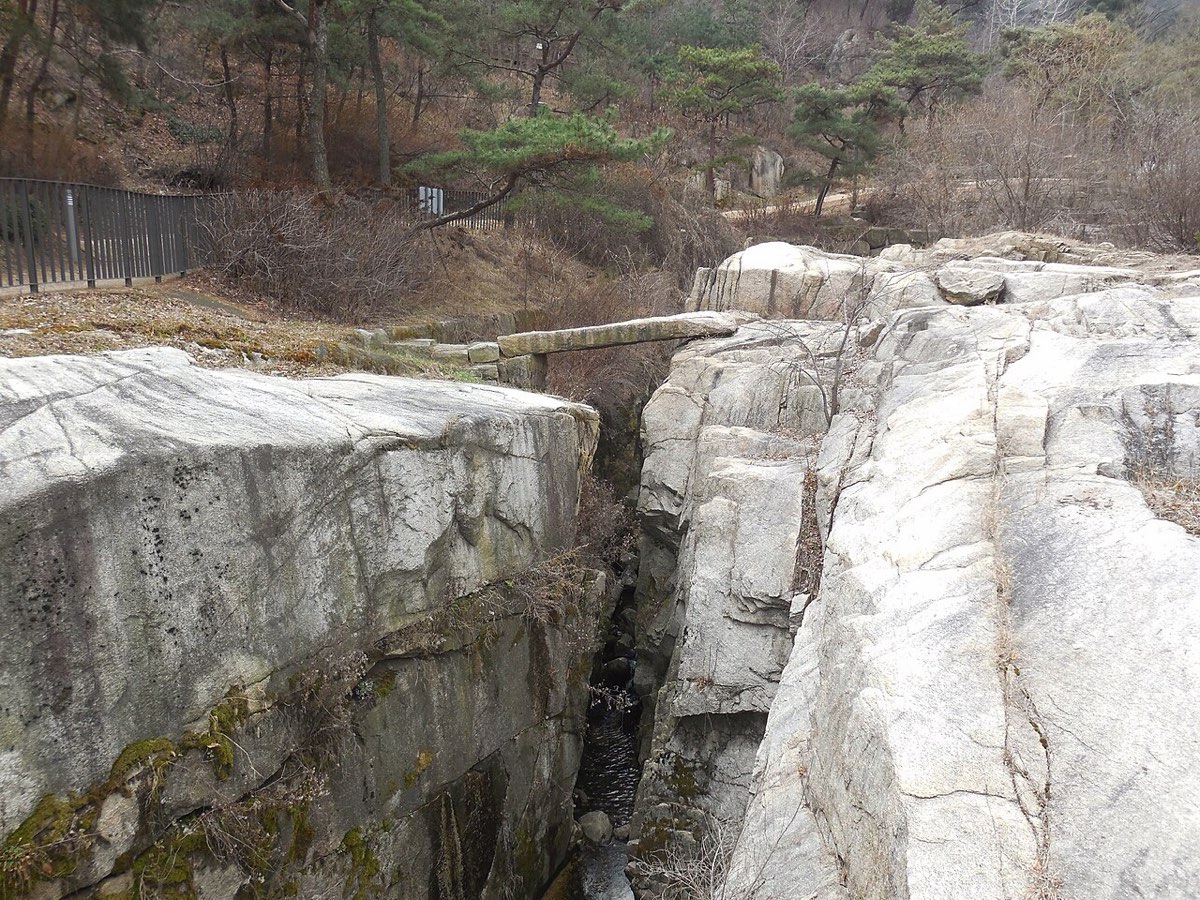
Walk uphill from Tongin Market through Okin-dong and the houses give way to granite. Suseongdong Valley (수성동계곡) is a stream valley that the painter Jeong Seon (정선) painted in his true-view landscape style, with scholars and a boy crossing a stone bridge among mossy rocks. A viewing point at the valley entrance stands where Seoul believes he worked, so you can compare his composition with the real scene.
For decades the valley lay under an apartment complex, the Okin pilot apartments. As the blocks came down, Seoul designated the valley a city monument in 2010, covering the stone bridge and the surrounding ground, and the restored valley opened to the public on July 11, 2012, replanted with more than 18,000 trees and given a small pavilion and wooden footbridges. The single-slab bridge, identified with the one in Jeong's painting, is described as the longest one-stone bridge still in its original place within the old city walls.
The valley is at its best after rain, when water actually runs over the rocks; in dry winter weeks it can be little more than a stony gully. If you do not want the uphill walk, the Seoul City Wall office lists Jongno village bus 09 from Gyeongbokgung Station Exit 3 to the Okin Apartment stop, named for the vanished complex, near the foot of the valley.
Two ways out: the Inwangsan ridge or Yun Dong-ju's hill
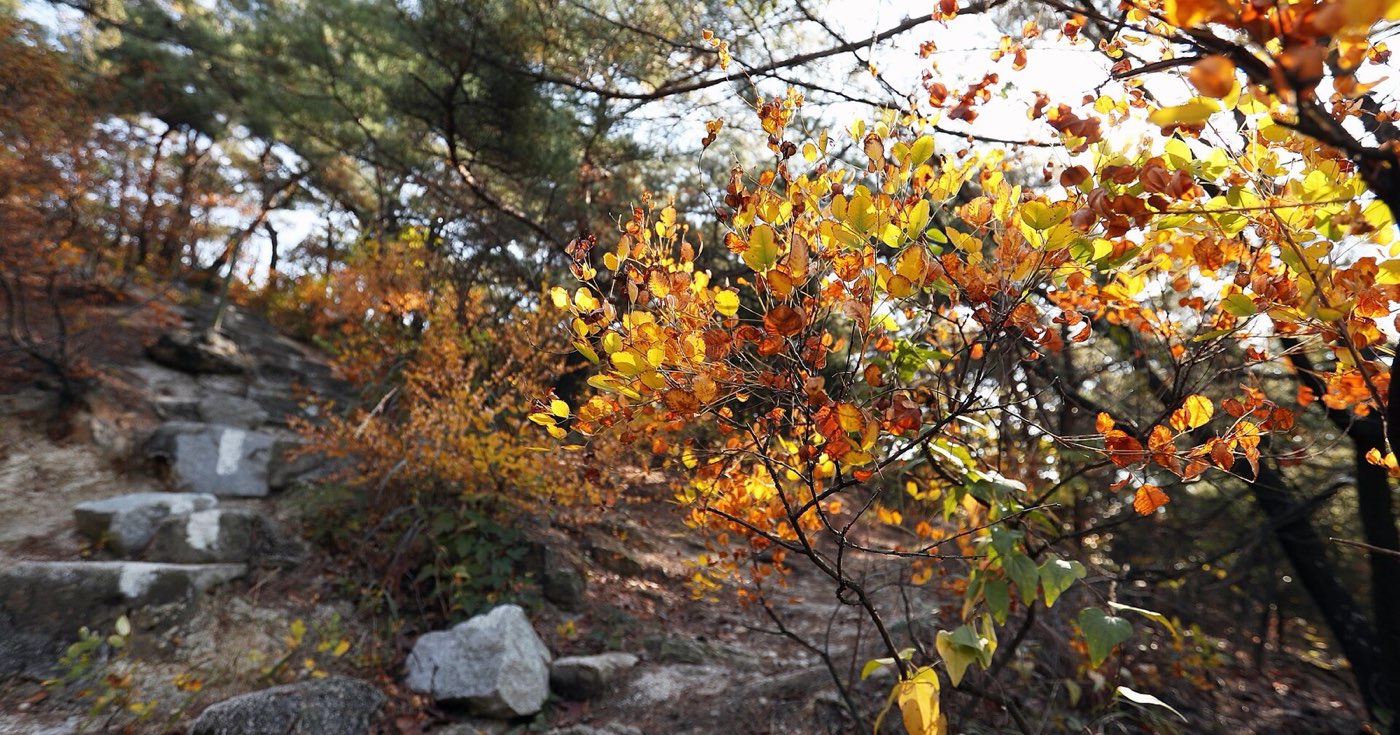
Inwangsan (339 meters) rises directly behind the valley, a rocky mountain known for formations such as Seonbawi, said to resemble a monk in meditation. Access was banned after a North Korean commando unit infiltrated Seoul on January 21, 1968, and the mountain reopened to the public only in 1993. The official Inwangsan section of the Seoul City Wall trail runs 4.0 kilometers from the site of Donuimun gate to Changuimun gate and takes about two and a half hours; from the Suseongdong side, the city wall office estimates about 30 minutes on foot toward the summit.
Our recommendation for a half day: climb from Suseongdong to the ridge, then follow the wall north and downhill to Changuimun and the Yun Dong-ju Literary Museum. The rock steps are steep and polished in places, and the city warns of extra care in winter, so wear proper shoes, carry water and allow two hours. If you are not a hiker, skip the climb and take the bus instead.
The Yun Dong-ju Literary Museum (윤동주문학관) honors the poet who boarded in nearby Nusang-dong, at the home of novelist Kim Song, while studying at Yonhi College, and who often climbed Inwangsan. It occupies a water pressure station decommissioned in 2008 and opened as a museum in 2012. One disused water tank had its roof opened to make the Open Well, a courtyard inspired by the well in his poem Self-Portrait; the other, left sealed, is the Closed Well, where a short film on his life plays in the dark.
The museum is open 10:00 to 18:00, with last entry at 17:30 and a daily cleaning break from 13:30 to 14:00; it closes on Mondays, January 1 and the days of Seollal and Chuseok, and admission is free. There are no toilets inside; use the Cheongun Park restrooms about 100 meters away. Without climbing, take bus 1020, 7022 or 7212 from Gyeongbokgung Station Exit 3 to the Jahamun Gogae stop. Behind the museum, steps lead to Poet's Hill and a stone carved with his poem Prologue, with views back over the city and Changuimun, the only auxiliary gate of the old wall whose gate tower survives.
A half-day sequence, timed around the closures
This plan assumes a Tuesday-to-Sunday visit and avoids both the literary museum's cleaning break and the market's lunch peak. Allow about four and a half hours from start to finish, or two hours more if you take the Inwangsan ridge. Walking times between stops are short, mostly ten minutes or less, except the climb from the market to the valley.
| Time | Stop | What to do |
|---|---|---|
| 10:30 | Gyeongbokgung Station Exit 2 | Walk north into the side lanes; stop at Yi Sang's House |
| 10:50 | Nuha-dong lanes | See the Daeoh Bookstore front and the mix of hanok and villas |
| 11:15 | Tongin Market | Buy coins, walk the lane, eat your lunchbox in the café |
| 12:20 | Park No-soo Art Museum | 40 minutes in the house and garden |
| 13:15 | Suseongdong Valley | Compare the view with Jeong Seon's painting |
| 13:45 | Inwangsan ridge or bus | Climb toward the summit, or bus 1020/7022/7212 to Jahamun Gogae |
| 14:15 or later | Yun Dong-ju Literary Museum | Arrive after the 13:30–14:00 cleaning break; then Poet's Hill |
| 15:00 | Changuimun | Bus back toward Gyeongbokgung or continue into Buam-dong |
Getting the day right: Mondays, weather and pairings
Monday is the one day to avoid. Both the Park No-soo Art Museum and the Yun Dong-ju Literary Museum close, and Visit Seoul lists Monday as a closing day for the Tongin lunchbox café as well. On a Monday, see Seochon's lanes in the morning and spend the rest of the day elsewhere, or simply swap your Seochon and palace days. On a Tuesday, call the market first, since a 2025 city report gives Tuesday as the café's day off, and skip the third Sunday of the month, when both sources list the café as closed.
Weather changes the route more than in most Seoul neighborhoods. Light rain improves Suseongdong and does little harm to the market, but it makes Inwangsan's granite slippery; in that case take the bus to the museum. In summer, do the uphill parts before noon. In autumn, the ridge views over Gyeongbokgung and toward Namsan are at their clearest.
Seochon pairs naturally with Gyeongbokgung, whose west side it borders, so a palace morning followed by a Seochon lunch and afternoon is an easy, low-transit day. Readers drawn to Korean poetry should save energy for the Yun Dong-ju museum, which is small but carefully made. Allow time at the end simply to wander: Seochon rewards the person who turns down an unplanned alley.
Questions visitors ask
How does the Tongin Market coin lunchbox work?
Buy yeopjeon coins at the dosirak café, each worth KRW 500, and pick up a tray. Walk the market and exchange coins for small portions at participating stalls, then eat in the café. Coin sales stop in mid-afternoon and the café has a weekly closing day, so check Visit Seoul or call before going.
Is Seochon better than Bukchon?
It is different rather than better. Bukchon has the famous rows of hanok rooftops and visiting-hour rules; Seochon has a market, small museums and an everyday residential feel with hanok scattered among newer houses. If you have time for only one and want the classic view, choose Bukchon. For food, literature and a quieter walk, choose Seochon.
Do I need hiking gear for Inwangsan?
Not technical gear, but proper walking shoes with grip, water and a layer for the wind on the ridge. The wall trail includes steep stone steps and exposed rock, and the city advises extra care in winter. If your footwear is not up to it, take the bus to the Yun Dong-ju Literary Museum instead.
Can I visit the Yun Dong-ju Literary Museum without speaking Korean?
Yes. The building itself, especially the Open Well and Closed Well spaces made from old water tanks, communicates without much text, and admission is free. Read one or two of his poems in translation beforehand, such as Prologue or Self-Portrait, and the visit will mean far more.
Sources and method
Written for: Walkers on a first or second Seoul trip who want an older residential neighborhood with market food, literature and a mountain edge rather than a photo-stop hanok street.
Method: Researched from the official sources listed below, checked on October 20, 2026. Hours, fees and booking rules can change; the linked official pages are the final word. Spotted something out of date? Tell us.
- Seoul City Wall (Seoul Metropolitan Government) — Inwangsan Mountain TrailSangchon/Udae history, lower-ranking officials and yeohang literature, modern residents, Inwangsan closure 1968 and reopening 1993, 4.0 km trail, winter caution, village bus 09, buses to Jahamun Gogae, Poet's Hill, Changuimun.
- Seoul Hanok Portal — The west side of Gyeongbokgung PalaceHyoja-dong and Sajik-dong, royal and influential residents, wihang literature, Byeoksusanjang, mix of urban hanok and modern housing, Tongin Market.
- Visit Seoul — Tongin Market1941 founding for Japanese residents, postwar change, 70+ stores, address, Exit 2 distance, market hours, dosirak café closing days and phone; edited September 2026.
- Seoul Mediahub — Making a lunchbox with yeopjeon at Tongin Market (May 2025)KRW 500 per coin, 10,000 won for 20 coins, café and coin-sale hours, Tuesday closing, refunds.
- Jongno Cultural Foundation — Park No-soo Art MuseumPark No-soo biography, 2011 donation, 2013 opening, house built around 1937 as an eclectic culture house, room-named galleries, hours, closing days, KRW 3,000 adult fee, 15-person limit, address.
- Jongno Cultural Foundation — Yun Dong-ju Literary MuseumGalleries, Open Well and Closed Well, hours, 13:30–14:00 cleaning break, closing days, free admission, no toilets inside.
- Seoul Mediahub — Seochon places where Yi Sang and Park No-soo lived (Apr. 2024)Park No-soo house purchase (1973) and Yun Deok-yeong link, Yi Sang's House history and 2009 rescue, Daeoh Bookstore 1951 founding and 2016 end of bookselling.
- Seoul Mediahub — Suseongdong Valley restored like the painting (July 2012)Jeong Seon painting, viewing point, 2010 monument designation, July 11, 2012 opening, 18,477 trees, single-slab bridge.
- Seoul Mediahub — Ways to remember poet Yun Dong-ju, 80 years on (Sept. 2025)Yonhi College, Nusang-dong boarding at Kim Song's house, Inwangsan walks, museum opened 2012 in a pressure station decommissioned in 2008, Poet's Hill.
- VISITKOREA — Seochon for Artistic Vibes, Bukchon for Timeless Tradition (Apr. 2025)Tongin Market's yeopjeon lunchbox and oil-fried tteokbokki; Park No-soo museum, Yun Dong-ju boarding house site and Suseongdong as Seochon route stops.