In shortLearn the polite -yo ending, 주세요 (juseyo, 'please give me'), 저기요 (jeogiyo, 'excuse me' to call staff) and the two different goodbyes, and you can handle most culture-trip exchanges. Save 112 (police), 119 (fire and ambulance) and 1330 (the 24-hour Korea Travel Hotline) in your phone before you land.
Key facts
- Default polite style
- -요 (-yo) endings, called haeyo-che (해요체)
- Most useful word
- 주세요 (juseyo), 'please give me'
- Calling restaurant staff
- 저기요 (jeogiyo)
- Police
- 112
- Fire and ambulance
- 119
- Korea Travel Hotline
- 1330, 24/7 (+82-2-1330 from abroad)
- Seoul city call center
- 02-120
- Romanization used
- Revised Romanization, based on pronunciation
Checked Oct 20, 2026 against the official sources listed at the end of this guide.
Two polite styles cover nearly everything
Korean grammar marks the relationship between speaker and listener at the end of almost every sentence, which is why a few endings matter more than a big vocabulary. As a visitor you need two of the language's several speech levels. The everyday polite style ends in -요 (-yo) and is called haeyo-che (해요체): 고마워요 (gomawoyo, 'thanks'), 괜찮아요 (gwaenchanayo, 'it's fine'). The formal style ends in -ㅂ니다 (-mnida) or -습니다 (-seumnida) and is often called hapsyo-che (합쇼체): 감사합니다 (gamsahamnida). You will hear the formal style in subway announcements, from palace staff and at shop counters.
Use the -yo style for your own sentences and the formal version of a few set phrases, such as thanks and apologies, where it sounds naturally respectful. Avoid banmal (반말), the casual speech friends use with each other; dropping the -yo when speaking to a stranger or a server sounds abrupt, whatever your accent. The single most useful word is 주세요 (juseyo), 'please give me.' Attach it to any noun, point if needed, and you have a complete, polite request, as in 물 주세요 (mul juseyo), 'water, please.'
Two short answers round out the basics. 네 (ne) means yes, and you will hear it constantly, often as 'I'm listening' rather than agreement. 아니요 (aniyo) means no. When you do not understand, 다시 한번 말해 주세요 (dasi hanbeon malhae juseyo) asks someone to say it again, and 천천히 (cheoncheonhi), 'slowly,' added before 말해 주세요, asks them to slow down. Both are better than nodding along and hoping.
Reading the romanization without sounding robotic
The romanization in this guide follows Korea's official Revised Romanization, which the National Institute of Korean Language bases on standard pronunciation rather than on spelling. That helps, but several letter pairs do not match English habits. Eo is a short, open 'uh' with relaxed lips, so 어디 (eodi, 'where') sounds closer to 'uh-dee' than 'ee-oh-dee.' Eu is said with the lips spread, like the vowel in 'took' pronounced with a smile. Ae and e have merged for most Seoul speakers, and both sound like the e in 'bed.'
Consonants come in sets of three: plain, aspirated with a puff of air, and tense with no puff at all. ㄱ, ㅋ and ㄲ are romanized g, k and kk. Getting them exactly right matters less than keeping the vowels clear. At the end of a syllable, consonants are not released: 밥 (bap, 'rice') ends with closed lips and no burst. Sounds also change where syllables meet. 감사합니다 is written with a b sound before ni but is pronounced, and romanized, gamsahamnida, and 국립 (gungnip, 'national') turns its k and l into ng and n.
Korean has little word stress, so give every syllable roughly equal weight at an even pace rather than punching one. If a listener looks puzzled after two tries, show the Hangul on your screen. Koreans read it instantly, it ends the guessing for both of you, and it is the reason every phrase in this guide is printed in Hangul first.
Greetings, thanks and the two goodbyes
안녕하세요 (annyeonghaseyo) works as hello at any hour, and a slight nod with it is polite in itself. For thanks, 감사합니다 (gamsahamnida) and 고맙습니다 (gomapseumnida) are both correct; the first, built on a Sino-Korean root, sounds a shade more formal. Say 실례합니다 (sillyehamnida) for 'excuse me' when passing someone or interrupting, and 죄송합니다 (joesonghamnida) for a genuine apology, such as stepping on a foot in a crowded train.
Goodbyes depend on who is leaving. If you leave and the other person stays, as when you walk out of a shop, say 안녕히 계세요 (annyeonghi gyeseyo), 'stay in peace.' If they are leaving, or you part on the street, say 안녕히 가세요 (annyeonghi gaseyo), 'go in peace.' The shopkeeper will say 가세요 to you as you go. Getting this right is a small thing that Koreans notice, because it shows you understood the situation instead of reciting a single memorized word.
Palaces, museums and temples: tickets, lockers and the camera question
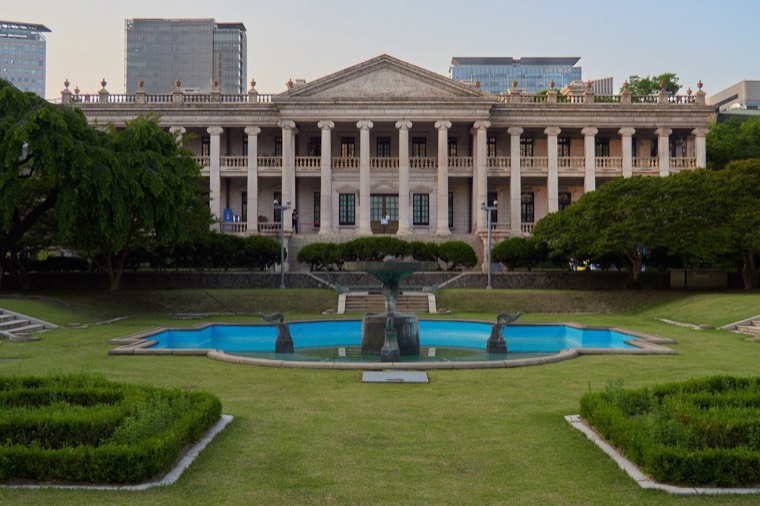
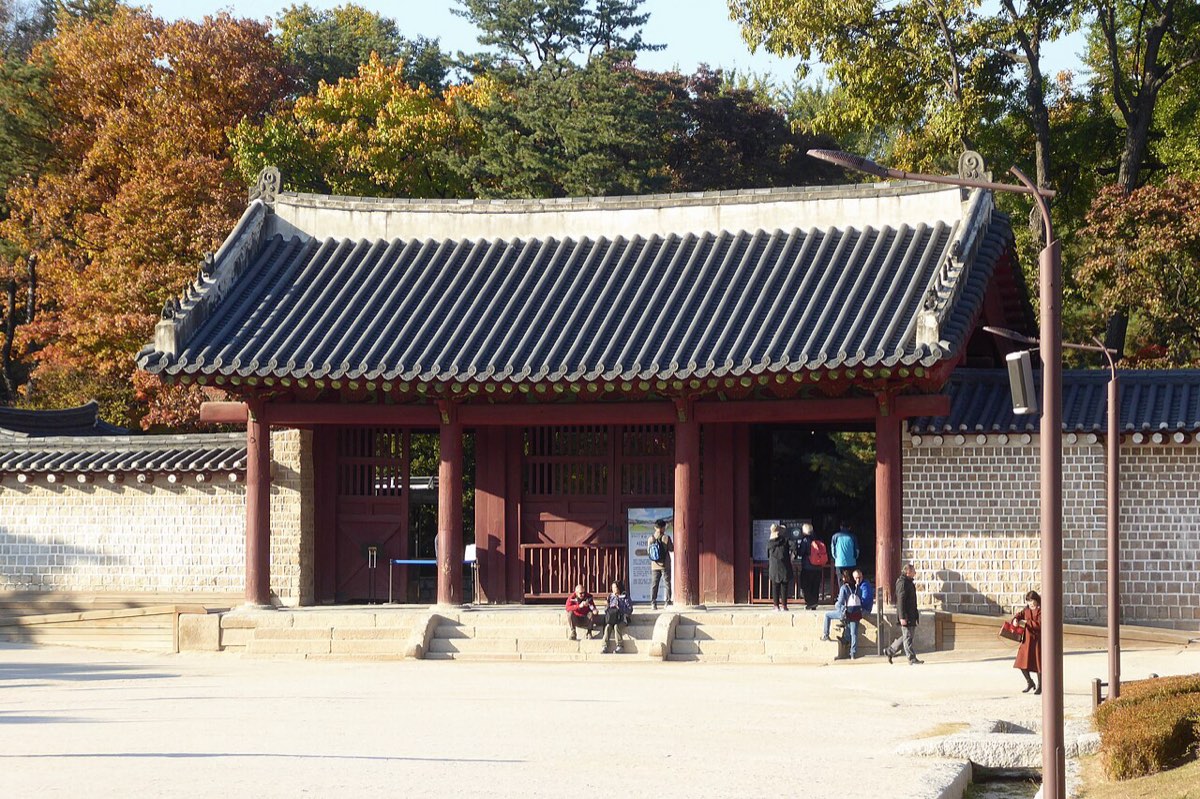
At a ticket window, name the ticket, the number and 주세요: 입장권 두 장 주세요 (ipjanggwon du jang juseyo), 'two admission tickets, please.' Counting tickets uses native Korean numbers (one is 한, han, before a counter word; two 두, du; three 세, se), while prices use the Sino-Korean set, a split that trips up every learner. Ask about lockers with 사물함 어디 있어요? (samulham eodi isseoyo?) and about English tours with 영어 해설 있어요? (yeongeo haeseol isseoyo?). 해설 (haeseol) is the word palace offices use for their guided commentary.
Photography rules differ by venue and even by room, so ask rather than assume: 사진 찍어도 돼요? (sajin jjigeodo dwaeyo?), 'may I take photos?' The -어도 돼요 pattern, 'is it okay if I...', is worth memorizing because it turns any verb into a polite request for permission. In museums the usual follow-up concerns flash, and 플래시 없이요? (peullaesi eopsiyo?), 'without flash?', covers it. Before committing to a long exhibition, 몇 시에 닫아요? (myeot sie dadayo?) asks what time the place closes.
Temples call for quieter manners. Take off your shoes before stepping into a worship hall (법당, beopdang) and keep your voice low. When a monk greets you with palms pressed together (합장, hapjang), return the gesture with a small bow. Before entering any space that looks private, ask 들어가도 돼요? (deureogado dwaeyo?), 'may I go in?', and at traditional houses 신발 벗어야 돼요? (sinbal beoseoya dwaeyo?), 'should I take off my shoes?' A quiet 감사합니다 on the way out completes the exchange.
| Korean | Romanization | Meaning | When to use |
|---|---|---|---|
| 안녕하세요 | annyeonghaseyo | Hello | Any time, any place |
| 감사합니다 | gamsahamnida | Thank you | Default respectful thanks |
| 실례합니다 | sillyehamnida | Excuse me | Passing, interrupting, entering |
| 죄송합니다 | joesonghamnida | I'm sorry | Real apologies |
| 안녕히 계세요 | annyeonghi gyeseyo | Goodbye (you stay) | When you leave a shop or office |
| 안녕히 가세요 | annyeonghi gaseyo | Goodbye (you go) | When the other person leaves |
| 한국어 잘 못해요 | hangugeo jal motaeyo | I don't speak Korean well | Before switching to gestures or English |
| 영어 하세요? | yeongeo haseyo? | Do you speak English? | Ask quietly, after a greeting |
| 입장권 두 장 주세요 | ipjanggwon du jang juseyo | Two admission tickets, please | Ticket windows |
| 사물함 어디 있어요? | samulham eodi isseoyo? | Where are the lockers? | Museums, stations |
| 영어 해설 있어요? | yeongeo haeseol isseoyo? | Is there an English tour? | Palaces, museums |
| 사진 찍어도 돼요? | sajin jjigeodo dwaeyo? | May I take photos? | Halls, exhibitions, people |
| 몇 시에 닫아요? | myeot sie dadayo? | What time do you close? | Before a long visit |
| 화장실 어디예요? | hwajangsil eodiyeyo? | Where is the restroom? | Anywhere |
| 들어가도 돼요? | deureogado dwaeyo? | May I go in? | Temple halls, gated areas |
| 신발 벗어야 돼요? | sinbal beoseoya dwaeyo? | Should I take off my shoes? | Temples, traditional houses |
Restaurants: jeogiyo, the table bell and ordering by the portion
Korean restaurants rarely send a server to check on you, so you call one. 저기요 (jeogiyo), literally 'over there,' is the standard polite way to get attention: say it clearly with a raised hand. Many tables have a call button instead, and pressing it is entirely normal. You will hear Korean customers call middle-aged women staff 이모 (imo, 'aunt'), an affectionate habit at casual places, but as a visitor you are on safer ground with jeogiyo.
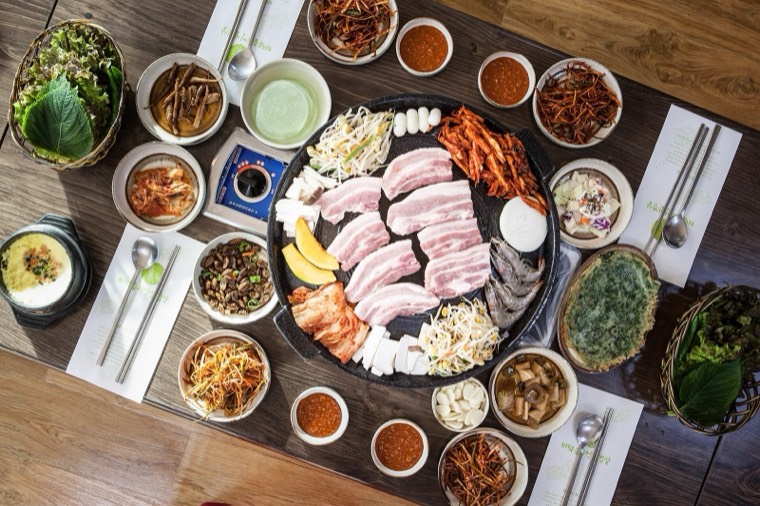
Grilled meat and many stews are ordered by the portion, 인분 (inbun): 2인분 주세요 (iinbun juseyo) means 'two portions, please,' and some barbecue restaurants will not cook a single portion, so a solo diner may need to order two. For heat, 안 맵게 해 주세요 (an maepge hae juseyo) asks for no spice and 덜 맵게 (deol maepge) for less. Kitchens cannot always remove chili from a dish built on it, so ask 이거 매워요? (igeo maewoyo?), 'is this spicy?', before you order rather than after.
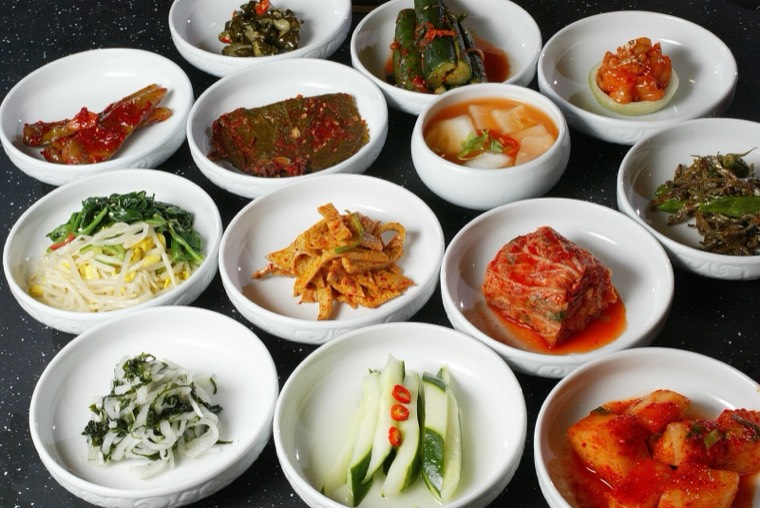
Side dishes (반찬, banchan) come with the meal, and refills are usually free; ask with 반찬 더 주세요 (banchan deo juseyo) or look for a self-service bar marked 셀프 (selpeu). Water is often self-service too. You normally pay at the counter by the door rather than at the table, and 계산해 주세요 (gyesanhae juseyo) works in either place. On the way out, 잘 먹었습니다 (jal meogeotseumnida), 'I ate well,' is the thanks Koreans give the cook and staff. It lands better than a tip, which is not part of Korean restaurant custom.
| Korean | Romanization | Meaning | When to use |
|---|---|---|---|
| 저기요 | jeogiyo | Excuse me (calling staff) | Getting a server's attention |
| 이거 주세요 | igeo juseyo | This one, please | Pointing at a menu or photo |
| 2인분 주세요 | iinbun juseyo | Two portions, please | Barbecue and stews |
| 안 맵게 해 주세요 | an maepge hae juseyo | Not spicy, please | When ordering |
| 물 좀 주세요 | mul jom juseyo | Some water, please | If water is not self-service |
| 땅콩 알레르기 있어요 | ttangkong allereugi isseoyo | I'm allergic to peanuts | Swap in your own allergen |
| 계산해 주세요 | gyesanhae juseyo | The bill, please | At the table or the counter |
| 따로 계산할게요 | ttaro gyesanhalgeyo | We'll pay separately | Group meals |
| 잘 먹었습니다 | jal meogeotseumnida | Thank you for the meal | Leaving a restaurant |
| 이거 얼마예요? | igeo eolmayeyo? | How much is this? | Markets, shops |
| 카드 돼요? | kadeu dwaeyo? | Do you take cards? | Market stalls, taxis |
| 여기로 가 주세요 | yeogiro ga juseyo | Please go here | Showing a taxi driver a Hangul address |
| 여기서 세워 주세요 | yeogiseo sewo juseyo | Please stop here | Ending a taxi ride |
| 영수증 주세요 | yeongsujeung juseyo | Receipt, please | Taxis, shops |
| 도와주세요 | dowajuseyo | Help me, please | Any emergency |
| 경찰 불러 주세요 | gyeongchal bulleo juseyo | Please call the police | Alongside 112 |
| 구급차 불러 주세요 | gugeupcha bulleo juseyo | Please call an ambulance | Alongside 119 |
| 길을 잃었어요 | gireul ireosseoyo | I'm lost | Asking for help on the street |
Markets and taxis: the numbers you will actually hear
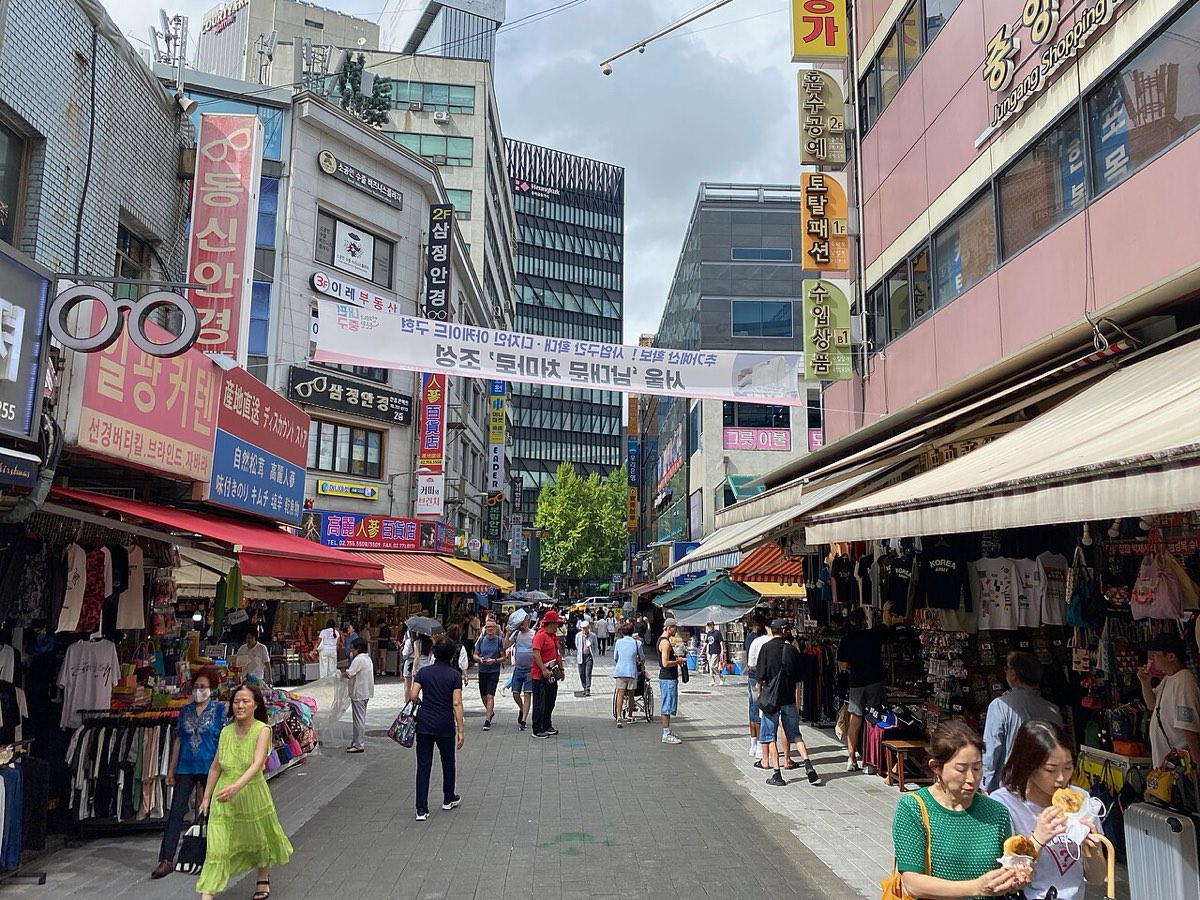
Prices use Sino-Korean numbers, and Korean counts large sums in units of ten thousand, 만 (man), rather than thousands. 천 원 (cheon won) is 1,000 won, 오천 원 (ocheon won) 5,000, 만 원 (man won) 10,000 and 삼만 원 (samman won) 30,000. Listening for 천 and 만 tells you the scale before you catch the rest, and most vendors will show the total on a calculator or phone if you look unsure. Ask 이거 얼마예요? (igeo eolmayeyo?) and point at the item.
Payment varies from stall to stall, so ask 카드 돼요? (kadeu dwaeyo?) before ordering and carry some cash for the smallest vendors. Haggling is not expected at food stalls; at clothing and souvenir stalls a polite 조금만 깎아 주세요 (jogeumman kkakka juseyo), 'a little discount, please,' may earn a small reduction, but do not push. In taxis, skip pronunciation entirely: show the Hangul address and say 여기로 가 주세요 (yeogiro ga juseyo). When you are close, 여기서 세워 주세요 (yeogiseo sewo juseyo) stops the car.
When something goes wrong: 112, 119 and 1330
Save three numbers before you land. Dial 112 for police and 119 for fire and ambulance. The third, 1330, is the Korea Travel Hotline, which the Seoul city government lists as running 24 hours a day; from a foreign phone, dial +82-2-1330. It handles tourist information, interpretation and complaints, and Visit Korea also offers it as a free online call over Wi-Fi and through chat apps including KakaoTalk, LINE and WhatsApp. In Seoul, the city's Dasan call center is 02-120, and immigration questions go to 1345.
In an emergency, short phrases beat sentences. 도와주세요 (dowajuseyo) means 'help me' and carries well when called out. Follow it with what you need: 경찰 (gyeongchal, police), 구급차 (gugeupcha, ambulance), 병원 (byeongwon, hospital) or 약국 (yakguk, pharmacy). 아파요 (apayo) means 'it hurts' or 'I'm ill'; point to where. 지갑을 잃어버렸어요 (jigabeul ireobeoryeosseoyo) is 'I lost my wallet.' If you cannot make yourself understood, call 1330 and pass the phone to the person helping you, so the hotline's interpreter can bridge the gap.
Worked example: lunch at a small restaurant, start to finish
Here is a typical exchange at a neighborhood restaurant serving stews and rice dishes, with what you say and why. Step inside, catch someone's eye and say 안녕하세요. Staff will often ask 몇 분이세요? (myeot buniseyo?), 'how many people?' Hold up fingers or answer 두 명이요 (du myeongiyo), 'two people,' and sit where they point. If no menu arrives, look at the wall: many small places post their menu there, sometimes with photos you can point at.
When you are ready, call 저기요, point and say 이거 두 개 주세요 (igeo du gae juseyo), 'two of these, please,' adding 안 맵게 해 주세요 if you want it mild. Side dishes arrive first, and when a dish you like runs out, 이거 더 주세요 (igeo deo juseyo), 'more of this, please,' is all you need. If someone at the next table fetches water from a cooler by the wall, that is your cue that water is self-service.
To finish, walk to the counter by the door and say 계산해 주세요. At very small places, ask 카드 돼요? before handing over a card. On the way out say 잘 먹었습니다 and then 안녕히 계세요, because you are the one leaving and the staff are staying. Total Korean used: about a dozen words, every one of them polite, and every one of them chosen for the situation rather than translated from English.
Questions visitors ask
Is it rude to start speaking English to someone in Korea?
Not if you open politely. Say 안녕하세요 first, then ask 영어 하세요? (yeongeo haseyo?), 'do you speak English?', in a normal voice. Staff at major sights often have some English, and a Korean greeting first sets a friendly tone either way.
What is the difference between 감사합니다 and 고맙습니다?
Both mean thank you and both are polite. 감사합니다 (gamsahamnida) comes from a Sino-Korean root and sounds slightly more formal; 고맙습니다 (gomapseumnida) is native Korean and a touch warmer. Either is correct with strangers, staff and elders.
Should I bow?
A small nod or slight bow with 안녕하세요 or 감사합니다 is polite and enough for visitors. Deep bows belong to family rites, such as the New Year's bow to elders, and to formal occasions. At temples, returning a monk's palms-together greeting with a small bow is appropriate.
Do I need to tip in restaurants or taxis?
No. Tipping is not part of Korean restaurant or taxi custom. Say 잘 먹었습니다 (jal meogeotseumnida) when you leave a restaurant and 감사합니다 to a taxi driver; that is the expected thanks.
Which number should I call if I am lost and cannot explain where I am?
Call 1330, the Korea Travel Hotline, which runs 24 hours a day and offers interpretation; from a foreign phone dial +82-2-1330. Give the nearest station name and exit number or read out a shop sign. For crimes or emergencies, call 112 (police) or 119 (fire and ambulance).
Sources and method
Written for: Visitors with no Korean who want enough polite, correctly pronounced phrases to handle palaces, museums, restaurants, markets, temples and taxis on their own.
Method: Researched from the official sources listed below, checked on October 20, 2026. Romanization follows Korea's official Revised Romanization; hotline numbers and services can change, and the linked official pages are the final word. Spotted something out of date? Tell us.
- National Institute of Korean Language: Romanization of KoreanRevised Romanization based on standard pronunciation; vowel and consonant spellings and sound-change examples used for every phrase.
- Seoul Metropolitan Government: English homepage contact footerKorea Travel Hotline 1330 / +82-2-1330 listed as 24/7; Dasan call center 02-120; Immigration Contact Center 1345.
- VisitKorea: 1330 Korea Travel HelplineTourist information, interpretation and complaints; free online call over Wi-Fi; chat via KakaoTalk, LINE and WhatsApp.
- Seongbuk-gu Office (Seoul): Medical Service and emergency numbers (English)119 for fire, emergency and free ambulance service with interpreters for foreign nationals; 112 for police, with crime reports taken through an interpretation center.
- Royal Palaces and Tombs: Deoksugung Chuseok 2026 visitor noticePalace offices' use of 해설 (haeseol) for guided commentary, including English commentary sessions.