In shortYes, give it one to two hours. The National Folk Museum of Korea is free, has its own gate on Samcheong-ro inside the Gyeongbokgung grounds, and explains the customs behind Korean holidays, first birthdays, weddings and ancestral rites better than any palace building can. Halls 2 and 3 cover the yearly cycle and the life cycle, and the outdoor exhibits include a recreated 1970s–80s street whose shop interiors open on weekdays only.
Key facts
- Korean name
- 국립민속박물관 (Gungnip Minsok Bangmulgwan)Naver Map
- Admission
- Free (Gyeongbokgung palace ticket is separate)
- Hours
- Mar–Oct 9:00–18:00, Wednesday to 20:00; Nov–Feb 9:00–17:00
- Last entry
- One hour before closing
- Closed
- January 1, Seollal day and Chuseok day (open on Tuesdays)
- Children's Museum
- Free; online reservation required (Korean-only booking)
- Nearest exits
- Gyeongbokgung Stn Exit 5 (about 14 min) or Anguk Stn Exit 1 (about 15 min)
Checked Oct 20, 2026 against the official sources listed at the end of this guide.
A museum of ordinary lives inside a royal palace
Gyeongbokgung shows how Joseon kings ruled. The National Folk Museum of Korea (국립민속박물관, Gungnip Minsok Bangmulgwan), on the palace's eastern side, shows how everyone else lived: what farming families did in each month of the lunar year, how a household announced a birth, what a wedding or a funeral demanded. Minsok (민속) means folk custom, and the museum treats humble things such as a straw rope stretched across a gate, a funeral bier or a set of ancestral tablets as evidence of beliefs that still shape Korean family life.
The museum opened in 1946 in Yejang-dong, on the slopes of Namsan, and moved several times before settling in a corner of the palace grounds in 1993. It marked its 80th anniversary in April 2026. Admission is free, while the palace charges separately. That pairing is its great advantage: you can leave a throne hall and, a short walk later, see the everyday world the throne hall governed.
It suits travelers who want context for things they will meet elsewhere in Korea: holiday food in markets, first-birthday parties advertised in hotels, ancestral-rite tables in television dramas. It is less rewarding if you want masterpieces, because most objects are modest and their interest lies in what they were for. With small children, the outdoor street and the separate Children's Museum will carry the visit.
Halls 2 and 3, and the Hall 1 redesign
Permanent Exhibition Hall 1, which since December 2023 presented everyday objects such as the A-frame carrier (jige), the hand hoe (homi), onggi jars and hanji paper as the roots of today's K-culture, closed on September 30, 2026 for a redesign, and the museum plans to reopen it on Tuesday, December 22, 2026 under a new theme provisionally titled Faces of the World (세계인의 얼굴). Hall 2 on the yearly cycle and Hall 3 on the life cycle stay open throughout, and they are the core of a visit in any case.
Two other limits are easy to miss. The interiors of the outdoor exhibition buildings, including the shops on the recreated street, are closed to visitors on weekends and public holidays for safety reasons, although you can still walk past them; come on a weekday if you want to step inside. The museum also posts one-off closures on its notice board, as on July 7, 2026, when both the main museum and the Children's Museum shut for the day. A quick look at the English visitor page before you set out avoids surprises.
Hall 2, A Year in Korea: living by the lunar calendar
Hall 2 (한국인의 일 년, A Year in Korea) follows nineteenth- and twentieth-century life through Jeongwol, the first lunar month, and then spring, summer, autumn and winter. The key idea is that the calendar was a work schedule as much as a list of festivals. Jeongwol opens with Seollal, when families eat tteokguk (떡국, sliced rice-cake soup) and younger relatives bow to elders in sebae (세배), and runs to Jeongwol Daeboreum, the first full moon, with village rites, tug-of-war and wishes made to the rising moon.
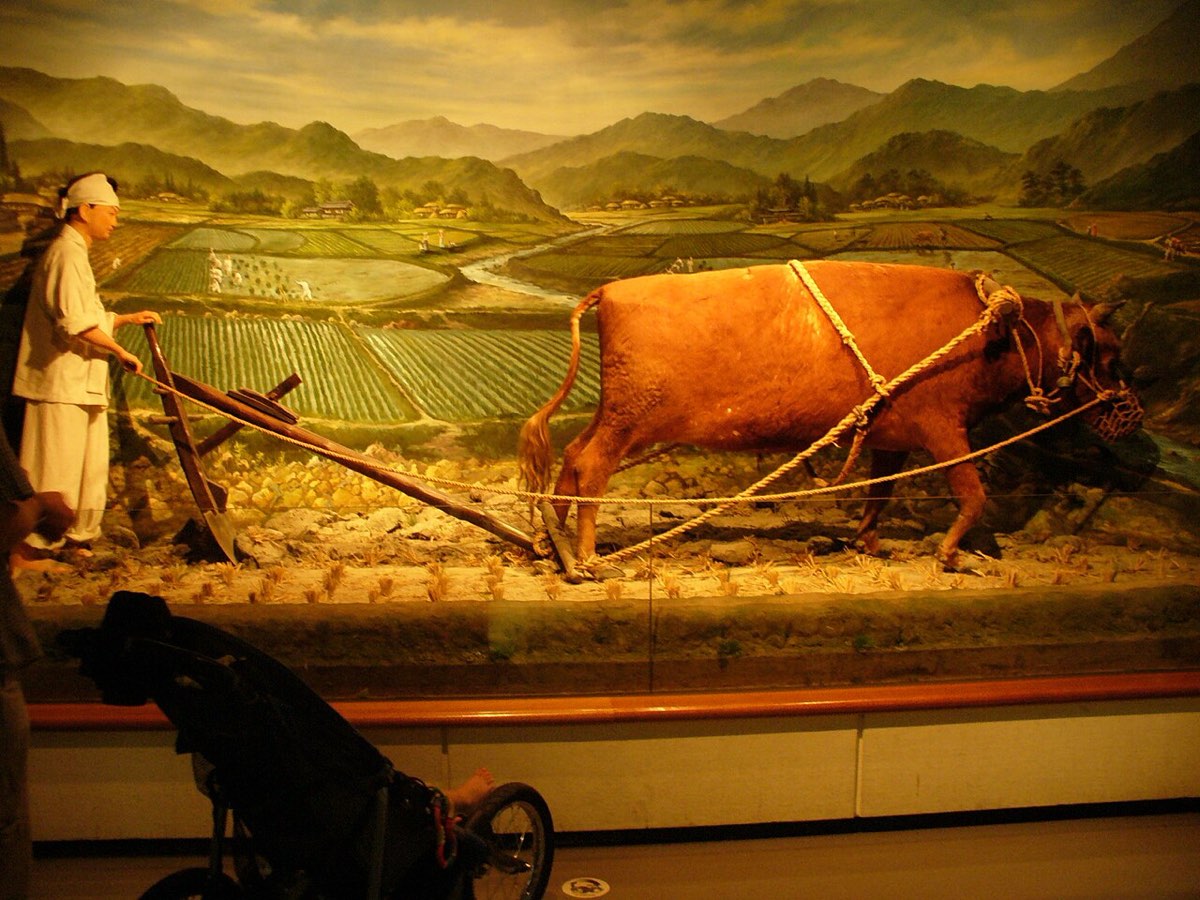
Spring brings plowing, flower outings around Samjinnal and the tending of ancestral graves at Hansik. Summer is the peak of farm labor, with rice transplanting and weeding organized through cooperative work teams called dure (두레), and Dano, when people exchanged fans, washed their hair in iris-infused water and held swinging and ssireum wrestling contests; Gangneung and other regions still hold Dano festivals. Autumn centers on Chuseok and its charye (차례), the ancestral rite for which new grain was made into wine and rice cakes. Winter is for kimjang, the big kimchi-making, for fermented soybean blocks called meju, and for red-bean porridge at the winter solstice to drive off misfortune.
Read this hall with a holiday in mind. If you are in Korea at Seollal or Chuseok, the displays explain why shops close, why trains sell out and what the food on family tables means. The hall's text also notes how customs shifted through the twentieth century, such as the Chuseok exodus from cities to home villages with gift sets in hand. The last room, a hanok shown through four seasons on immersive video, is a good pause before you go on to see real hanok in Bukchon.
Hall 3, Korean Life Passages: from the birth rope to the ancestral tablet
Hall 3 (한국인의 일생, Korean Life Passages) is the one most visitors remember, because it explains rituals Koreans still perform. It starts with birth. In Joseon, families hung a straw rope called geumjul (금줄) across the gate to announce a newborn and keep impurity out. Because so many infants died, celebration waited for baegil (백일), the hundredth day, and for dol (돌), the first birthday, when relatives tried to read the child's future. The museum notes that both parties continue today, now for daughters as much as for sons.
The hall then moves through schooling and coming of age, called gwallye (관례) for young men and gyerye (계례) for young women, through careers and the state examinations, to marriage. In late Joseon the wedding took place at the bride's home; afterward the groom brought the bride to his family to greet the ancestors, and she offered pyebaek (폐백), a formal bow to her parents-in-law with gifts. The museum's point is that venues, clothing and honeymoons have changed while the basic structure and meaning of a wedding have changed much less.
The final sections cover the sixtieth-birthday feast (hwangap), healing, funerals and jesa (제사), the rite for ancestors. The Confucian ideal was three years of mourning, during which a son might leave office or farming and live in a hut beside the grave, and a household kept tablets for four generations of ancestors. Today, the museum observes, rites are simpler and families more varied, but remembering ancestors and holding the family together remain the purpose. That explains a great deal about Korean holidays.
Outdoors: guardian posts, a Jeju gate and a 1970s street
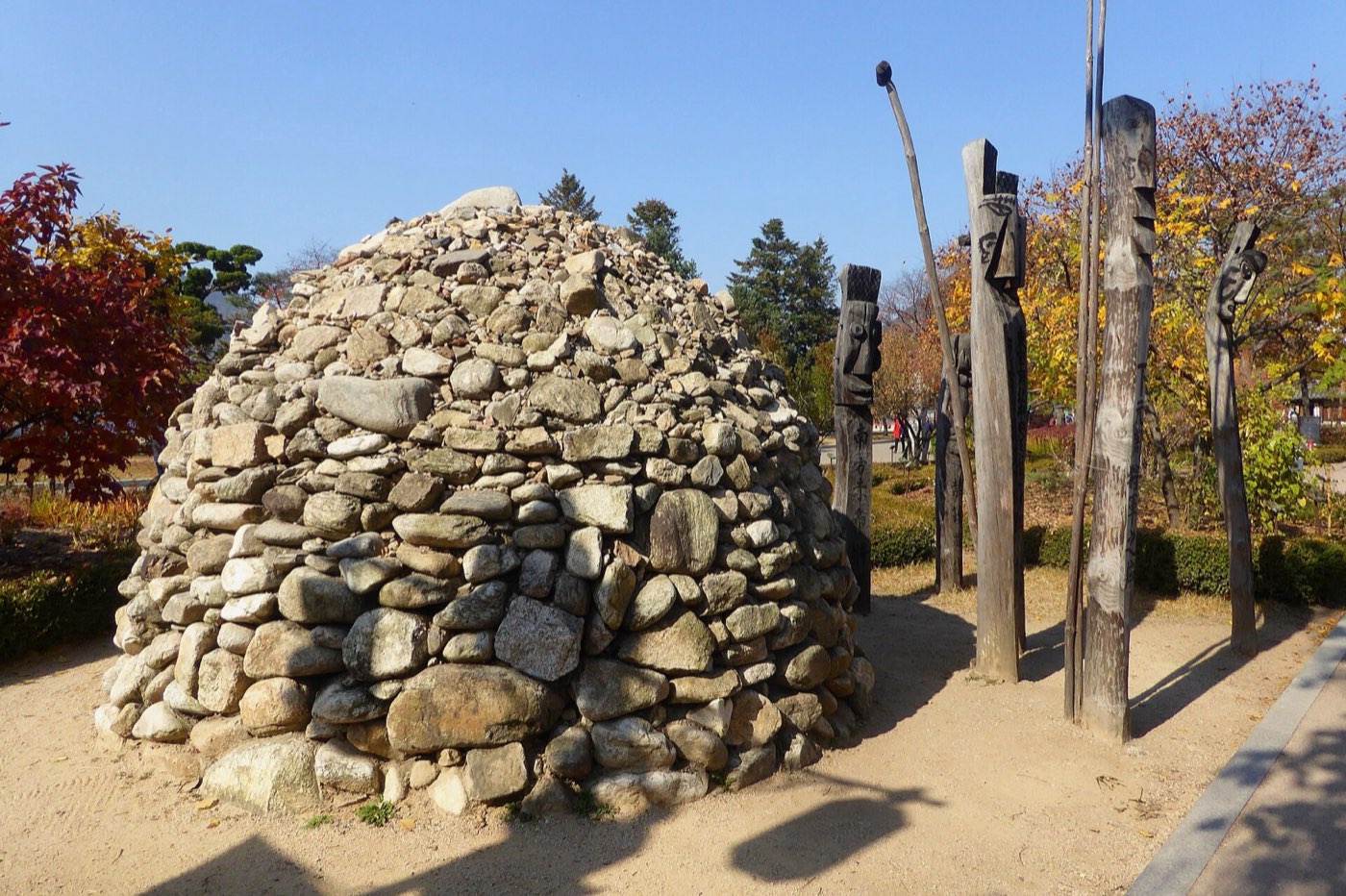
The open-air area is one of the best-explained outdoor displays in Seoul and costs nothing. Look for the twelve zodiac figures, a replica of the supyo (수표), the stone water gauge first made under King Sejong to warn of drought and flood, and a cluster of jangseung (장승), carved guardian posts that stood at village entrances. Their styles vary by region: wooden posts were more common in the center and north, stone ones in the south. Nearby stand a stone cairn and sotdae (솟대), tall poles topped with carved birds that protected villages.
Two exhibits reward a closer look. The jeongnang (정낭) gate from Jeju uses wooden bars laid across stone posts instead of a door: one bar meant the owner had stepped out briefly, two meant away for half a day, and bars in every hole meant gone for several days. Ochondaek (오촌댁) is a real house built in 1848 in Yeongdeok, North Gyeongsang Province, donated in 2010 and moved here. Its enclosed courtyard plan, with women's and men's quarters joined around a central yard, shows how a late-Joseon family of some standing lived.
Do not miss the hyojagak (효자각), a small, brightly painted shrine with a gate. The state honored a man named Heo Gwon (1847–1895) for filial piety, and this structure, carved with lotus buds, dragons and phoenixes, sheltered the memorial stone at his descendants' home. After flood damage in 2005 it was moved here in 2008. It is a compact illustration of how Joseon society turned a Confucian virtue into public architecture, and it pairs naturally with the ancestral-rite displays in Hall 3.
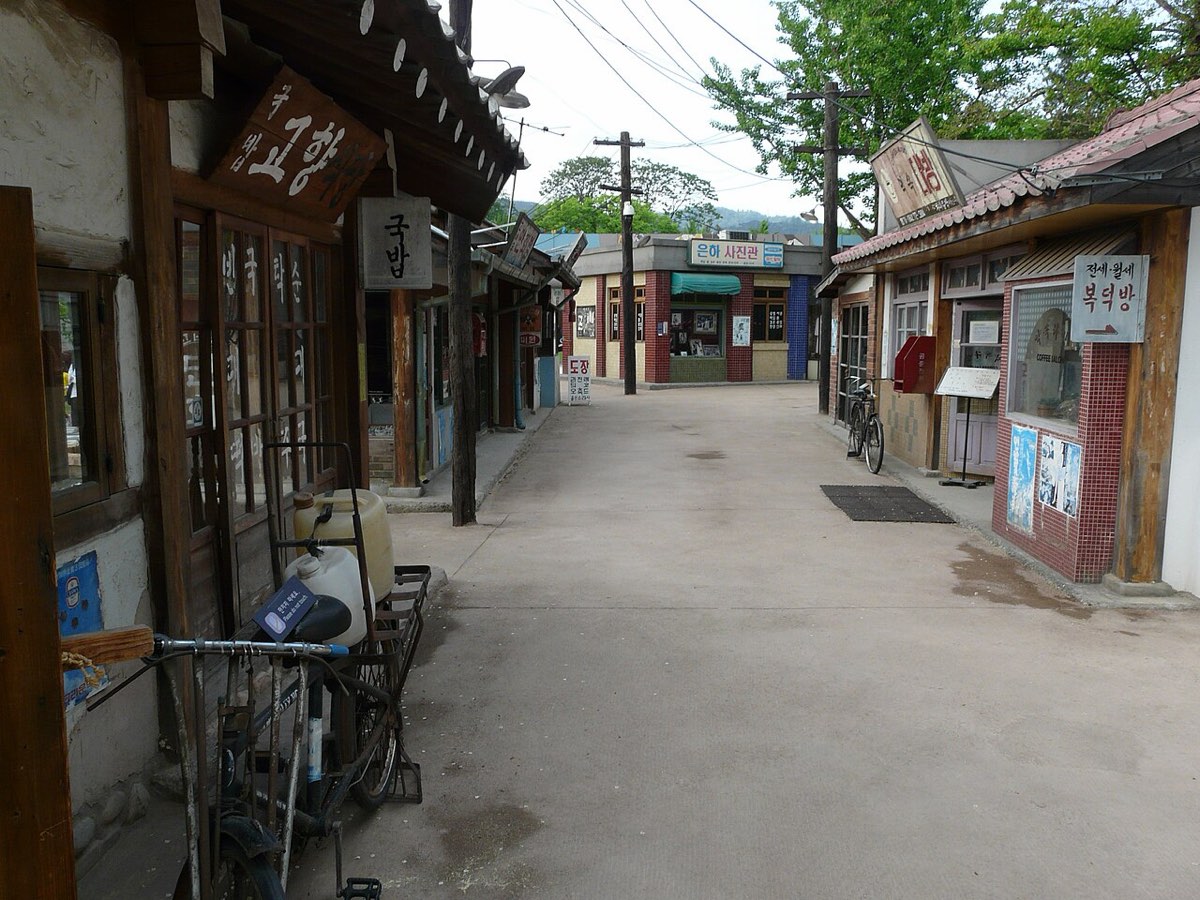
The 70·80 Street of Memories (70·80 추억의 거리) rebuilds a Seoul neighborhood of the 1970s and 1980s: an elementary school from the years when it was still called gungminhakgyo, a stationery shop, a corner store with period brands, a comic-book rental shop, a snack bar, a barbershop, a rice mill, a dabang tearoom, a dressmaker, a photo studio, an electronics repair shop and a public bathhouse. For older Koreans it is nostalgia; for a visitor it is a quick lesson in how fast the country urbanized. The shop interiors open on weekdays only.
The Children's Museum and its booking rule
The Children's Museum (어린이박물관) has its own building and hands-on exhibitions meant for children and parents to explore together. It is free, but unlike the main museum it requires an online reservation in advance, and the museum says the booking service is currently available in Korean only. Hours are 9:30–16:50 all year with no evening opening. If the Korean booking page defeats you, ask your hotel or a Korean-speaking friend to reserve a slot before the day.
The house rules are written for families: parents take part alongside their children, voices stay low, nobody runs or wears wheeled shoes, and food and drink stay outside. Drones are banned across the whole site, indoors and out. For children under about seven, an hour here plus the outdoor street is a better use of time than the main halls, which are text-heavy.
Fitting the museum around Gyeongbokgung
The museum's main gate is on Samcheong-ro (삼청로), along the palace's eastern wall, so you can visit without a palace ticket. Its own directions put the walk at about 14 minutes from Gyeongbokgung Station Exit 5 (Line 3), about 15 minutes from Anguk Station Exit 1 (Line 3) and about 17 minutes from Gwanghwamun Station Exit 2 (Line 5). Search 국립민속박물관 in Naver Map or Kakao Map. There is no visitor parking; the nearest paid lots are at Gyeongbokgung and at the National Museum of Modern and Contemporary Art, Seoul.
Timing matters more than distance. Gyeongbokgung closes every Tuesday, but the folk museum does not, so Tuesday is a good folk-museum day. The palace charges 3,000 won for adults (foreign visitors aged 19 to 64), opens 9:00–18:00 in October and 9:00–17:00 in November with last entry an hour earlier. The folk museum keeps 9:00–18:00 from March to October and 9:00–17:00 from November to February, with Wednesdays extended to 20:00 from March to October.
A half-day that works on a Monday, Wednesday or Friday: enter Gyeongbokgung at 9:00 while it is quiet, see the throne hall and Gyeonghoeru Pavilion, and make your way to the folk museum around 11:00. Spend an hour on your own in Halls 2 and 3, walk the outdoor street and its shop interiors, then eat in Samcheong-dong or Bukchon, both a short walk away. If you want a guide, return for the 14:30 English docent tour, which meets at the first-floor lobby information desk and needs no registration; groups of ten or more must ask in advance.
| Day | Free English docent tour (meet at 1F lobby desk) |
|---|---|
| Monday | 10:30 and 14:30 |
| Tuesday | None in English |
| Wednesday | 14:30 |
| Thursday | 10:30 |
| Friday | 10:30 and 14:30 |
| Saturday | None in English |
| Sunday | 10:30 |
Will the museum move to Sejong?
You may read that the museum is leaving Gyeongbokgung. Its own website has a section on building a new museum in the National Museum Complex in Sejong City, and it links the project to the restoration of Gyeongbokgung, to spreading national institutions beyond the capital and to the need for a modern building. An architectural design competition has already chosen a winning scheme for the Sejong site.
The picture is more nuanced in 2026. At the museum's 80th-anniversary ceremony in April 2026, its director described the Sejong building, targeted to open in 2031, as a museum of world folk culture, while the Seoul building would remain the center for Korean folk culture, each with its own permanent exhibitions. Nothing about a visit in 2026 or 2027 is affected. If you are reading this closer to 2031, check the museum's announcements before you go.
Questions visitors ask
Do I need a Gyeongbokgung ticket to enter the National Folk Museum?
No. The museum is free and has its own main gate on Samcheong-ro along the palace's eastern wall. You need a palace ticket, 3,000 won for adults, only if you also tour Gyeongbokgung itself.
Is the National Folk Museum open on Tuesdays when Gyeongbokgung is closed?
Yes. The museum's regular closing days are January 1, Seollal and Chuseok, plus occasional one-off closures posted on its notice board. Gyeongbokgung closes every Tuesday, so Tuesday is a sensible day to give the folk museum your full attention and save the palace for another day.
Are there free English tours at the National Folk Museum?
Yes. English docent tours run at 10:30 and 14:30 on Mondays and Fridays, 14:30 on Wednesdays and 10:30 on Thursdays and Sundays. They are free, start at the first-floor lobby information desk and need no registration, though groups of ten or more must inquire in advance.
Can foreign visitors book the Children's Museum?
Yes, but advance online reservation is mandatory and the museum says the booking service is currently in Korean only. Hours are 9:30–16:50 and entry is free. Ask your hotel or a Korean-speaking friend to make the booking if needed.
What is changing in Permanent Exhibition Hall 1?
A redesign. The museum closed Hall 1 on September 30, 2026 and plans to reopen it on December 22, 2026 under a new theme provisionally titled Faces of the World. Halls 2 and 3 and the outdoor exhibits stay open during the work.
Sources and method
Written for: Visitors to Gyeongbokgung who want to understand how ordinary Koreans lived, celebrated and mourned, and families deciding whether the museum and its Children's Museum fit a palace day.
Method: Researched from the official sources listed below, checked on October 20, 2026. Hours, fees and booking rules can change; the linked official pages are the final word. Spotted something out of date? Tell us.
- National Folk Museum of Korea — Visiting (English)Seasonal hours, Wednesday late opening, last entry, closing days, free admission, weekend restriction on outdoor building interiors, English docent tour times, Children's Museum reservation rule.
- National Folk Museum of Korea — Notice: Permanent Exhibition Hall 1 closure (Sept 23, 2026)Hall 1 closed Sept 30–Dec 21, 2026; reopening Dec 22 under the provisional theme 세계인의 얼굴.
- National Folk Museum of Korea — 상설전시 (permanent and outdoor exhibitions)Contents of Halls 1–3 and outdoor exhibits: seasonal customs, life-cycle rites, jangseung, jeongnang, Ochondaek (1848), 70·80 street shops.
- National Folk Museum of Korea — Permanent Exhibition 3 (English)English hall names and Hall 3 texts on weddings, longevity banquet, funeral rites.
- National Folk Museum of Korea — Children's Museum visitor informationAdvance reservation required, 9:30–16:50, free, house rules, directions and parking.
- National Folk Museum of Korea — 세종 이전 건립 (Sejong relocation project)Rationale for the Sejong building, site in the National Museum Complex, design competition result, 1946 opening and 1993 move to Gyeongbokgung.
- Seoul Shinmun — National Folk Museum 80th anniversary (Apr 24, 2026)Sejong building targeted for 2031 as a world-folk museum; Seoul building to remain the Korean folk center.
- Royal Palaces and Tombs Center — 관람시간 (visiting hours)Gyeongbokgung closed Tuesdays; seasonal hours and last entry.
- Royal Palaces and Tombs Center — 관람요금 (admission fees)Gyeongbokgung adult fee 3,000 won; foreign adults aged 19–64.
- Royal Palaces and Tombs Center — Oct–Nov 2026 Gyeongbokgung operations noticeFree admission Oct 29–Nov 15, 2026 during the Korea Grand Festival (closed days excepted); October and November hours.