In shortNamsangol Hanok Village is a free open-air museum of five late-Joseon houses gathered here in 1998, four moved from around Seoul and one rebuilt as a replica, open Tuesday to Sunday from 9:00, about 300 meters from Chungmuro Station Exit 4. Give the houses an hour, then go up Namsan: walk the city wall if you have two hours and steady legs, ride bus 01B for the cheapest trip, or take the cable car from Myeong-dong for the view.
Key facts
- Korean name
- 남산골한옥마을 (Namsangol Hanok Maeul)Naver Map
- Houses open
- Tue–Sun 9:00–21:00 (Apr–Nov), 9:00–20:00 (Dec–Mar); Mondays closed unless a public holiday
- Admission
- Free; the traditional garden is open 24 hours
- Nearest subway
- Chungmuro Station (Lines 3 and 4), Exit 4
- Time capsule opens
- November 29, 2394
- Namsan Cable Car
- 10:00–23:00 daily; adult round trip KRW 15,000
- N Seoul Tower observatory
- Adults KRW 29,000; weekdays 10:00–22:30
Checked Oct 20, 2026 against the official sources listed at the end of this guide.
Five houses from across Seoul on one hillside
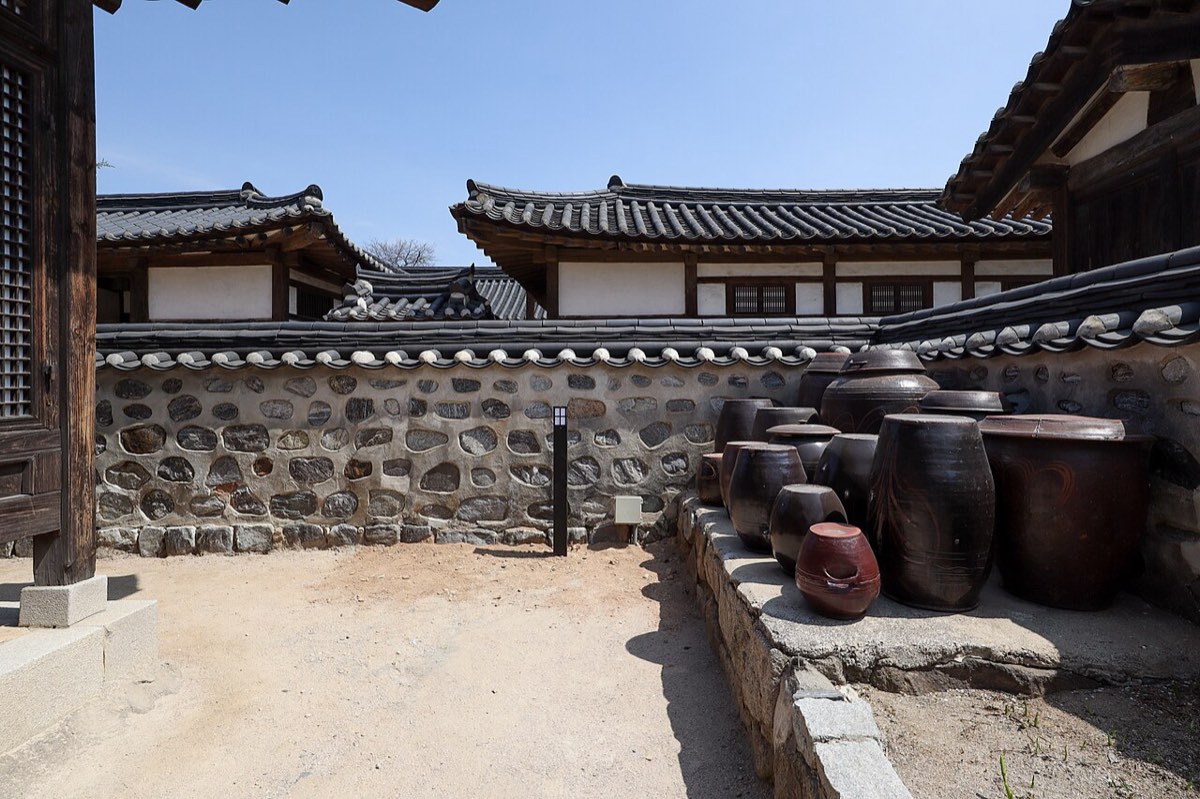
Namsangol (남산골), the valley of Namsan, lies in Pil-dong on the mountain's northern foot. On April 18, 1998, Seoul opened Namsangol Hanok Village here, bringing together four late-Joseon houses designated as Seoul folk heritage, moved from scattered parts of the city and restored, and a faithful replica of a fifth house from Okin-dong. Behind them the city rebuilt a traditional garden on Namsan's original terrain, planted with native trees and laid out around a stream valley, a pond and a pavilion.
The result is the opposite of Bukchon. Nobody lives here, so you can step through the gates, cross the yards and look into rooms, kitchens and wooden halls without worrying about anyone's privacy. The trade-off is context: these houses have been lifted out of their original streets, so you see the buildings but not the neighborhoods that shaped them.
That makes Namsangol the better classroom and Bukchon the better street. If you want to understand how a hanok works, from the heated rooms to the open wooden hall and the separation of family quarters, an hour here will teach you more than a morning photographing Bukchon's lanes. It is also free, which helps.
Reading rank in timber: the five houses compared
Each house is named for its original neighborhood and owner, and together they span a revealing range of late-Joseon society, from a master builder to the in-laws of the last emperor. Walk them in order of rank, starting with the carpenter, and the jump in scale, number of buildings and refinement of detail tells the story better than any label.
Start with Yi Seung-eop's house, built in the 1860s by the chief carpenter on the rebuilding of Gyeongbokgung; it rewards a close look, since its roofline is handled differently front and back. Kim Chun-yeong's house shows a household in between, combining commoner and yangban features. The Min family house is a different order of wealth, with separate inner quarters and detached buildings. The two Yun properties, linked to the family of Empress Sunjeonghyo, consort of the last Joseon ruler Sunjong, date from 1906 and the 1910s and show how elite households built as the dynasty came to an end.
Notice the jaesil in particular. It was not a family home but a building used for preparing ancestral rites, and its unusual plan sets it apart from the others. Inside the yards, look for the raised wooden maru, the heated ondol rooms behind sliding paper doors, and the kitchens set lower than the living rooms so their fires could heat the floors.
| House (original area) | Built | Whose | What to notice |
|---|---|---|---|
| Yi Seung-eop house (Samgak-dong) | 1860s | Chief carpenter on the Gyeongbokgung rebuilding | Rooflines that differ front and back |
| Kim Chun-yeong house (Samcheong-dong) | 1890s | Military officer of owijang rank | A blend of commoner and yangban features |
| Min family house (Gwanhun-dong) | Late Joseon | Min Yeong-hwi, relative of Empress Myeongseong | Separate inner and detached quarters on a large plan |
| Yun Taek-yeong jaesil (Jegi-dong) | 1906 | Father-in-law of Emperor Sunjong | An unusual plan built for ancestral rites |
| Yun family house (Okin-dong) | Replica of a 1910s house | Family of Empress Sunjeonghyo | A large inner quarters with ornate bracket work |
Games, weddings and night tours: using the yards
Namsangol is set up for doing as well as looking. In the yards you will often find traditional games laid out for anyone to try, such as jegichagi, in which you keep a weighted shuttlecock aloft with your foot, and tuho, tossing arrows into a narrow-necked jar. Visit Seoul also lists traditional archery, performances and, on weekends, traditional wedding ceremonies, which you are welcome to watch from a respectful distance.
For depth, join a guided tour. The village runs 40- to 60-minute commentary tours from Tuesday to Sunday, in English at 14:00 and 15:30 on weekdays and at 10:30 and 12:00 on weekends. Individuals need no reservation and simply join at the guide office by the main gate; groups of 25 or more book by phone. Evening is a good choice in summer: the houses stay open until 21:00 from April to November, and the yards are cooler and calmer after dark.
Practical details: the houses are open Tuesday to Sunday, 9:00 to 21:00 from April to November and 9:00 to 20:00 from December to March, and close on Mondays unless the Monday is a public or substitute holiday; entry is free. The traditional garden and time capsule plaza stay open around the clock, so a Monday visit is still worthwhile if you only want the garden and a walk up the mountain. Search 남산골한옥마을 in Naver Map or Kakao Map; Chungmuro Station Exit 4 is about 300 meters away.
A letter to 2394: the Seoul Millennium Time Capsule
Climb through the garden to its highest point and you reach a plaza with a bell-shaped marker. Beneath it, about 15 meters underground, lies the Seoul Millennium Time Capsule (서울천년타임캡슐), buried on November 29, 1994, to mark 600 years since Seoul became the capital of Joseon in 1394. Its shape echoes Bosingak, the bell pavilion whose bell once regulated the city's day.
The capsule holds about 600 objects chosen to show how Seoul residents lived in 1994. It is scheduled to be opened on November 29, 2394, the city's 1,000th anniversary as capital. The idea is more poignant than it first appears: a city that demolished so much of its own past in a few decades of rapid growth decided to set aside an ordinary year for people four centuries ahead.
There is nothing to open or enter, so ten minutes is enough. Go for the idea and for the view back down over the hanok roofs, which is one of the best angles in the village: tiled roofs in the foreground, the office towers of central Seoul behind them, and the northern mountains on a clear day, six centuries of the capital in a single frame.
Seoul Namsan Gugakdang: Korean music below ground
Just inside the village sits Seoul Namsan Gugakdang (서울남산국악당), a venue for gugak, traditional Korean music, and performing arts that opened in 2007. The roughly 300-seat hall lies underground, so it does not compete with the hanok roofs above, and a sunken garden called Chimsangwon brings daylight down into the building. Even if you do not attend a show, the descent into that courtyard is worth a look.
Programs change through the year, and Seoul's own reporting mentions festivals and building tours alongside concerts. Music needs little translation, which makes a gugak performance one of the easier cultural evenings for visitors who do not speak Korean. The building is open Tuesday to Sunday, 9:00 to 21:00, and closes on Mondays. For the current schedule and tickets, see the venue's official site, sgtt.kr, which has an English option, and see our guide to traditional performances in Seoul for how gugak compares with other stages in the city.
Our suggestion for a first visit is to pair a performance with the village rather than making a separate trip. From April to November the houses stay open until 21:00, so you can walk the yards in the early evening, go down into the hall for the show and still reach Myeong-dong for a late dinner. Book ahead for weekend dates, and arrive early enough to see the sunken garden before the doors close.
Up Namsan three ways: on foot, by bus or by cable car
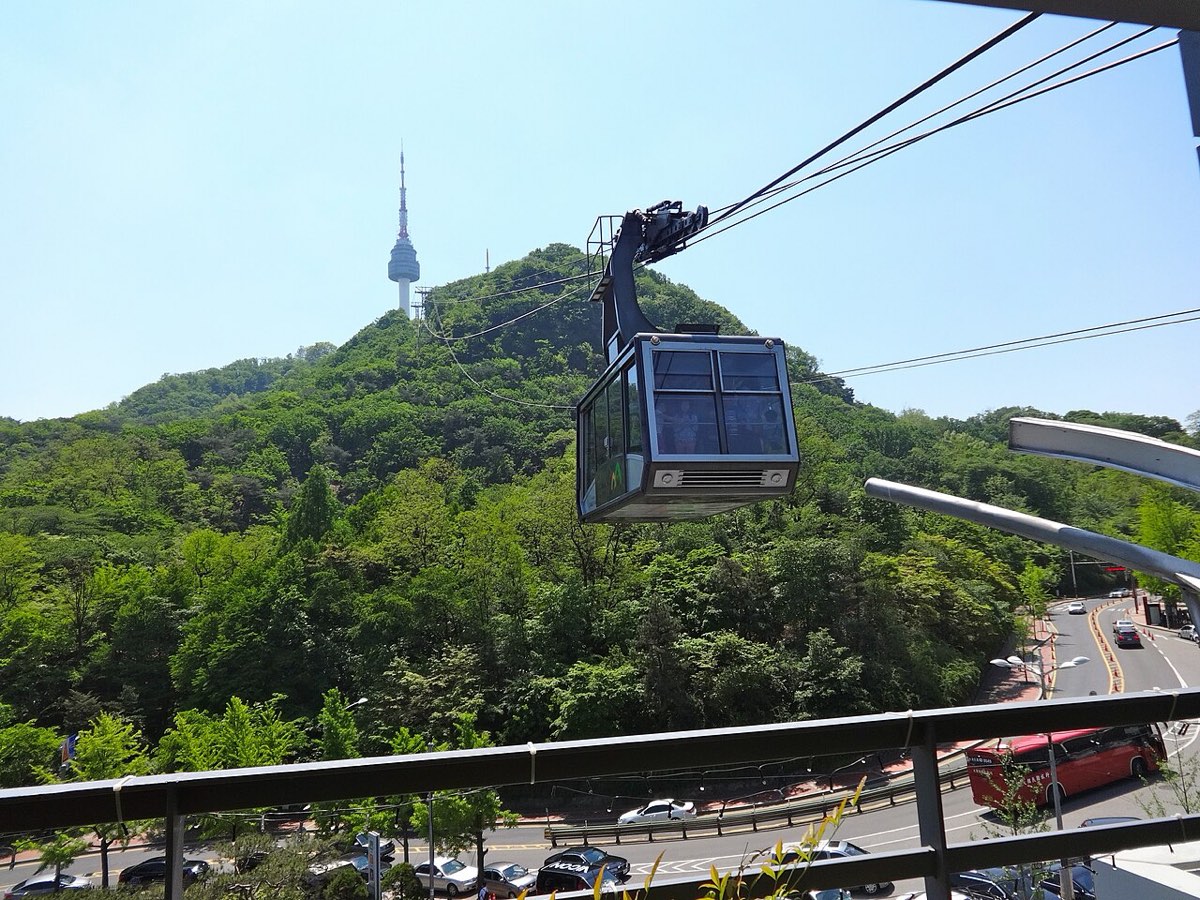
N Seoul Tower sits near the summit of Namsan, and private cars have been barred from the summit road since 2005, so you will arrive on foot, by local bus or by cable car. Each suits a different visitor, and the right choice depends less on money than on the time of day, the state of your knees and whether you want to experience the mountain or simply reach the top.
The Namsan circulation buses are the bargain. Route 01B runs every 14 minutes from 06:30 to 23:00 via Chungmuro Station Exit 2, Dongguk University Station and the National Theater to N Seoul Tower, and also stops at the cable car's lower station. Route 01A loops through the city center, including Gwanghwamun, Anguk and Namdaemun Market. Both cost KRW 1,500 and accept transit cards only, with no cash.
The Namsan Cable Car operates daily from 10:00 to 23:00, with last tickets sold 30 minutes before closing, and it can stop running in bad weather. From Myeong-dong Station Exit 3 it is a 10- to 15-minute uphill walk along the road beside the Pacific Hotel, or ride the free Namsan Oreumi incline elevator from the entrance of Namsan Tunnel No. 3, about two minutes to the boarding area. Adult fares are KRW 15,000 round trip and 12,000 one way. A city-built gondola from near Myeong-dong has been blocked in court, most recently by an appeal ruling on September 17, 2026, so do not plan around it.
Our pick: walk up in daylight, when the wall and the views keep you company, and ride down by cable car or bus after dark. The tower's observatory costs KRW 29,000 for adults and is open 10:00 to 22:30 on weekdays and to 23:00 on weekends and holidays; the summit terraces, beacon mound and wall views are free.
- Walk: free; from Namsangol (Chungmuro Exit 4), Jangchung (Dongguk University Station Exit 5 or 6) or Baekbeom Square (Hoehyeon Station Exit 4); 40 minutes to over an hour, steep in places.
- Bus 01B or 01A: KRW 1,500 by transit card; 06:30–23:00; easiest for limited mobility.
- Cable car: KRW 15,000 adult round trip; 10:00–23:00; long weekend and sunset queues.
The city wall over Mongmyeoksan, and the beacon at the top
Namsan's Joseon name was Mongmyeoksan (목멱산), and the Seoul City Wall, Hanyangdoseong (한양도성), ran along its ridge as part of the loop of walls and gates that enclosed the capital. The official Namsan section runs 6.7 kilometers from Jangchung Gymnasium to Baekbeom Square, takes about three hours and is rated three stars out of five for difficulty. In the 1920s colonial authorities tore down much of the wall here to build the Joseon Shinto Shrine; restoration began in the 1970s, and a mid-1990s recovery project returned most sections to their earlier form. Wall foundations unearthed in good condition at Hoehyeon in 2013 show how much still lay buried.
For the best wall walking, start on the east at Jangchung and climb with the masonry beside you to the summit, then descend west toward Baekbeom Square and Myeong-dong. At the top, look for Palgakjeong, an octagonal pavilion on the site of Guksadang, a state shrine the Japanese moved to Inwangsan in 1925, and a stone marking the geographical center of Seoul.
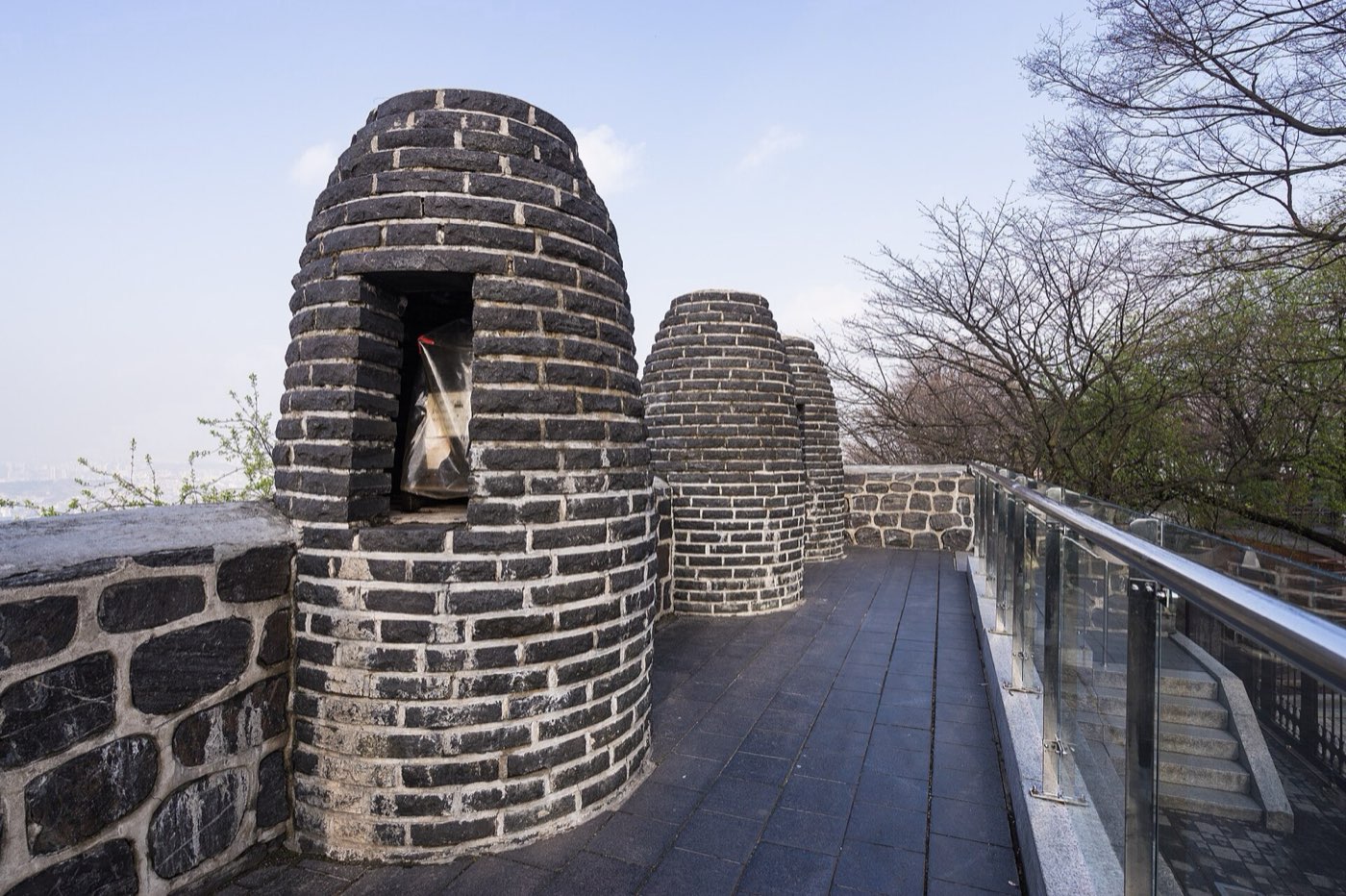
The summit's most meaningful structure is the smallest. The Mongmyeoksan beacon mound was the end of the line for Joseon's signal network: messages relayed hill to hill from the border regions, as smoke by day and fire by night, all ended here in the capital. Built in 1423 and used until 1895, the beacons were restored in 1993. Stand beside them and look out at the ring of mountains, and the logic of a capital defended by fire signals becomes immediately clear.
An afternoon that ends in Myeong-dong
Namsangol, Namsan and Myeong-dong fit into one afternoon with no transit beyond the first subway ride. Arrive at Chungmuro Station Exit 4 around 14:00 and spend an hour in the five houses, trying the yard games if you like. At about 15:15 climb through the garden to the time capsule plaza, then head uphill on Namsan's footpaths (the city wall office lists Namsangol as one of the trail's access points); allow an hour or a little more at an easy pace.
Aim to reach the summit around 16:30 to see the beacon mound and Palgakjeong in daylight, then stay for sunset over the city; decide on the observatory only if the sky is clear. Check the day's sunset time before you set out and plan to be at the top about 45 minutes ahead of it, because the light over the Han River fades quickly once the sun drops behind the western hills. After dark, ride the cable car down, or catch bus 01B, and walk from the lower cable car station toward Myeong-dong Station Exit 3 for dinner and the evening street-food stalls.
On a Monday the houses are closed, but the garden, capsule plaza and mountain are not, so start at the garden instead. If you prefer mornings, reverse the plan: take bus 01B up from Chungmuro Exit 2, walk down past the beacon mound and along the wall, and finish at Namsangol after its 9:00 opening, before Myeong-dong's shops are fully awake.
Questions visitors ask
Is Namsangol Hanok Village really free?
Yes. Entry to the houses and the traditional garden is free, according to Seoul's culture portal and Visit Seoul. Performances at the neighboring Seoul Namsan Gugakdang and some hands-on programs may be ticketed or need advance booking, so check before you go if you have a specific activity in mind.
Is Namsangol open on Mondays?
The houses close every Monday. The traditional garden and the time capsule plaza are open 24 hours, and Namsan's trails are always open, so a Monday visit can still include the garden and a walk up the mountain. The village's own site says the houses open as usual when a Monday is a public or substitute holiday.
Which is better for seeing hanok, Namsangol or Bukchon?
For understanding hanok, Namsangol: you can walk into yards and see rooms, kitchens and halls at five houses of different social ranks. For the experience of a living hanok neighborhood and its famous rooftop views, Bukchon. Many visitors do both on different days, starting with Namsangol so that Bukchon's lanes make more sense.
How long does it take to walk up Namsan to N Seoul Tower?
From the Myeong-dong or Namsangol side, allow roughly 40 minutes to an hour at a steady pace, mostly on stairs and paved paths. The full official city-wall section from Jangchung Gymnasium to Baekbeom Square is 6.7 kilometers and takes about three hours. The bus is the alternative if stairs are difficult.
Can I see the time capsule contents?
No. The capsule is sealed about 15 meters underground and scheduled to be opened on November 29, 2394. What you can see is the plaza and bell-shaped marker at the top of the garden, which is open around the clock and offers one of the best views over the village rooftops.
Sources and method
Written for: Visitors staying around Myeong-dong or Chungmuro who want a hanok village they can actually walk into, a taste of Korean music, and a sensible way up Namsan.
Method: Researched from the official sources listed below, checked on October 20, 2026. Hours, fees and booking rules can change; the linked official pages are the final word. Spotted something out of date? Tell us.
- Seoul Metropolitan Government culture portal — Namsangol Hanok VillageOpened April 18, 1998; the five hanok; traditional garden open 24 hours; house hours and Monday closure; free admission; time capsule shape, 600 items and 2394 opening; updated August 2026.
- Visit Seoul — Namsangol Hanok VillageThe five houses and their owners, hours, Monday closure, free admission, address, Chungmuro Exit 4 distance, archery, weekend weddings, foreign-language commentary.
- Seoul Mediahub — Namsangol Hanok Village and Seoul Namsan Gugakdang (May 8, 2026)Names and original areas of the five houses, traditional games (jegichagi, tuho), Gugakdang opened 2007 with about 300 underground seats and sunken garden Chimsangwon, venue hours, time capsule burial date and depth.
- Namsangol Hanok Village (official site) — 전통가옥 소개 (the five houses)Designations, original sites and construction dates of the houses (Yi Seung-eop 1860s, Kim Chun-yeong 1890s, Yun Taek-yeong jaesil 1906); front and back rooflines; commoner and yangban features; the owijang rank; the Okin-dong house as a replica of a 1910s house.
- N Seoul Tower — Getting Here: By Cable CarCable car hours 10:00–23:00; fares (adult round trip 15,000 won, one way 12,000 won); route from Myeong-dong Station Exit 3 past the Pacific Hotel (10–15 minutes); free Namsan Ormi incline elevator from the Namsan Tunnel No. 3 entrance.
- N Seoul Tower — Getting HereBuses 01A and 01B: routes, frequency, 06:30–23:00, KRW 1,500 card-only fare; private vehicles restricted since 2005.
- N Seoul Tower — Hours and AdmissionObservatory fees (adults KRW 29,000). Hours are on the same section's Hours tab (eng/visit/use.asp): observatory weekdays 10:00–22:30, weekends and holidays 10:00–23:00.
- Namsan Cable Car — official siteDaily 10:00–23:00, open all year, may stop in bad weather, last tickets 30 minutes before closing. Fares and directions are no longer on this page (see N Seoul Tower cable-car page).
- Seoul City Wall (Seoul Metropolitan Government) — Namsan (Mongmyeoksan) Mountain Trail6.7 km, about 3 hours, difficulty rating; 1920s demolition and later restoration; Hoehyeon remains (2013); Palgakjeong and Guksadang; Central Point of Seoul; beacon mound built 1423, used to 1895, restored 1993; access stations and exits.
- Money Today — Namsan gondola blocked again on appeal (Sept. 17, 2026)Seoul High Court dismissed the city's appeal over the gondola; city considering Supreme Court appeal and a decree change.
- Namsangol Hanok Village (official site) — Visit GuideHouse hours (April–November 09:00–21:00, December–March 09:00–20:00), Monday closure with holiday-Monday opening, free admission, garden open 24 hours, guided commentary tours (individuals join on site at the main-gate guide office; groups of 25+ book ahead).