In shortIf you see only one show, book the National Gugak Center's Saturday Gugak Concert (토요명품), an 80-minute weekly sampler of court music, folk music and dance at 15:00, 20,000–30,000 won, bookable online until 18:00 the day before. Then choose by language: court music, dance and samulnori need no Korean, talchum needs a little context, and full-length pansori is a story sung in Korean.
Key facts
- Best first show
- Saturday Gugak Concert (토요명품), National Gugak Center
- When
- Every Saturday, 15:00–16:20 (2026 run ends December 26)
- Price
- A seats 30,000 won, B seats 20,000 won
- Booking
- Online until 18:00 the day before; leftover seats at the box office from one hour before
- Getting there
- Nambu Bus Terminal Stn (Line 3) Exit 5, then village bus Seocho 22
- UNESCO listings
- Pansori (proclaimed 2003, inscribed 2008); talchum (2022)
- Map search
- 국립국악원 / 서울남산국악당 / 서울돈화문국악당Naver Map
Checked Oct 20, 2026 against the official sources listed at the end of this guide.
Gugak is an umbrella, not a single genre
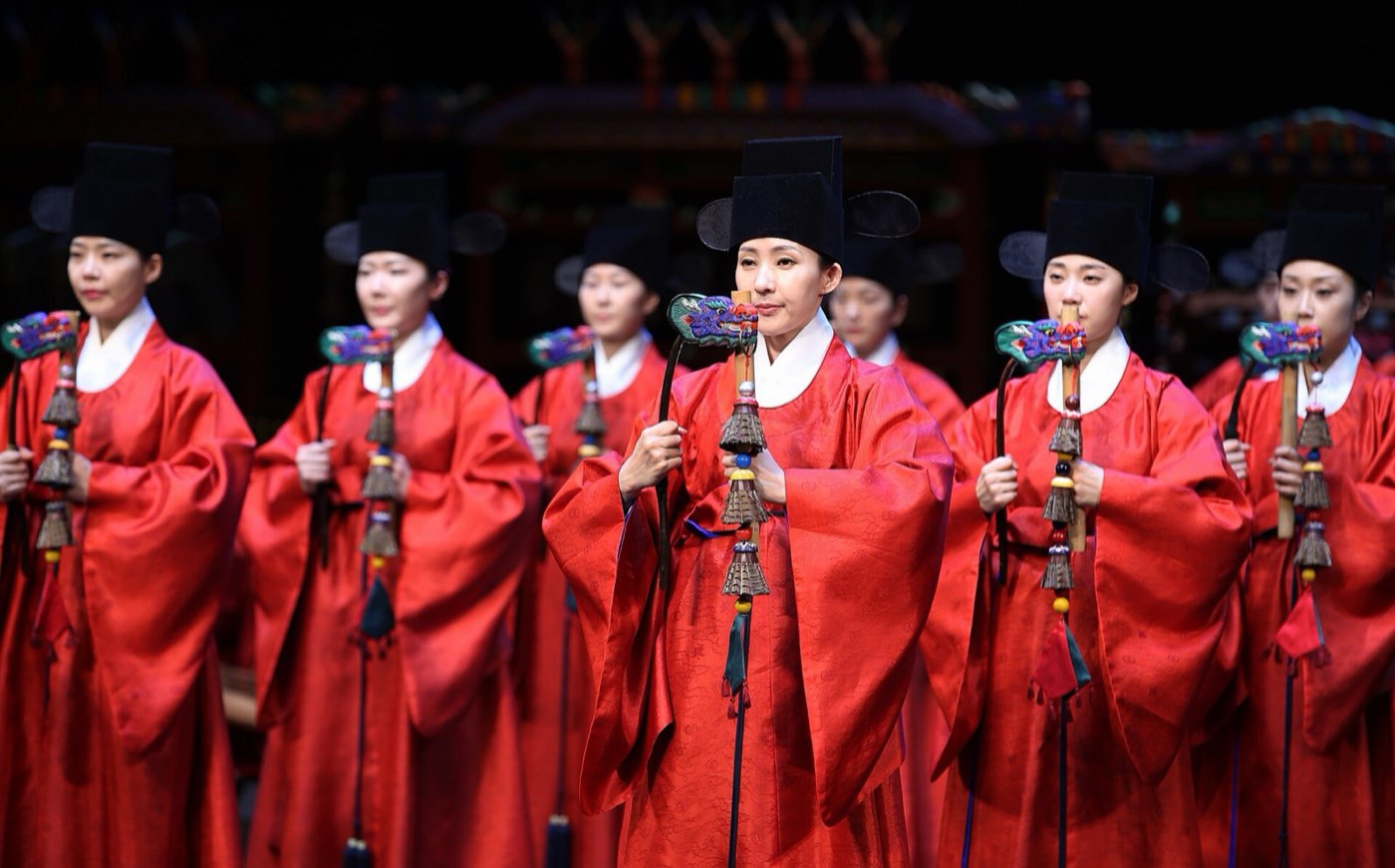
Koreans call their traditional music gugak (국악), literally 'national music', but the word covers forms as different from each other as a cathedral choir and a street drum line. At one end sits jeongak (정악), the slow, measured music of the court and the scholar class, which includes ritual music and court dance. At the other sits minsogak (민속악), folk music: pansori storytelling, the virtuoso instrumental solos called sanjo (산조) and the percussion of village farmers' bands. Talchum, the masked dance drama, belongs to the folk side and adds comic theater.
This matters because the experience changes completely with the form. Court music asks you to sit still and let long, sustained tones settle. A drum performance asks you to clap along. Pansori asks you to follow a story. A first-timer who picks badly often concludes that traditional music is not for them, when the real problem was the match between the show and the listener. The rest of this guide is about making that match.
If court music is new to you, listen for three things. The melody is carried by wind instruments such as the piri (피리), a double-reed pipe, and the daegeum (대금), a large bamboo flute, while the haegeum (해금), a two-string fiddle, shadows it and the janggu marks out long rhythmic cycles. Notes rarely sit still: they swell, waver and bend at the end, and that ornamentation is where much of the expression lies. Give a piece three or four minutes before deciding whether it speaks to you.
Choose by how much Korean you need
Language dependence is the most useful filter. Court music and dance are wordless, or sung in classical texts that most Korean listeners do not follow word for word either, so you lose almost nothing. Samulnori is pure rhythm. Talchum has spoken comedy, but masks, gestures and familiar character types carry much of the joke. Full-length pansori is a sung novel in Korean, and without surtitles even a great singer may lose you after twenty minutes. A short pansori excerpt inside a mixed program is a different and far easier proposition.
A practical rule follows. With one free slot in your trip, choose a mixed program, because it lets you sample court and folk forms in a single sitting and discover which one you respond to. With two slots, use the second for contrast: a samulnori or talchum performance if the court pieces left you cold, or a small-hall pansori if a sung excerpt held your attention despite the language.
| Form | What carries it | Korean needed | Good first setting |
|---|---|---|---|
| Court music and court dance (jeongak) | Sound, costume, slow movement | None | National Gugak Center Saturday concert |
| Samulnori and pangut | Rhythm, speed, spectacle | None | Saturday concert; free outdoor stages |
| Talchum (mask dance drama) | Masks, gesture, comic dialogue | Some; read the plot first | Festival and gugakdang listings |
| Pansori excerpt | Voice and drum | Low | Mixed programs |
| Full pansori (wanchang) | The story itself | High, unless surtitled | Small gugakdang halls |
Pansori: one singer, one drummer, and an audience that answers back
UNESCO, which proclaimed pansori a masterpiece of intangible heritage in 2003 and inscribed it in 2008, describes it as musical storytelling by a single singer accompanied by a barrel drum, with texts that mix rural speech and literary language. It emerged in southwest Korea in the seventeenth century, probably out of shamans' narrative songs, and a complete performance can last up to eight hours. The name joins pan (판), a place where people gather, and sori (소리), song.
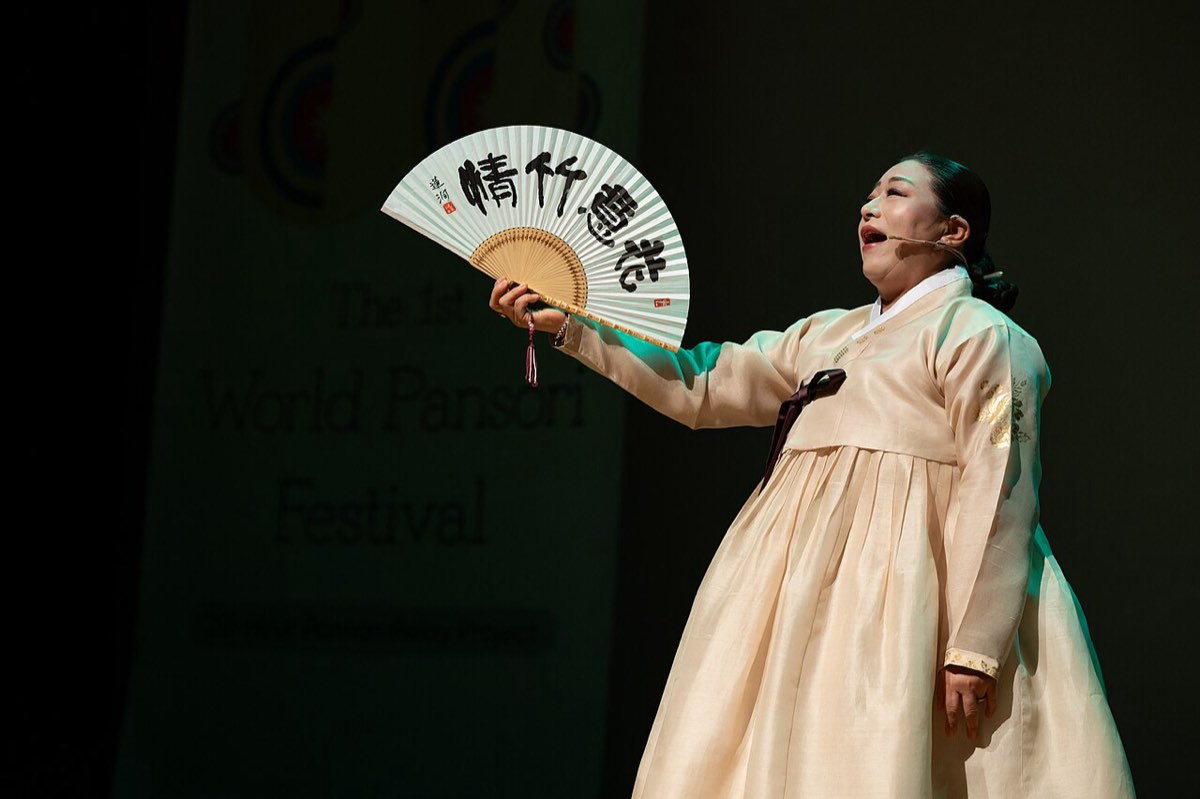
On stage the singer stands with a folding fan, moving between sung passages and spoken narration and acting out every character. The seated drummer, the gosu (고수), does more than keep time, shaping the pace and calling out encouragement. Listeners join in with chuimsae (추임새), short shouts such as eolsigu (얼씨구) or jota (좋다) dropped at the end of a phrase. Five full-length works survive in the classical repertoire, and Chunhyangga, the story of a woman who resists a corrupt magistrate and is rescued by her husband, is the best known.
Start with an excerpt in a mixed program and save a full wanchang (완창, complete performance) for when surtitles are offered or you already know the story. Full performances do appear on Seoul's small stages: Seoul Donhwamun Gugakdang, for example, has listed a free 120-minute Chunhyangga in the Manjeong style as a rental production with its own contact number. Read a synopsis before you go and the second hour becomes far easier to follow.
Samulnori: four instruments from the farmers' band
Samulnori (사물놀이) is younger than most visitors assume. According to the Korea Times, the name was coined in 1978, when four percussionists, Kim Duk-soo, Kim Yong-bae, Lee Kwang-soo and Choi Jong-sil, began performing on a small Seoul stage. Samul means 'four objects': the kkwaenggwari (꽹과리), a small gong that leads; the jing (징), a large gong whose long tone anchors the beat; the janggu (장구), an hourglass drum; and the buk (북), a barrel drum.
The roots are older. The founders drew on nongak, the farmers' band music once played for village rites and harvests, and combined its rhythms with elements of shamanic ritual music, bringing an outdoor, standing tradition onto an indoor stage where the players sit. The standing, dancing form survives too: pangut (판굿), in which players move and dance as they drum, is part of the National Gugak Center's Saturday repertoire and turns up on outdoor festival stages.
Samulnori is the safest choice for children and for anyone wary of slow music. It needs no translation, it builds to loud climaxes, and audiences are often invited to clap on the beat. If you are sensitive to volume, sit toward the back; four metal and skin instruments in a small hall fill the room.
Talchum: satire behind a mask
UNESCO inscribed talchum (탈춤), the mask dance drama of Korea, in 2022. It combines dance, music and theater, with an ensemble of six to ten musicians accompanying masked performers, and it uses caricatures of everyday characters to mock social hierarchy and argue for equality. Regional dialects and folk songs tie each tradition to its home area, and the form needs no formal stage: any open space can serve.
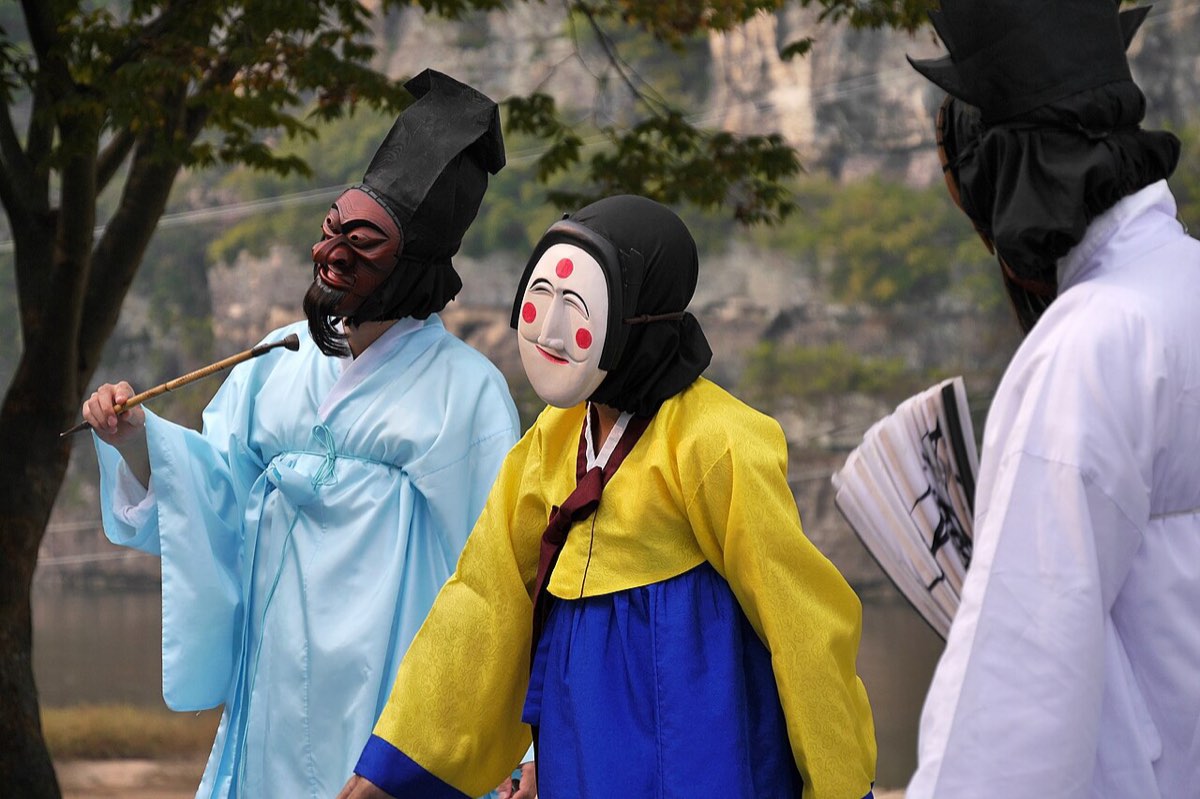
The audience is part of the show. UNESCO notes that spectators' cheers and jeers shape the drama as it unfolds, and talchum spread widely among university students in the 1970s and 1980s, a generation that still teaches performance and mask-making through local associations, clubs and schools. Performers were once only men; women now take part. Watch for familiar types: a pompous aristocrat outwitted by his servant, a monk who has strayed from his vows, a quarreling old couple. The exaggerated masks tell you who is who before anyone speaks.
Talchum rarely has a fixed weekly slot in central Seoul, so look for it in festival programs and gugakdang listings rather than expecting a nightly show. Do not confuse it with Cheoyongmu (처용무), the masked court dance that sometimes appears in the Saturday concert: that is a formal, ceremonial dance, while talchum is rowdy village comedy. Seeing both is the best way to understand the difference between court and folk.
The Saturday Gugak Concert, step by step
The National Gugak Center (국립국악원) in Seocho-gu runs the Saturday Gugak Concert, 토요명품 (Toyo Myeongpum), every Saturday from 15:00 to 16:20 in its Umyeondang (우면당) hall. The 2026 season runs from January 3 to December 26. A seats cost 30,000 won and B seats 20,000 won, and the minimum age is seven. The program changes from week to week, so treat it as a sampler rather than a fixed show.
The center's own merchandise gives a sense of the range. Its Saturday-concert pin badges are themed on jipbak (집박), the official who signals the start and end of court pieces with a wooden clapper; Daechwita (대취타), royal procession music for winds and percussion; gayageum and daegeum sanjo, solo showpieces for zither and bamboo flute; janggu dance; pangut; and Cheoyongmu. A single afternoon can move from court ceremony to folk virtuosity.
Booking rules are strict. Online sales and any cancellation or change close at 18:00 the day before the performance, and online booking is not possible on the day; leftover seats are sold first come, first served at the box office from one hour before. Phone bookings on 02-580-3300 accept cash transfer only, and the center warns that some cards issued outside Korea may be declined, so book early with a backup card.
To get there, take Line 3 to Nambu Bus Terminal Station (남부터미널역), use Exit 5 and board the village bus Seocho 22, or take Line 2 to Bangbae Station, Exit 1, for village buses Seocho 7, 15 or 17. Search 국립국악원 in Naver Map or Kakao Map. Arrive early for the free Gugak Museum (국악박물관), open 10:00–18:00 with last entry at 17:30 and closed on Mondays, whose permanent galleries are built around listening to instruments rather than just looking at them.
Smaller stages: Namsan, Donhwamun and Jeongdong
Seoul's two municipal gugak halls share one website, sgtt.kr, which has an English option. Seoul Namsan Gugakdang (서울남산국악당) sits beside Namsangol Hanok Village at 28 Toegye-ro 34-gil, about 350 meters from Exits 3 and 4 of Chungmuro Station (Lines 3 and 4). Seoul Donhwamun Gugakdang (서울돈화문국악당) is a small hall at 102 Yulgok-ro near Changdeokgung, about 400 meters from Anguk Station Exit 4 or 600 meters from Jongno 3-ga Station Exit 7. Both program new gugak alongside traditional pansori and sanjo.
The National Jeongdong Theater (국립정동극장), at 43 Jeongdong-gil on the road along Deoksugung's stone wall, changes its programming by season, so check the current listings rather than expecting a fixed tourist show. In autumn 2026 it has run a free outdoor lunchtime program, 정오의 한마당, Tuesday to Friday at noon, with Namsadang tightrope walking and the martial art taekkyeon among the acts; no reservation is needed, and rain cancels the show.
Read these listings carefully. A performance marked 대관 (daegwan) is a rental by an outside company, which may book through its own phone number or ticket site. Check the age rating and running time, and assume no English surtitles unless the listing says otherwise; if language matters, email or call the venue's contact line before buying.
Etiquette: when to clap, when to call out
The house rules at the National Gugak Center are typical. Aim to be seated ten minutes early, because entry can be restricted once a performance begins and latecomers are seated only when staff find a suitable break. Switch phones off, not just to silent, and stay in your assigned seat. Filming and recording are prohibited, and food and flowers are not allowed in the hall. Pre-school children are not admitted except at children's performances, and the Saturday concert sets its minimum age at seven.
When to make noise depends on the form. In court music, stay silent and applaud only when the piece has clearly finished, because long pauses are part of the music. In pansori, chuimsae is welcome: a quiet eolsigu at the end of a phrase is a compliment, not an interruption, though let Korean listeners set the volume. At samulnori, pangut and talchum, clapping along and laughing out loud are part of the deal, especially when performers invite it.
There is no dress code. Smart-casual clothes are fine everywhere, and hanbok is welcome; the Gugak Center has offered hanbok wearers half-price tickets during Hanbok Culture Week. Comfortable layers help more than formality: older halls can be cool in winter and outdoor stages offer no shade at noon, so dress for the venue rather than the occasion.
A Saturday built around the 15:00 concert
The National Gugak Center sits on the southern edge of the city, so make the trip worthwhile by pairing the concert with the museum. The plan below assumes you booked online the day before. If you did not, arrive by 14:00 and try for returned or unsold seats at the box office, which opens one hour before the performance.
- 13:00 Leave Nambu Bus Terminal Station by Exit 5 and take the village bus Seocho 22 to the center.
- 13:30 Gugak Museum: instruments, scores and listening displays (free; individuals need no reservation).
- 14:30 Pick up tickets at the box office with your booking number or confirmation.
- 14:50 Take your seat in Umyeondang and switch your phone off.
- 15:00–16:20 Saturday Gugak Concert.
- Evening: check sgtt.kr for a show at Namsan or Donhwamun Gugakdang, or keep Jeongdong's free noon program for a weekday.
Questions visitors ask
Which Korean traditional performance is best if I don't speak Korean?
Samulnori, court music and court dance need no Korean at all, so a mixed program such as the National Gugak Center's Saturday Gugak Concert is the safest first choice. Talchum works if you read the plot first. Save full-length pansori for when surtitles are offered or you already know the story.
Can I buy Saturday Gugak Concert tickets on the day?
Not online. Online booking closes at 18:00 the day before. If seats remain, the box office sells them first come, first served from one hour before the 15:00 start. On busy weekends that can mean no seats, so book ahead with a card that works on Korean sites.
Does the Saturday Gugak Concert have English subtitles?
The booking page does not say. The program is mostly music and dance, so the language barrier is small, but if you want to know whether a specific week's pansori excerpt or narration is translated, call the center on 02-580-3300 before booking.
Is there a free traditional performance in central Seoul?
Look at the National Jeongdong Theater first: in autumn 2026 it has run a free outdoor lunchtime program, 정오의 한마당, Tuesday to Friday at noon with no reservation, cancelled in rain. Also check the theater's listings and the Namsan and Donhwamun gugakdang site for free events.
When should I call out during pansori?
At the end of a sung phrase or a dramatic moment, a short call such as eolsigu or jota is a traditional compliment called chuimsae. Keep it brief and follow the lead of the Korean listeners around you; never call out during court music.
Sources and method
Written for: Visitors who want to see a Korean traditional performance in Seoul but are unsure which form will hold their attention without understanding Korean.
Method: Researched from the official sources listed below, checked on October 20, 2026. Hours, fees and booking rules can change; the linked official pages are the final word. Spotted something out of date? Tell us.
- National Gugak Center — 2026 토요명품 (Saturday Gugak Concert) listing2026 dates (Jan 3–Dec 26), 15:00–16:20, Umyeondang, A 30,000 / B 20,000 won, age 7+, booking deadline, box-office sales, phone booking by cash transfer, pin-badge repertoire, Oct 24 hanbok discount.
- National Gugak Center — Booking guide (English)Booking and cancellation deadline, foreign-card restrictions, ticket pickup, house rules (phones, filming, late entry, food).
- National Gugak Center — Directions (English)Nambu Bus Terminal Exit 5 with Seocho 22; Bangbae Exit 1 with Seocho 7/15/17; Naebang Exit 3; bus routes.
- National Gugak Center — Gugak Museum (국악박물관) informationFree admission, 10:00–18:00, last admission 17:30, closed Mondays and January 1; listening-focused permanent exhibition.
- Seoul Namsan · Donhwamun Gugakdang — DirectionsNamsan Gugakdang address and walk from Chungmuro Exits 3 and 4 (about 350 m); footer lists both venues' addresses and contact numbers. Donhwamun distances (Anguk Exit 4 about 400 m, Jongno 3-ga Exit 7 about 600 m) are on the sibling page sgtt.kr/customer/course_donhwamun.
- Seoul Donhwamun Gugakdang — 나윤영의 만정제 춘향가 listingExample of a full pansori listing: Oct 25, 2026, 15:00, 120 minutes, free, rental production.
- National Jeongdong Theater — 2026 정오의 한마당Free outdoor noon program Sept 29–Oct 31, 2026, Tue–Fri 12:00–12:50, no reservation, cancelled in rain.
- UNESCO — Pansori epic chantProclaimed 2003, inscribed 2008; singer with barrel drum; 17th-century southwest origins; performances up to eight hours; meaning of pan and sori.
- UNESCO — Talchum, mask dance drama in the Republic of KoreaInscribed 2022; six to ten musicians; satire of hierarchy; audience role; transmission since the 1970s–80s.
- Korea Times — Samulnori celebrates 30th anniversaryTerm coined in 1978, four founding percussionists, the four instruments, roots in nongak and shamanic ritual music.