In shortMakgeolli is unfiltered rice wine brewed with the starter nuruk; filter the same brew and you get yakju or cheongju, distill it and you get soju, though the cheap green-bottle soju is diluted ethanol. At the table, pour for others, use two hands with elders and turn slightly away when you drink. You can legally drink from January 1 of the year you turn 19, so in 2026 anyone born in 2007 or earlier qualifies.
Key facts
- Legal drinking age
- From Jan. 1 of the year you turn 19 (born 2007 or earlier, in 2026)
- Takju vs yakju
- Unfiltered vs filtered rice wine (Liquor Tax Act)
- Two kinds of soju
- Pot-distilled (증류식) or diluted ethanol (희석식)
- Heritage status
- Makgeolli-making: National Intangible Cultural Heritage (June 2021)
- The Sool Gallery
- 18 Bukchon-ro, Jongno-gu; 10:00–19:00, closed Mondays
- Seoul taxi night surcharge
- 20% (22–23h, 02–04h), 40% (23–02h)
Checked Oct 20, 2026 against the official sources listed at the end of this guide.
Everything starts with nuruk
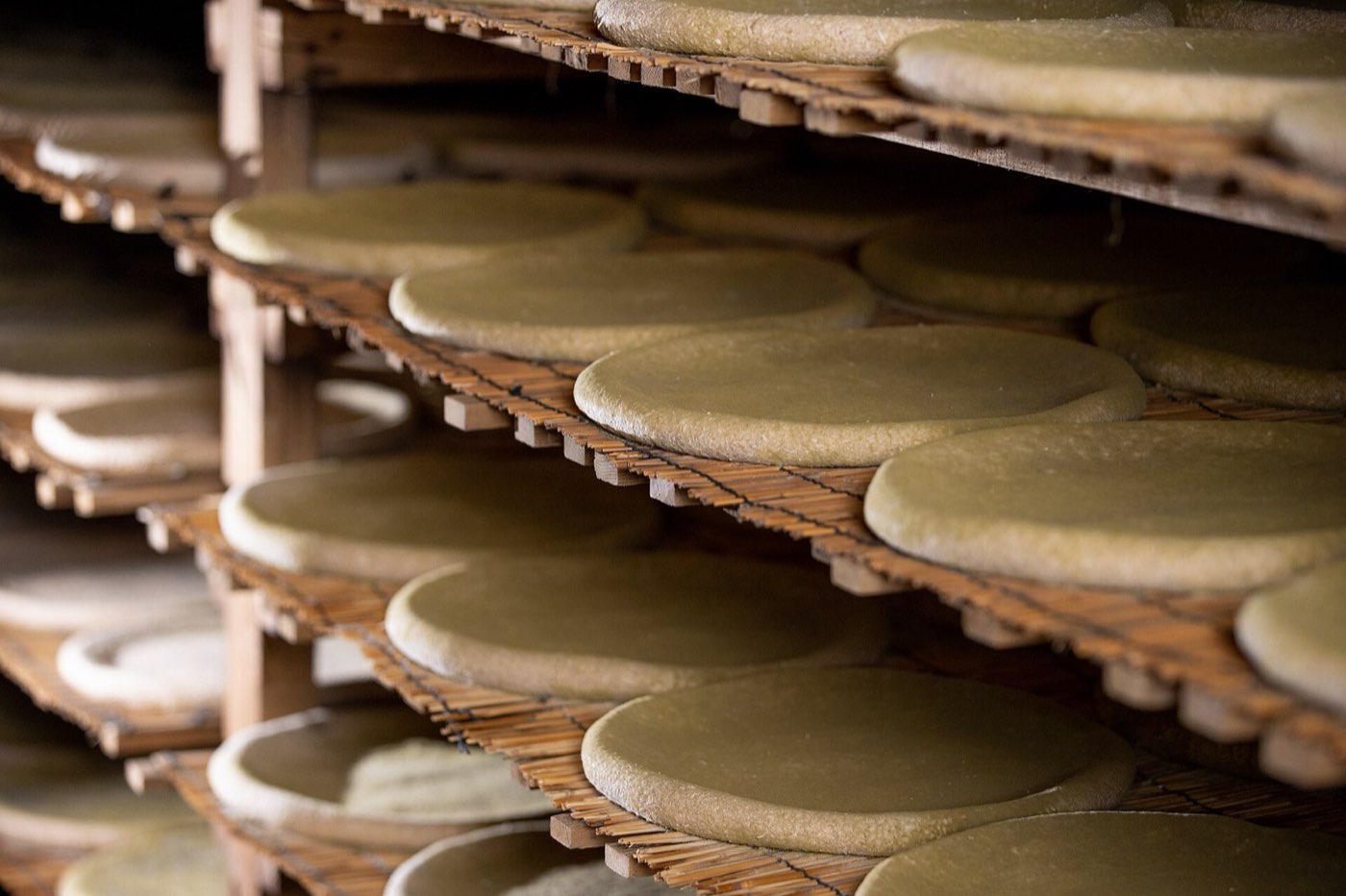
The Korean word for alcohol, sul (술), covers everything from beer to whisky, but the traditional drinks share one ingredient: nuruk (누룩). Nuruk is a dried cake, usually of coarsely milled wheat, on which molds and wild yeasts have grown. Korea's Liquor Tax Act defines this family of starters, guk (국, 麴), as starchy material on which molds have been cultivated. The molds release enzymes that turn grain starch into sugar while the yeasts turn that sugar into alcohol, both in the same vessel at the same time.
A basic brew is steamed rice, nuruk and water, left to ferment for days or weeks. Because nuruk carries a mixed, local population of microbes, it gives Korean rice wines their tang and earthy depth, and two brewers using the same rice can produce very different results. Many modern producers add cultured yeast for consistency, which is why labels that make a point of 전통 누룩 (jeontong nuruk, traditional nuruk) are telling you something about the brewer's approach.
From one fermented mash come three families of drink, and their names describe what happens next. Leave the mash unfiltered and cloudy, and you have takju (탁주, 'cloudy liquor'), of which makgeolli is the everyday form. Let the solids settle and draw off or filter the clear liquid, and you have yakju (약주) or cheongju (청주). Distill it, and you have soju (소주). The Liquor Tax Act still sorts Korean drinks along exactly these lines.
Takju, yakju, cheongju and soju, side by side
The legal definitions are sharper than most bar menus. In the Liquor Tax Act's annex, takju is made from starchy grain, a mold starter and water and finished without filtering, so it stays cloudy; yakju is the filtered equivalent; cheongju is a filtered rice wine whose grain must be rice, glutinous rice included. Soju is distilled and comes in two legally distinct forms: one distilled by a non-continuous, pot-still method from a fermented starch mash, and one made by diluting high-proof ethanol with water. That second form is the green bottle in every convenience store.
One practical note for makgeolli. A label marked 생 (saeng, 'live') means it is unpasteurized and still contains active yeast, so keep it cold, drink it within the date printed, and open it slowly because it can foam over. Pasteurized makgeolli, 살균 (salgyun), is shelf-stable and flatter. Gently tip the bottle to mix the sediment before pouring; shaking a live bottle hard is the classic first-timer's mistake.
| Drink | Korean | How it is made | What to expect |
|---|---|---|---|
| Makgeolli (takju) | 막걸리 / 탁주 | Fermented grain mash, left unfiltered | Milky, lightly sour, often fizzy; mix gently before pouring |
| Yakju | 약주 | The same kind of mash, filtered | Clear and golden, smoother; served chilled in small cups |
| Cheongju | 청주 | Filtered rice wine made only from rice | Clean and delicate |
| Distilled soju | 증류식 소주 | Pot-distilled from a fermented mash | Strong and aromatic; sip it, don't shoot it |
| Diluted soju | 희석식 소주 | High-proof ethanol diluted with water and sweetened | Neutral and smooth; the everyday green bottle |
Why the green bottle tastes the way it does
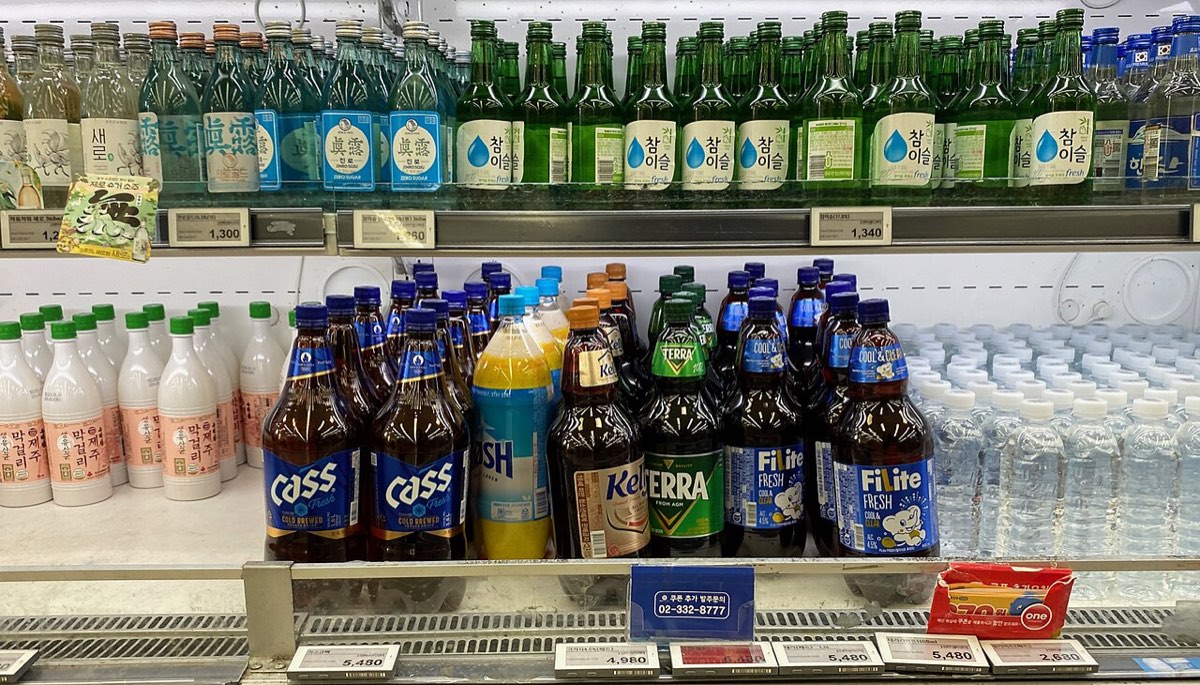
Most of the soju Koreans drink is the diluted kind, and the reason is twentieth-century policy. The National Archives of Korea explains that after the 1965 Grain Management Act banned making liquor from pure grain, distilled soju with its traditional flavor all but disappeared, and producers switched to ethanol from sweet potato or molasses, diluted with water and sweeteners. Makgeolli suffered as well: brewers turned to imported wheat flour, and some added carbide to hurry fermentation, which did lasting damage to its reputation.
The archives also explain why every region seems to have its own soju. In 1976 the government consolidated 254 soju makers into ten diluted-soju producers, one per province, and protected each in its home market. That rule was abolished in 1996, but regional loyalties outlived it, so ask for the local soju outside Seoul and you will usually be handed a provincial brand. Distilled soju, with Andong soju from North Gyeongsang Province as its best-known example, is the version worth seeking out: sip it neat or over ice to taste the grain.
Makgeolli's comeback, and what 'traditional' means on a label
Rice makgeolli returned in the early 1990s, when large harvests produced a rice surplus, according to the National Archives, though it took until the late 2000s for the drink to become fashionable again; the archives note it topped the Samsung Economic Research Institute's list of hit products for 2009. In June 2021 the Cultural Heritage Administration designated makgeolli-making (막걸리 빚기) a National Intangible Cultural Heritage, honoring the shared practice of brewing and drinking it rather than any single master brewer.
The heritage administrator's column on the designation, published in the Korea JoongAng Daily, shows where the drink sits in Korean life. An old saying held that farmhands favored farms that served good makgeolli at their breaks; it is still poured at ceremonies for new buildings, new cars and restaurant openings; and it remains the natural partner for kimchi, bindaetteok and hongeo samhap, fermented skate with pork and kimchi. Households once brewed it at home the way they made kimchi and soybean paste.
'Traditional liquor', jeontongju (전통주), is a legal category and narrower than you might expect. Under the Liquor Tax Act it covers drinks made by holders of a national or provincial intangible heritage title for liquor, by designated Korean Food Masters, or by farm and fishery businesses making regional specialty liquors from local produce with a provincial recommendation. A mass-market makgeolli can be traditional in style without qualifying. When shopping, the brewery's region and the origin of its rice tell you more than the word 'traditional'.
Regional bottles worth seeking out
Regional liquors are where Korean drinking culture gets interesting. Andong soju (안동소주), from Andong in North Gyeongsang Province, is the archetype of distilled soju, and the National Archives uses it as the representative example of the pot-still style. Munbaeju (문배주) is a distilled spirit that smells of wild pear although no pear goes into it; KOCIS's English guide to Korean drinks describes a mixed-grain recipe with millet in the starter and sorghum in the main mash.
Hansan sogokju (한산소곡주), from Hansan in South Chungcheong Province, is a glutinous-rice liquor fermented at low temperature for about 100 days, according to Korea.net. Its nickname, anjeunbaengi-sul (앉은뱅이술), roughly 'the drink that keeps you sitting', comes from stories of drinkers who found they could not stand up; Korea.net lists the standard version at 18 percent alcohol and a stronger version, bulsogokju, at 43. Gamhongno (감홍로), an herbal distilled spirit whose name means 'sweet red dew', is described by KOCIS as one of the three famous liquors of the Joseon era.
You don't need to travel to try them. Department-store food halls, specialist bottle shops and many Seoul restaurants stock regional liquors, and a tasting is the fastest way to discover whether you lean toward sweet, sour, dry or smoky. Our suggestion: start with a good live makgeolli and a clear yakju to taste the same kind of mash two ways, then try one distilled soju neat. That trio teaches more than a week of green bottles.
The pour: how Koreans share a bottle
Korean drinking etiquette grew out of Confucian manners codified in the Joseon era, and Korea.net's series on alcohol traces it to the Sohak (소학), the 'Lesser Learning' primer. The core rule survives intact: you pour for others, not for yourself, and someone will notice when your glass is empty. Tradition also says a cup should be emptied before it is passed back or refilled, and the person pouring watches the glasses around the table rather than their own. A friend who fills your glass will expect you to return the favor when theirs runs dry.
With elders, the gestures matter. Pour with your right hand on the bottle while your left hand supports it or touches your right forearm, a gesture Korea.net traces to holding back a long sleeve so it would not trail over the food, and receive a pour with your glass held in both hands. When you drink in front of someone older, turn your head slightly aside and shield the glass with a hand. Korea.net's etiquette material lists these moves, and its alcohol series adds that one hand is acceptable between companions within about five years of age.
The first round is usually a group toast, geonbae (건배, 'dry cup'). After that, pace is personal. If you don't drink, accept the first pour, touch glasses, then sip or don't and set the glass down; Korea.net describes much the same for non-drinkers, and a full glass signals that you are fine. Visitors get latitude, but these gestures land well with older Koreans and in business settings. Nobody should pressure you, and 술을 못 마셔요 (sureul mot masyeoyo, 'I can't drink') is a complete answer.
Pajeon on rainy days, and other pairings
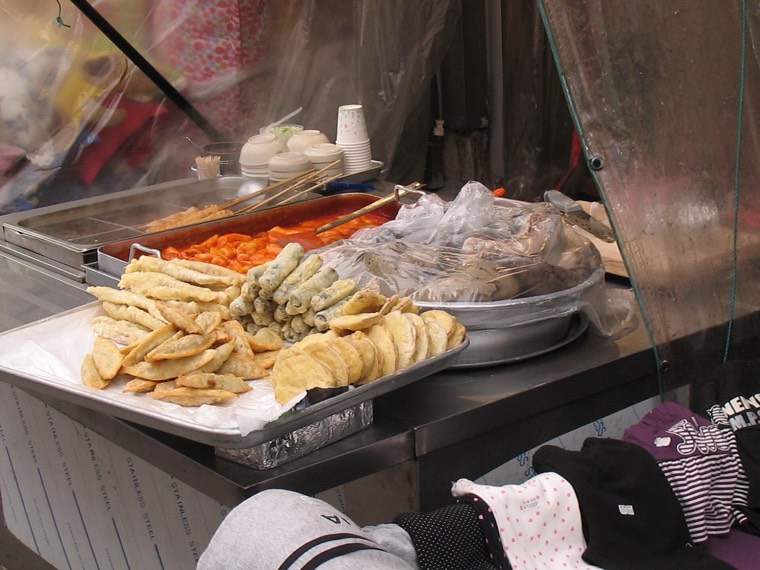
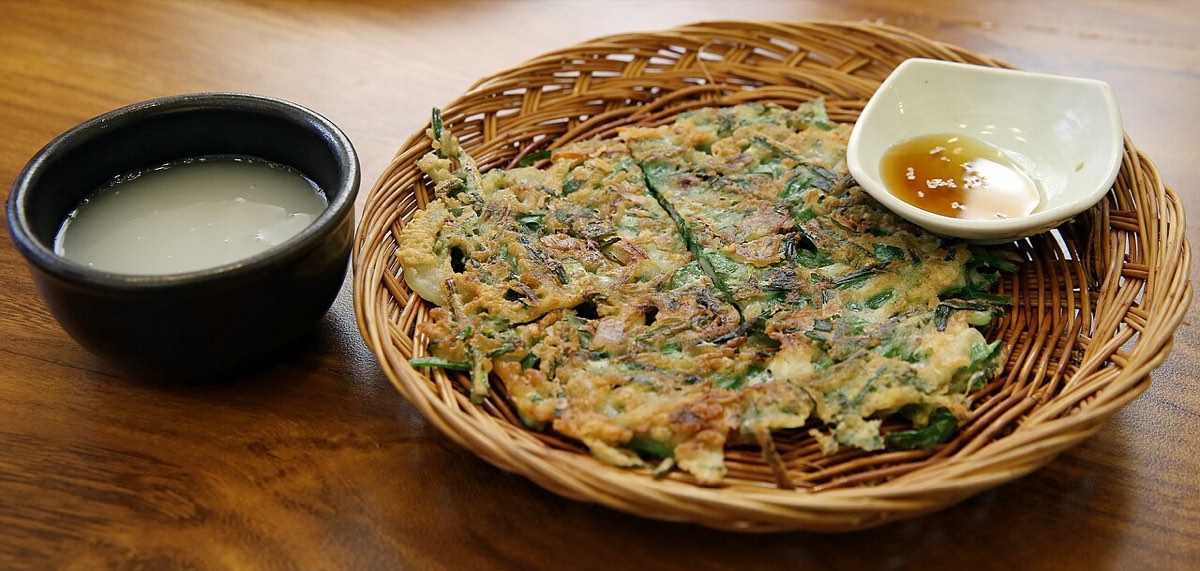
Koreans rarely drink without food, called anju (안주). The pairing every Korean knows is makgeolli with jeon (전), savory pan-fried pancakes, especially pajeon (파전, scallion pancake) and bindaetteok. On a wet day many Koreans crave exactly that combination. The popular explanations range from the hiss of batter in hot oil sounding like rain to rainy days once being rest days for farmers. Neither can be proven, but the habit is real: ask a Korean friend what to eat on a rainy evening and jeon with makgeolli is the likely answer.
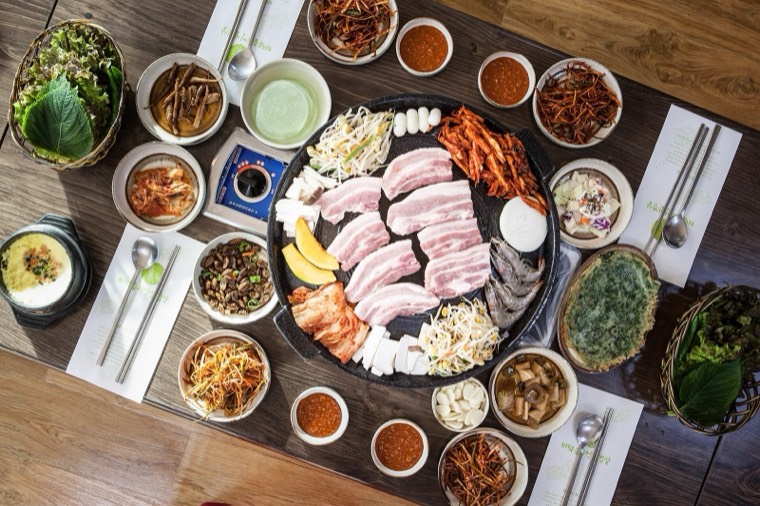
Soju suits strong, salty or fatty food: grilled pork belly, stews, spicy stir-fries and soups. Clear yakju and cheongju suit lighter dishes such as jeon, steamed fish or raw fish, while a distilled soju stands up to grilled beef. The venues follow the drinks. Jeon houses (전집, jeonjip) and folk taverns (민속주점, minsok jujeom) are where makgeolli lives; barbecue restaurants and tent bars (포장마차, pojangmacha) are soju territory. In Naver Map, search 막걸리 or 전집 plus a neighborhood name to find them.
Where to learn: The Sool Gallery in Bukchon
The best single stop for an introduction is The Sool Gallery (전통주갤러리, Jeontongju Gallery), a showroom and tasting room set up by the Ministry of Agriculture, Food and Rural Affairs and the Korea Agro-Fisheries & Food Trade Corporation (aT). Its official site places it on the first floor of Ieum, the Korean food culture space (한식문화공간 이음), at 18 Bukchon-ro, Jongno-gu, open 10:00–19:00 and closed on Mondays, New Year's Day, Seollal and Chuseok. Search 전통주갤러리 in Naver Map.
The gallery picks a themed 'liquor of the month' lineup and runs tasting programs, including sessions for foreign visitors in English, Japanese and Chinese, according to its site. A March 2025 government article described free tastings on the hour from noon to 6 p.m., Tuesday to Sunday, with the 3 p.m. and 4 p.m. sessions reserved for foreign visitors in English and about ten places per session, most booked through Naver Reservation. Treat that as a guide and confirm the current schedule when you book through Naver Reservation, by phone (02-555-2283) or by email (soolgallery2@gmail.com).
The gallery is a short walk from Anguk Station, Exit 2, on Line 3, which makes it easy to pair with Bukchon or Insadong. Make the tasting your afternoon anchor, then walk to a jeon house for dinner and order what you liked. If you prefer to read first, KOCIS publishes a free English guide, Hidden Charms of Korea: SOOL, on Korea.net, covering traditional drinks, soju and food pairings.
Legal age, strength and getting home
Korea's drinking age is set by calendar year, not by birthday. The Youth Protection Act defines a youth as someone under 19 but excludes anyone who has reached January 1 of the year they turn 19. In 2026 that means anyone born in 2007 or earlier can legally buy and drink alcohol, whatever their birthday. Bars, clubs and convenience stores can ask for identification and refuse a sale without it, so carry your passport if you look young.
Strength sneaks up on visitors. Diluted soju tastes mild but is far stronger than beer, the small glasses empty fast in a rhythm of toasts, and fizzy makgeolli goes down easily too. Eat as you drink, alternate with water, and decide your limit before the second round, 2차 (icha), when groups move on to another bar. The morning after has its own vocabulary: haejang (해장) means easing a hangover, and haejangguk (해장국) is the soup Koreans eat to do it.
Plan the ride home before you order the last bottle. The subway does not run through the night, so check your station's last train in Naver Map or Kakao Map before the second round. After that, Seoul's late-night N buses cover major routes, and taxis add a night surcharge: Seoul's official fare page lists 20 percent from 10 to 11 p.m. and from 2 to 4 a.m., and 40 percent from 11 p.m. to 2 a.m. Never drive after drinking.
A short checklist before a night out keeps the evening easy and the journey home predictable. None of it is specific to visitors; Korean office workers heading out for a team dinner run through much the same list, usually while checking the last train.
- Carry your passport if there is any chance you will be asked your age.
- Check the last subway time from the bar to your hotel before the second round.
- Order food with every round; Korean drinking is meant to come with anju.
- Alternate soju or makgeolli with water.
- Keep a taxi app or cash ready for the night-surcharge fare home.
Questions visitors ask
Is makgeolli the same as Japanese sake?
No. Both are rice-based, but makgeolli is unfiltered and cloudy, usually lower in alcohol and often fizzy, and it is traditionally fermented with nuruk, a wheat-based starter carrying wild yeasts and molds. Korea's clear, filtered rice wines, yakju and cheongju, are the closer comparison to sake.
I turn 19 in December 2026. Can I drink in Korea now?
Yes. The Youth Protection Act excludes anyone who has reached January 1 of the year they turn 19, so in 2026 anyone born in 2007 or earlier can legally buy and drink alcohol regardless of birthday. Carry your passport, since staff may ask for proof of age.
Do I really have to turn away when I drink?
Only in front of someone noticeably older, and mainly in formal or family settings. Turning your head slightly and shielding the glass is a sign of respect. Among friends of similar age it is not expected, and visitors who forget will be forgiven, but the gesture is noticed and appreciated.
How can I tell if a makgeolli is unpasteurized?
Look for 생 (saeng) or 생막걸리 on the label, usually with a short shelf life and a refrigeration note. Unpasteurized makgeolli keeps fermenting in the bottle, so it tastes livelier and can foam when opened. Pasteurized bottles are marked 살균 (salgyun) and last longer at room temperature.
Is green-bottle soju a traditional Korean liquor?
Not in the historical sense. It is diluted soju, ethanol cut with water and sweeteners, which became dominant after the 1965 grain rules pushed out grain-distilled soju. Traditional soju is pot-distilled from a fermented mash, as in Andong soju. Legally, 'jeontongju' is a narrower category still.
Sources and method
Written for: Adult visitors who want to understand and enjoy Korean alcohol, from convenience-store soju to regional rice wines, and handle a Korean drinking table gracefully.
Method: Researched from the official sources listed below, checked on October 20, 2026. Hours, fees and booking rules can change; the linked official pages are the final word. Spotted something out of date? Tell us.
- Korean Law Information Center (law.go.kr) — Youth Protection Act (청소년 보호법), Article 2Definition of youth: under 19, excluding those who have reached January 1 of the year they turn 19 (current text, checked via the official law service).
- Korean Law Information Center (law.go.kr) — Liquor Tax Act (주세법), Articles 2 and 5 and AnnexDefinitions of guk (mold starter), takju, yakju, cheongju, pot-distilled and diluted soju, and the legal definition of jeontongju.
- National Archives of Korea — Soju and makgeolli (기록으로 보는 소주와 막걸리)1965 Grain Management Act and the shift to diluted soju, carbide-era makgeolli, rice makgeolli's early-1990s return and 2009 revival, 1976 one-per-province consolidation and 1996 abolition, Andong soju as representative distilled soju.
- Korea JoongAng Daily — Makgeolli-making recognized as a Korean cultural heritage (June 16, 2021)Column by Cultural Heritage Administration head Kim Hyun-mo on the June 15, 2021 designation: makgeolli's role at farm breaks, ceremonies for buildings, cars and restaurant openings, pairings with kimchi, bindaetteok and hongeo samhap, and home brewing. Designation date also on the Korea Heritage Service register (막걸리 빚기, 지정일 2021.06.15).
- Korea.net — Alcohol in Korean Life [8]Confucian and Sohak roots of drinking etiquette, two-hand pouring and receiving, turning away, one hand among near-peers, emptying before refilling, guidance for non-drinkers.
- Korea.net — Hansan Sogokju, 'The sit-down drink'Glutinous rice, about 100 days of low-temperature fermentation, 18% standard and 43% distilled versions, the anjeunbaengi-sul nickname.
- Korea.net — KOCIS releases English-language guide on Korean alcoholic drinks (Feb. 13, 2023)Hidden Charms of Korea: SOOL guide; munbaeju grains; gamhongno as one of Joseon's three famous liquors.
- The Sool Gallery (MAFRA and aT) — ReservationLocation at Ieum 1F, 18 Bukchon-ro; hours 10:00–19:00; closed Mondays, New Year's Day, Seollal and Chuseok; Naver Reservation, phone 02-555-2283 and email. Foreign-language programs (English/Japanese/Chinese) and the monthly tasting theme are on the gallery's Introduction page: https://thesool.com/eng/contents/M000000137/view.do
- Korea.kr (Ministry of Culture, Sports and Tourism policy news) — The Sool Gallery (Mar. 4, 2025)Free hourly tastings 12:00–18:00 Tuesday–Sunday, 3 p.m. and 4 p.m. English sessions for foreign visitors, about 10 places per session, Anguk Station Exit 2.
- Seoul Metropolitan Government Transportation — Seoul taxi fares (서울 택시요금)Medium taxi night surcharge 22:00–04:00: 20% (22–23h, 02–04h) and 40% (23–02h); page updated Oct. 14, 2026.