In shortKorean etiquette rests on a few habits: polite speech with strangers, a small bow, two hands when giving or receiving, shoes off where the floor steps up, and quiet on public transport. Leave priority and pink seats free, do not tip, and treat questions about your age as a way of placing you, not prying. Visitors get generous allowance for nearly everything else.
Key facts
- Polite ending to learn
- -yo (-요), e.g. 괜찮아요 (gwaenchanayo, it's fine)
- Official age counting
- International age since June 28, 2023
- Shoes
- Off before entering homes and raised floors
- Subway seats
- Priority seats at car ends; pink seats for pregnant passengers
- Temple halls
- Side doors; shoes off, toes pointing out
- Bukchon red zone
- Tourist visits 10:00–17:00 only
- Help in English
- 1330 Korea Travel Helpline (+82-2-1330 from abroad)
Checked Oct 20, 2026 against the official sources listed at the end of this guide.
Why age comes up in the first five minutes
Visitors are often startled by how quickly a new Korean acquaintance asks their age, or the year they were born. The question is practical, not nosy. Korean grammar and social life are organized around relative seniority: it decides which speech level people use with each other, who pours the drinks, who pays, and which kinship word fits. Until two people know where they stand, they cannot settle on how to talk. Asking age is the shortcut.
The arithmetic used to be confusing even for Koreans. The traditional system counted a newborn as one year old and added a year every January 1, so people were often a year or two older than their international age. Since June 28, 2023, revised civil and administrative law has made international age the standard for official and legal purposes. A few matters still go by birth year, including school entry and the minimum age for buying alcohol and tobacco. In conversation, many people simply give their birth year, which sidesteps the problem entirely.
So answer with your birth year or your age, and expect a small reaction. A Korean friend a few years older may jokingly become your unni, oppa, noona or hyung, the words for older sister or brother, chosen according to the speaker's own gender. Colleagues use seonbae for seniors and hubae for juniors. As a visitor you are not expected to slot yourself into any of this; being asked is simply a sign that someone wants to choose the right words for you.
One speech rule that covers almost everything
Korean has several speech levels, but a visitor needs only one: the polite ending -yo (-요), plus the more formal -mnida (-ㅂ니다) found in set phrases like 감사합니다. Use polite forms with everyone you do not know well, including people younger than you, shop staff and taxi drivers. Casual speech (banmal) between strangers comes across as rude, however often drama characters use it. Koreans move to banmal only after they become close, and usually after one of them suggests it.
A short phrase set goes a long way, and the table below covers the moments that come up every day. Note how to call restaurant staff: raising a hand and saying 저기요 (jeogiyo, roughly 'excuse me, over here') is normal, not rude, and many restaurants have a call button on the table. Calling out across the room suits a busy barbecue restaurant; in a quiet café, catch someone's eye or walk to the counter instead.
Names follow the same respectful logic. Outside close friendships, Koreans rarely address each other by given name alone; titles and family words do that work. With a guide, host or colleague, use the person's name plus -ssi (씨), or their title, such as seonsaengnim (teacher), unless they invite something more casual. Calling someone older by a bare given name is an easy slip to avoid, and avoiding it signals that you have made an effort.
| Situation | Korean | Romanization | When to use it |
|---|---|---|---|
| Hello (any time of day) | 안녕하세요 | annyeonghaseyo | Greeting anyone |
| Thank you | 감사합니다 | gamsahamnida | Staff, drivers, strangers |
| I'm sorry / excuse me | 죄송합니다 | joesonghamnida | Bumping into someone, interrupting |
| Excuse me (to call staff) | 저기요 | jeogiyo | Restaurants and counters |
| It's okay / no, thank you | 괜찮아요 | gwaenchanayo | Declining an offer politely |
| This one, please | 이거 주세요 | igeo juseyo | Ordering while pointing |
Bows, both hands and the reasoning behind them
The everyday bow is small: a nod with a slight bend from the waist when you greet someone, thank them or apologize. Deep bows belong to ceremonies, such as the formal New Year bow to parents and grandparents. Korean men often combine a handshake with a slight bow and support the right forearm with the left hand. Mirroring that is gracious, but a visitor who simply nods and smiles is doing fine.
The habit you will notice most is the use of two hands. Koreans give and receive objects, from a business card to a credit card to a glass, with both hands, or with the right hand while the left touches the right wrist or forearm. The meaning is easy to read: the exchange has your full attention, and so does the person in front of you. It matters most with older people, teachers, hosts and anyone senior, and it costs nothing to do with everyone.
The same logic shapes drinking, which deserves its own guide. When someone older pours for you, hold your glass with both hands; when you drink in front of a senior, turning slightly away is a traditional courtesy, though friends of the same age relax it. Pouring for others rather than yourself is the norm, and an empty glass is an invitation for someone to fill it. Our table manners guide covers the rest, from chopsticks to who starts eating first.
Where the floor is furniture: shoes off
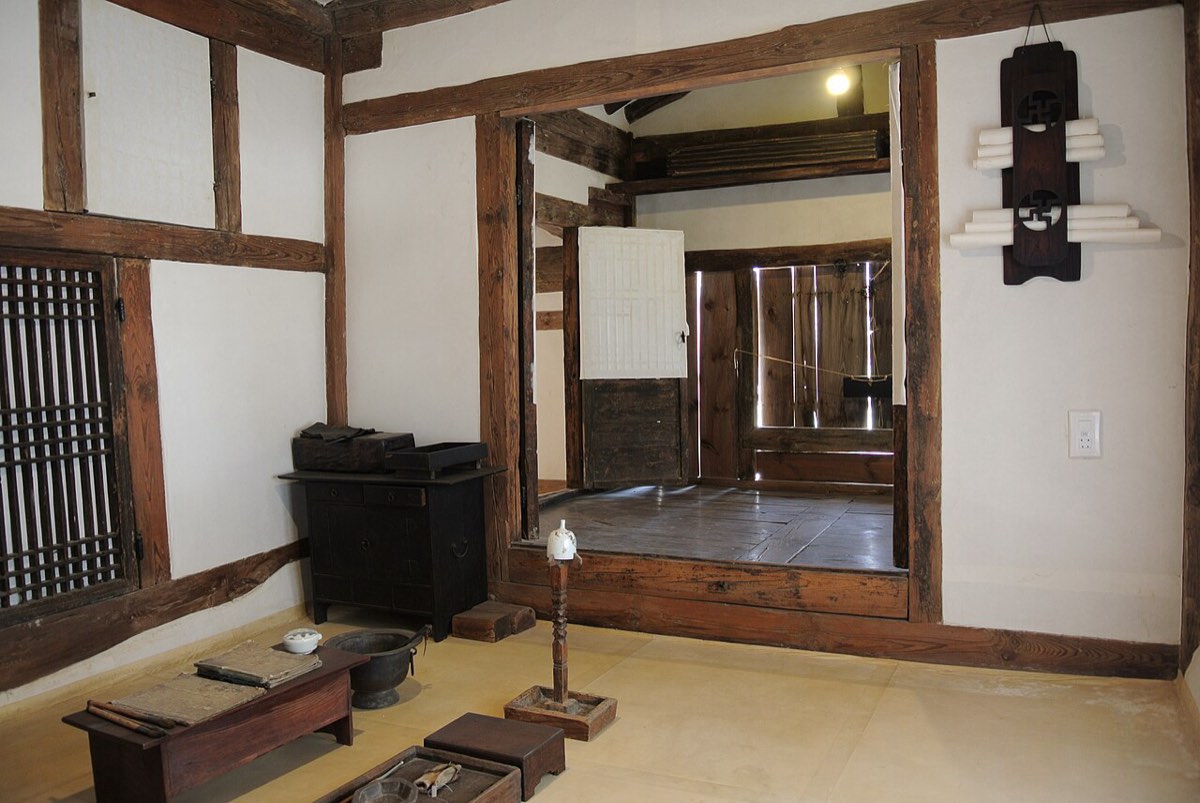
Traditional Korean houses were heated from below by ondol, a system of flues running under the floor, so the floor was where people sat, ate and slept. Shoes stay out because the floor is, in effect, furniture. VisitKorea's own advice to visitors is short: there is no strict dress etiquette in Korea, but you will often need to take your shoes off before entering a house.
Learn to read the threshold. A raised step, a row of shoes or a shelf of slippers means shoes off. That applies in homes, in guesthouses with floor rooms, in temple halls, in some traditional restaurants with floor seating, and occasionally in small clinics and offices. Step from your shoe straight onto the raised floor rather than standing on the lower entry area in your socks. At temples, turn your shoes to face outward so you can slip back into them easily. Socks are expected; bare feet in someone's home or a temple hall feel a little too casual.
In homes you may be handed indoor slippers, and a separate pair for the bathroom, which often has a wet tiled floor. Swap back on the way out rather than wandering into the living room in bathroom slippers. When you sit on the floor, cross-legged is fine for everyone; avoid stretching your legs straight out toward people across a low table, and tuck your feet to the side if you need to shift position.
On the subway: seats that are not yours, and a quiet car
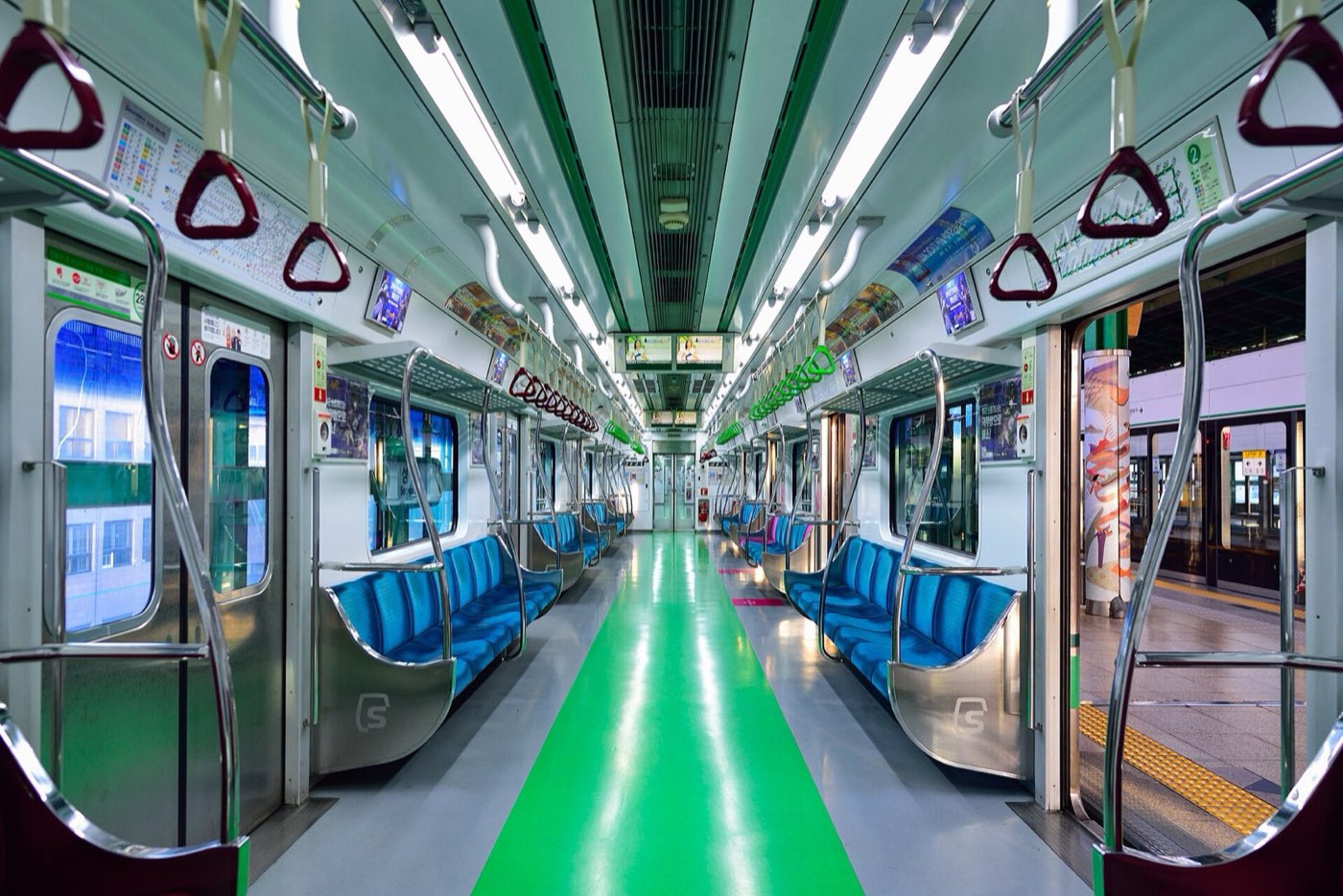
Each Seoul subway car has priority seats at its ends, marked for older people, disabled passengers, pregnant women and people with small children. Many Koreans leave them empty even when the train is packed, and a healthy young traveler sitting there will draw looks. Treat them as unavailable. If you do sit in one on an empty train, be ready to stand the moment someone who needs it boards.
The pink seats in the middle of the car are for pregnant passengers. Seoul gave these seats bright pink backs in 2015, two per car, starting on Lines 2 and 5, with a line of text calling the seat a place for 'a future protagonist', because the earlier small emblem disappeared from view whenever someone sat down. Early pregnancy is invisible, so the convention is to leave the pink seat free rather than wait to see who needs it.
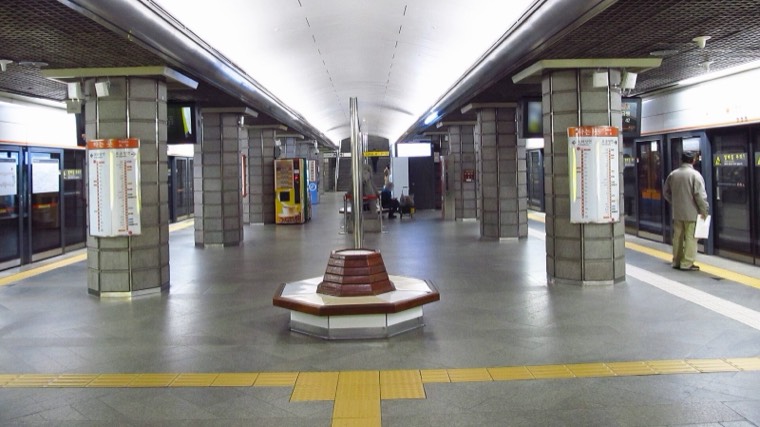
Seoul trains are quiet. Calls are brief and low, video and music go through headphones, and loud group conversation earns frowns. In a crowd, wear your backpack on your front or put it on the overhead rack. On the platform, stand at the marked door positions and let people off before you board. Eating on the train is widely regarded as bad manners, and strong-smelling food doubly so; finish your snack before the gates.
Paying, tipping and who picks up the bill
Tipping is not part of everyday Korean service. The price on the menu or the taxi meter is what you pay, and leaving coins or notes on the table is more likely to confuse staff than to please them. A smile and 감사합니다 are the thanks expected. In most restaurants you pay at the counter on the way out, carrying the bill with you, rather than handing a card to a server at the table.
Who pays follows the same seniority logic as speech. Traditionally the oldest or most senior person, or whoever issued the invitation, covers the meal, and the others reciprocate later by paying for coffee, the next round or the next dinner. Among younger Koreans and friends of similar age, splitting the bill is common and unremarkable. As a guest, offer to pay; if your host insists, accept graciously and return the favor another time rather than wrestling over the bill at the counter.
Small exchanges follow the two-hands rule: pass cards and cash with both hands or with your left hand supporting your right, and receive change and receipts the same way. Cards are accepted almost everywhere, even for small purchases, so you rarely need to count out coins while a queue waits behind you.
Gifts, numbers and the personal questions you will be asked
If you are invited to a Korean home, bring something: a box of fruit, good cookies or pastries, a bottle, or a specialty from your own country. Present it with both hands. Your host may set it aside to open later rather than unwrapping it in front of you, which is courtesy, not indifference. Avoid giving things in sets of four, since the Sino-Korean word for four sounds like the word for death, the same reason some elevators label the fourth floor 'F'. Do not write a living person's name in red ink, a color traditionally associated with the names of the dead.
Expect personal questions that would be unusual at home: are you married, what do you do for work, sometimes a frank comment on your weight or how tired you look. Most of this is the same placing instinct as asking age, and some of it is how care is expressed, through attention to someone's health and appearance. Answer briefly, then redirect with a question of your own. Laughing it off works far better than visible offense, which will puzzle the person who asked.
The topics to handle carefully are the ones that are sensitive anywhere. Politics, North Korea and the country's twentieth-century history carry strong feelings, and strangers may not share your view of them. Let your Korean companion lead those conversations, listen more than you argue, and keep jokes about them out of public places.
What you can stop worrying about, and the short list that matters
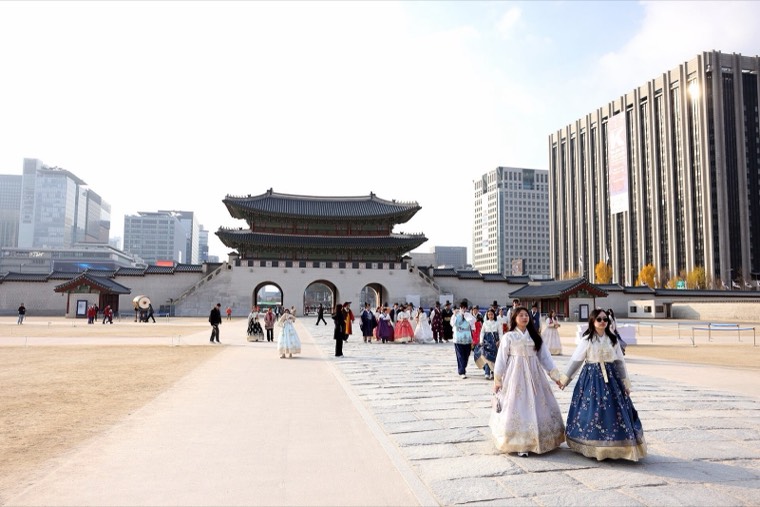
Visitors tend to overprepare. Koreans do not expect foreigners to master speech levels, the full choreography of drinking with elders or the depth of a ceremonial bow, and most are delighted by any attempt. Eye contact is normal; you do not need to lower your gaze. Asking for a fork is fine, and nobody minds clumsy chopsticks. Wearing hanbok as a foreigner is welcomed rather than resented; the royal palaces even waive admission for visitors who wear it.
The handful of things that genuinely matter are about other people's space and peace. Keep your voice down on public transport and in residential neighborhoods, leave priority seats free, queue, take shoes off where floors are raised, and treat working temples as places of worship. Residential areas popular with tourists now enforce this formally: in Bukchon's most crowded lanes, tourist visits are limited to 10:00–17:00, with fines for sightseeing outside those hours. And never stand chopsticks upright in a bowl of rice, which echoes the offerings made at ancestral rites.
When unsure, watch what the people around you do and copy it; that instinct covers most situations in Korea. If something goes wrong, from a lost item to a dispute with a taxi, the 1330 Korea Travel Helpline offers phone and chat support for tourists in several languages, on 1330 inside Korea or +82-2-1330 from abroad.
- Polite -yo speech with anyone you do not know well
- A small bow; two hands when giving or receiving
- Shoes off wherever the floor steps up
- Priority and pink subway seats left free
- Quiet on trains and in residential lanes
- No tipping; pay at the counter
- Chopsticks never upright in rice
Would you pass as a polite visitor in Seoul?
Seven everyday situations, from a stranger asking your age to an empty seat on a crowded train.
-
Five minutes after meeting you, a new Korean acquaintance asks how old you are. What's the best response?
Show the answer
Give your age or birth year, which helps them choose how to address you. Relative age decides the speech level, who pours and pays, and which kinship word fits, so asking is a shortcut, not prying. Many Koreans simply give their birth year.
-
You need help from a shop clerk who looks younger than you. How should you speak in Korean?
Show the answer
Use the polite -yo ending, as with anyone you don't know well. Polite forms are for everyone you don't know well, including younger people, shop staff and taxi drivers. Casual speech between strangers comes across as rude, and Koreans switch to it only once they become close.
-
Your guesthouse host, who is older than you, hands you the room key. How do you take it?
Show the answer
With both hands, or your right hand with your left touching your right wrist. Giving and receiving with two hands shows the exchange has your full attention, and it matters most with older people and hosts. A small bow is plenty, since deep bows belong to ceremonies.
-
Just inside the guesthouse door there's a raised wooden step and a shelf of slippers. What do you do?
Show the answer
Take your shoes off and step straight from them onto the raised floor. A raised step, a row of shoes or a shelf of slippers means shoes off, because with ondol floor heating the floor was where people sat, ate and slept. Step from your shoe straight onto the raised floor instead of standing on the entry area in socks.
-
The subway is crowded, and a pink seat in the middle of the car is empty. Nobody nearby looks pregnant. What do you do?
Show the answer
Leave it empty and keep standing. Pink seats are for pregnant passengers, and because early pregnancy is invisible, the convention is to leave them free rather than wait to see who needs one. Standing beside an empty pink seat is completely normal in Seoul.
-
Your taxi driver was friendly and helped with your bags. How do you thank them?
Show the answer
Pay the meter fare and say 감사합니다 (gamsahamnida). Tipping isn't customary in Korean taxis, restaurants, cafés or salons, and the meter price is what you pay. A smile and a sincere 'gamsahamnida' are the thanks people expect.
-
You're invited to dinner at a Korean home. Which gift works best?
Show the answer
A box of fruit or good pastries, handed over with both hands. Fruit, pastries, a bottle or a specialty from home all work, presented with both hands. Avoid sets of four, since the word for four sounds like the word for death, and never write a living person's name in red.
Questions visitors ask
Should I bow or shake hands when I meet someone in Korea?
Either works, and many Koreans do both: a handshake with a slight bow, the left hand lightly supporting the right forearm. With older people, a small bow first is the safer choice. Visitors are not expected to bow deeply; a nod with a slight bend from the waist is enough.
Is it rude to talk on the phone on the Seoul subway?
A short, quiet call is tolerated, but long or loud calls are frowned upon, as are videos or music without headphones. If a call will take a while, keep it brief and say you will call back. Most riders stay silent or text.
Do I need to tip in Korea?
No. Tipping is not customary in restaurants, taxis, cafés or salons, and the listed price is what you pay. Leaving money on the table may simply confuse staff. A sincere 감사합니다 (gamsahamnida, thank you) is the expected way to show appreciation.
Can I sit in the pink seat if no one pregnant is on board?
The convention is to leave it empty. Early pregnancy is not visible, and Seoul designed the pink seat backs precisely so the seat stays noticeable and free. Standing beside an empty pink seat is completely normal in Seoul.
What should I say when someone asks how old I am?
Give your birth year or your age and expect a friendly reaction. The question helps the other person choose the right level of politeness and the right word to call you. Since 2023, official documents use international age, but many people still answer with their birth year.
Sources and method
Written for: Independent travelers who want to behave considerately in Korea without memorizing a rulebook, and who want to understand the reasoning behind the customs they notice.
Method: Researched from the official sources listed below, checked on October 20, 2026. Hours, fees and booking rules can change; the linked official pages are the final word. Spotted something out of date? Tell us.
- The Korea Times — Korea's age system to change from WednesdayInternational age made standard for official purposes from June 28, 2023; exceptions for school entry, alcohol and tobacco, and conscription.
- Seoul Metropolitan Government — Seoul subway to apply new seat design for pregnant womenPink seat backs for pregnant passengers from 2015, two per car on Lines 2 and 5 first, 'seat for a future protagonist' text, reason for the redesign.
- VisitKorea — Climate & Seasons (Tip: basic Korean dress etiquette)No strict dress etiquette, but shoes often come off before entering a house; palaces give free admission to visitors in hanbok. Page updated September 18, 2026.
- Korea.net — Temple stay: a trip for inner healingTemple etiquette: side doors to the main hall, shoes placed facing outward, passing behind people at prayer, quiet behavior.
- Seoul Metropolitan Government — Bukchon special management area noticeBukchon red zone: tourist visits limited to 10:00–17:00, 100,000 won fine, enforcement from March 1, 2025.
- Royal Palaces and Tombs Center — Free Admission Guidelines for Hanbok WearersFree palace admission for visitors wearing hanbok, supporting the point that foreign visitors in hanbok are welcomed.
- VisitKorea — 1330 Travel Helpline & Complaint Center1330 Korea Travel Helpline phone and chat service; 1330 in Korea, +82-2-1330 from overseas.
- Visit Seoul (Seoul Tourism Organization) — The Basics of Korean EtiquetteOfficial etiquette basics: shoes off at residences, temples and guesthouses; short bow with handshake; both hands when giving and receiving; tipping not customary; no utensils upright in rice.
- Seoul Metropolitan Government (traffic news) — Pregnant-passenger seats on Seoul subway Lines 1–8Priority (교통약자) seats at both ends of each car; seven courtesy seats in the middle, with the two end seats of that row reserved for pregnant passengers; 19 seats per car in total.