In shortIn Korea, cha (차) means both leaf tea and hot drinks made from fruit, roots, berries or grain, so a teahouse menu mixes green tea (nokcha) with yuja, omija and jujube drinks. Korean tea etiquette, darye, is closer to good manners than to choreography: brew gently, pour for others first, drink slowly. For leaf tea to take home, look for Boseong, Hadong or Jeju origin, the current year's harvest and an early grade such as ujeon or sejak.
Key facts
- Korean terms
- 차 (cha, tea), 녹차 (nokcha, green tea), 다례 (darye, tea etiquette)
- Map search
- 전통찻집 (traditional teahouse) in Naver Map or Kakao MapNaver Map
- Main tea regions
- Boseong, Hadong, Jeju
- Harvest grades
- 우전 ujeon, 세작 sejak, 중작 jungjak, 대작 daejak (earliest to latest)
- Heritage status
- Jeda (traditional tea making) designated National Intangible Heritage, July 14, 2016
- Hands-on option
- Namsangol Hanok Village seasonal programs (2026 season ends late October)
Checked Oct 20, 2026 against the official sources listed at the end of this guide.
Why 'cha' on a Korean menu rarely means just tea
In Korean, cha (차) is a broad word. It covers leaf tea from the tea plant, above all nokcha (녹차, green tea), but also hot drinks made from citron, jujubes, ginger, schisandra berries, roasted barley or herbal blends. A traditional teahouse menu will list nokcha a few lines above yuja-cha and ssanghwa-cha without treating them as different categories. Knowing this is the first step to ordering well, because the name alone does not tell you if the cup holds caffeine, fruit, a medicinal blend or grain.
Both kinds have deep roots and both still matter. Leaf tea carries the older story of Buddhist monasteries, royal rites and scholar-monks, and it is what darye, Korean tea etiquette, is built around. The fruit and herbal drinks are what most Koreans actually reach for at home and in winter, and what traditional teahouses list beside leaf tea. A good first teahouse visit includes one of each, ideally shared so you can taste both.
From seeds on Jirisan to a monk's tea manual
Tea reached the Korean peninsula from China early. Imports are recorded from the reign of Queen Seondeok of Silla in the seventh century, and in 828 King Heungdeok received tea seeds from Tang China and had them planted on Jirisan, the mountain range whose southern slopes, around Hadong, still grow tea.
Under Goryeo (918–1392), tea moved to the center of state and religious life. It was offered at major national ceremonies and to revered monks, a government office called the Tabang (다방) oversaw tea rituals, and tea-producing villages grew up around temples. The jade-green celadon in the National Museum of Korea's Room 303 comes from the same centuries, a reminder that tea culture and ceramic craft grew up side by side.
Under Joseon (1392–1910) tea lost ground. The court kept up its tea rites and temples carried on the practice, but by the late sixteenth century, around the Japanese invasions, tea drinking had faded so far that, according to the Encyclopedia of Korean Culture, even the palace seems to have stopped drinking it properly. A trace survives in the language: the holiday ancestral rite is still called charye (차례), literally 'tea rite', although the National Folk Museum notes that the Chuseok version centered on wine and rice cakes made from the new harvest.
The revival is tied to one man. Choui (초의, 1786–1866), a Seon monk who led his lineage at Daeheungsa in Haenam, built the hermitage Ilji-am on nearby Duryunsan and lived there for many years. He studied Confucian learning and poetry under the scholar Jeong Yak-yong, kept company with the calligrapher Kim Jeong-hui, and wrote Dongdasong (동다송), a verse tribute to Korean tea. Korean tea circles still honor him as the tea monk who joined tea practice to Seon meditation.
Darye: etiquette for guests, not a performance
Darye (다례) translates as 'etiquette for tea' or 'tea rite', and it has meant different things in different settings: court rituals, temple practice and simple hospitality at home. The craft beneath it is recognized too. In 2016 the government designated jeda (제다), traditional tea making, as a National Intangible Heritage, and the Korea Heritage Service illustrates it with leaves being steamed to make tteokcha, a pressed cake tea.
In practice, what you will see is closer to good manners than to fixed choreography. The host warms the pot and cups with hot water, lets boiled water cool before it meets green tea leaves, often in a separate pouring bowl, and pours a little into each cup in turn so every guest gets the same strength. Guests receive the cup with both hands, look at the color, breathe in the aroma and drink in small sips. None of this is secret; it exists to make the tea taste right and to look after the person opposite you.
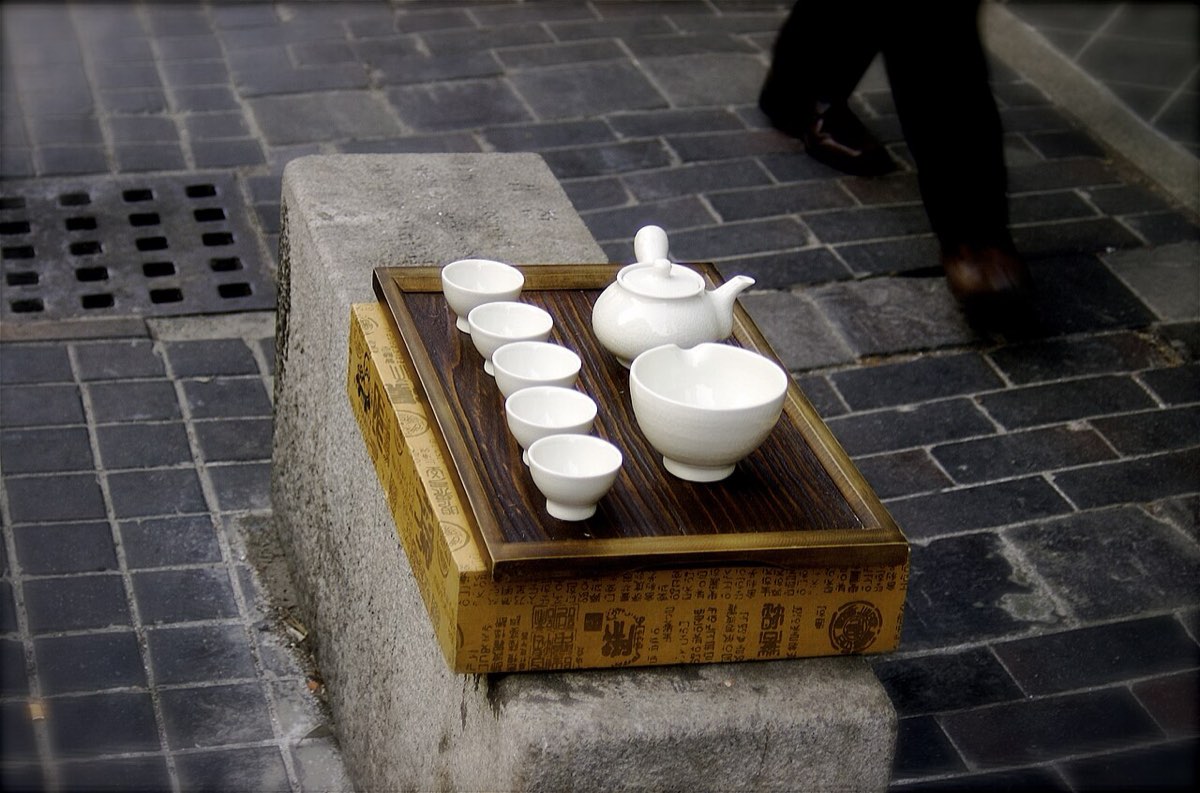
The utensils are few and worth recognizing, because you will see them in teahouses and shops. A basic set has a small teapot (다관, dagwan), a cooling bowl with a spout (숙우, sukwu) for bringing boiled water down to temperature, small handleless cups (찻잔, chatjan) and often a tray and a cloth for wiping drips. Stoneware and buncheong-style glazes are common. If you plan to buy a set, handle the pot first: the lid should sit snugly and the spout should pour without dribbling.
Buddhist temples keep the most reflective version. Templestay's official site describes Da-Seon, tea meditation, as a way of practicing mindfulness through brewing and drinking, in which sight, hearing, smell, taste and touch are all engaged, and it repeats the old saying that tea and Seon share one taste. Its one-day programs, which usually take two to three hours, typically include a temple tour, meditation and tea, which makes a templestay the most accessible place to see darye practiced as it was meant.
Yuja, omija, jujube: the teas with no tea in them
The dabang (다방), the tearoom of twentieth-century Korea, served coffee and tea long before today's café chains: the Encyclopedia of Korean Culture dates Seoul's first hotel tearoom to the Sontag Hotel in 1902 and the first dedicated modern dabang to around 1923. Traditional teahouses today keep a wider list; the table covers the five you are most likely to meet.
Most of these drinks are sweet, because the fruit is preserved in sugar or honey before it reaches the cup. If you dislike sweetness, omija-cha and ginger tea are the safest choices, or ask whether the drink can be made less sweet. Do not confuse any of them with sujeonggwa (수정과), a cold cinnamon and ginger punch served as a dessert drink, or with sikhye (식혜), a sweet rice drink: both appear on teahouse menus but are not cha.
| Drink | What is in it | Taste | Order it when |
|---|---|---|---|
| 유자차 yuja-cha | Citron preserved with sugar or honey, stirred into hot water | Sweet, fragrant, slightly bitter peel | Cold weather; a safe first choice |
| 오미자차 omija-cha | Dried schisandra berries steeped hot or cold; the name means 'five flavors' | Sour, sweet and sharp at once | Summer, iced; if you like tart drinks |
| 대추차 daechu-cha | Jujubes simmered into a thick, sweet infusion | Deep, rich, almost like a purée | Mid-afternoon in place of a snack |
| 쌍화차 ssanghwa-cha | Herbal blend based on the medicinal ssanghwa-tang | Bitter-sweet, medicinal, warming | On a cold day, for a warming herbal cup |
| 생강차 saenggang-cha | Ginger, usually with honey | Hot and spicy | When you feel a cold coming on |
How a traditional teahouse works
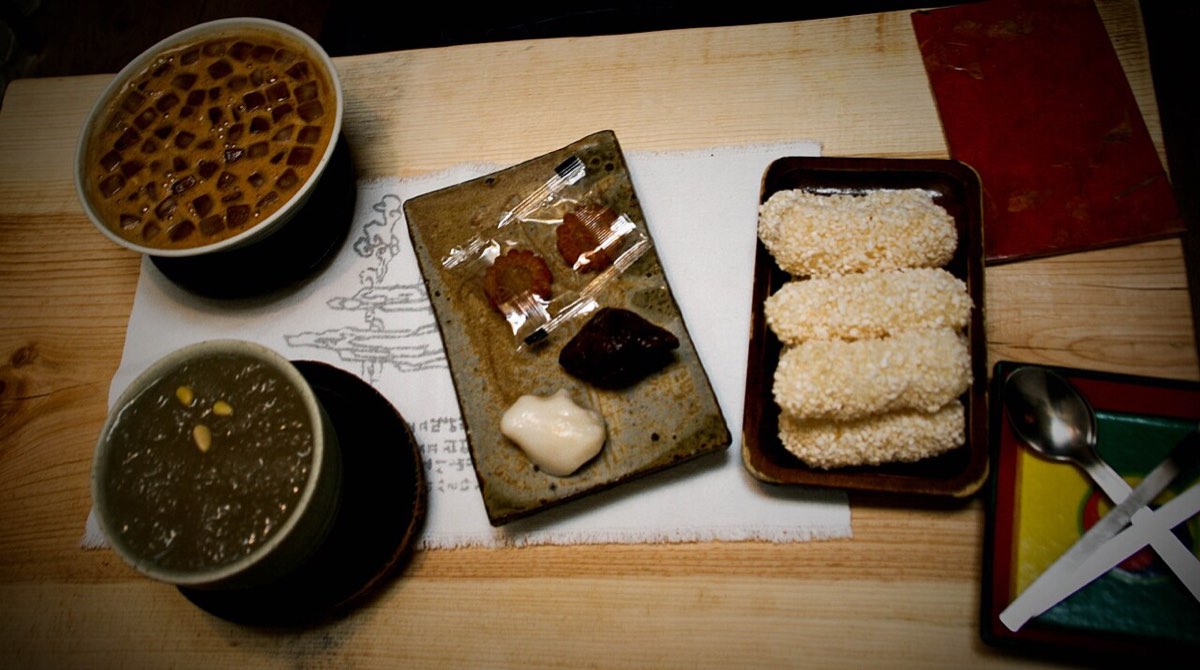
Traditional teahouses (전통찻집, jeontong chatjip) cluster in Insadong and Bukchon, often in hanok or upstairs rooms off the main streets. Many seat you at low tables on floor cushions, with shoes left at the step where the floor rises. Expect to order one drink per person, with snack plates such as yugwa (puffed rice crackers), yakgwa (honey cookies) or rice cakes listed separately. Leaf tea often arrives as a small pot with a cup and a separate vessel for cooling the water, and the pace is deliberately slow; nobody will hurry you out.
To find one, search 전통찻집 in Naver Map or Kakao Map rather than relying on an English search, and read the listing's opening hours, because some close in the early evening and some close one day a week. Photos in the listing show whether a place has floor seating or chairs, which matters if kneeling is uncomfortable for you. Payment works as in any Korean café, usually at the counter as you leave.
Ordering takes very little Korean. Point to the menu item and add juseyo (주세요, 'please'): nokcha juseyo for green tea, yuja-cha juseyo for citron tea, or hana (하나, 'one') and dul (둘, 'two') before juseyo for quantities. If the menu has no English, pointing at the line works fine. If a drink is offered hot or iced, the words are tteugeoun geot (뜨거운 것) and chagaun geot (차가운 것); omija-cha in particular is often better cold.
- Take your shoes off where the floor rises and leave them on the rack or step.
- Order one drink each; add a shared snack plate if you are hungry.
- For leaf tea, ask whether more hot water comes with it: 뜨거운 물 더 주세요 (tteugeoun mul deo juseyo, 'more hot water, please').
- Pour for your companions before yourself, and take a cup with both hands when an older person pours for you.
- Brew green tea more than once; the second infusion is often the best.
- Pay at the counter on your way out.
Where to learn darye in Seoul
Namsangol Hanok Village (남산골한옥마을), near Chungmuro Station, runs traditional-culture programs on a spring-to-autumn season in one of its houses, the Okin-dong house, a replica of a 1910s home. In 2026 its tea etiquette class (다례예절교실) has run from April, Tuesday to Thursday, in six sessions of about 50 minutes for ages five and up, but only for groups, and its tea-snack making class (다과 만들기), open to individuals, has run Friday to Sunday with a dedicated reservation link for foreign visitors.
That calendar is the honest limitation: if you are in Seoul between November and March, assume there is no public darye class at Namsangol and check its traditional-experience page in spring for the new season. The village's traditional houses close every Monday, unless the Monday is a public holiday. In winter, the most reliable way to experience tea practice is a one-day templestay program that includes tea, which our temple guide covers in detail.
Do you need a class at all? For most visitors, no. A quiet hour in a good teahouse, ordering one leaf tea and one fruit tea, brewing the green tea twice and pouring for each other, teaches most of what a short class covers. Book a class if you are traveling with children who learn better by doing, or if you want to understand the utensils before buying a tea set.
Buying leaf tea: origin, harvest grade and freshness
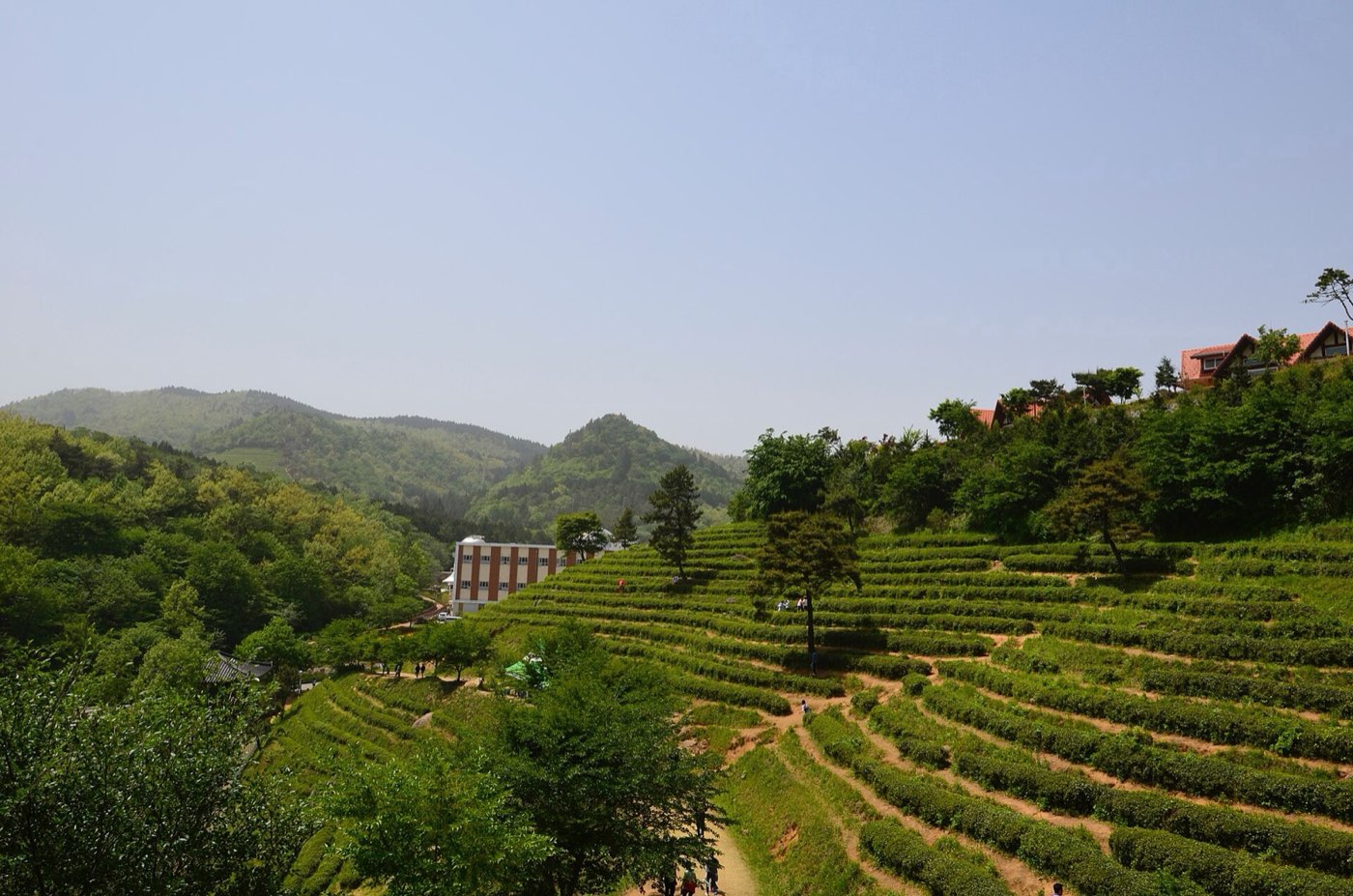
Three regions dominate Korean green tea: Boseong in South Jeolla, with its terraced plantations; Hadong in South Gyeongsang, on the southern side of Jirisan, the mountain named in the 828 record; and Jeju. Most Korean green tea is pan-roasted (덖음차, deokkeum-cha), which gives it a toasty, nutty note, rather than steamed (증제차, jeungje-cha). Hadong is also known for jaekseol-cha, a black tea, and you will see partly oxidized hwangcha (황차) and pressed cake teas in specialist shops.
The harvest grade matters as much as the region. Ujeon (우전) is picked before Gogu (곡우), the 'grain rain' solar term around April 20, and uses the smallest, most tender leaves; it is the most delicate and the most expensive. Sejak (세작), jungjak (중작) and daejak (대작), roughly 'fine', 'medium' and 'large', follow as the season advances and the leaves grow, becoming sturdier in flavor and cheaper. For a gift, sejak from Boseong or Hadong is the sweet spot; buy ujeon for someone who already drinks green tea seriously.
Check the label for origin (원산지), harvest year and packing date, and buy the current year's tea in a sealed tin or foil pouch, because green tea fades within a year once opened. If you are bringing home yuja-cha, remember that it comes as a jar of preserve, which counts as a liquid or gel at airport security, so pack it in checked luggage. Dry, sealed, labeled leaf tea is the easiest product to declare; check your home country's rules on plant products before you fly.
Brewing Korean green tea at home
The most common mistake is boiling water. Bring water to the boil, then pour it into a separate bowl or into the cups first and let it cool to roughly 70–80°C, which is why darye uses a cooling bowl (숙우, sukwu). Put a heaped teaspoon of leaves in a small pot, add the cooled water and steep for about a minute. Pour out every drop into the cups, sharing it evenly, so the leaves do not stew in the pot.
Re-steep the same leaves two or three times, shortening the second infusion slightly and lengthening the third. Ujeon wants the coolest water and the shortest steep; daejak tolerates hotter water. If the tea turns bitter, the water was too hot or the steep too long, not the tea too cheap. A small Korean tea set, sold in Insadong shops, makes the routine easy, but a teapot and a mug will do.
Questions visitors ask
Does Korean 'tea' always contain tea leaves?
No. Cha (차) covers leaf tea such as nokcha and also hot drinks made from fruit, roots, berries or grain, such as yuja-cha, omija-cha, daechu-cha and barley tea. Most fruit and herbal 'teas' contain no caffeine, so ask for nokcha if you want actual tea.
Is Korean darye a formal tea ceremony I need to learn before visiting a teahouse?
No. Darye means tea etiquette, and in a teahouse it amounts to brewing gently, pouring for others first, receiving cups with both hands and drinking slowly. Staff will show you how to use the pot if you ask. Formal classes exist but are not needed.
Where can I try a Korean tea ceremony in Seoul?
Namsangol Hanok Village runs seasonal programs, but in 2026 its tea etiquette class was for groups only and the season ends in late October. For individual travelers, the most reliable option is a one-day templestay program, which usually includes tea with meditation and a temple tour.
What Korean green tea should I buy as a gift?
Look for Boseong, Hadong or Jeju origin, the current year's harvest and a sealed package. Sejak offers the best balance of quality and price; ujeon, picked before about April 20, is the premium choice for serious tea drinkers.
Which traditional 'tea' should I order first?
Yuja-cha is the easiest start: citron preserve stirred into hot water, sweet and fragrant. If you prefer less sugar, try omija-cha or ginger tea, and add a pot of nokcha to taste real Korean green tea alongside it.
Sources and method
Written for: Travelers who want to order confidently in a Korean teahouse, understand the difference between leaf tea and fruit or herbal 'cha', and bring home good Korean tea.
Method: Researched from the official sources listed below, checked on October 20, 2026. Hours, fees and booking rules can change; the linked official pages are the final word. Spotted something out of date? Tell us.
- Korea Heritage Service — National Intangible Heritage: Jeda (traditional tea making)Designation of jeda on July 14, 2016; image of steaming leaves for tteokcha.
- Templestay (Cultural Corps of Korean Buddhism) — About TemplestayOne-day templestay of two to three hours with temple tour, meditation and tea; description of Da-Seon tea meditation.
- Namsangol Hanok Village — 다례예절교실 (tea etiquette class)2026 dates (Apr 7–Oct 29), Tue–Thu, six sessions, about 50 minutes, ages 5+, groups only, Okin-dong house, group booking number.
- Namsangol Hanok Village — 다과 만들기 (tea-snack making)2026 dates (Apr 3–Oct 25), Fri–Sun, ages 6+, reservation link for foreigners.
- Namsangol Hanok Village — English visit guideTraditional houses closed every Monday unless a public holiday; free admission.
- National Folk Museum of Korea — 상설전시 (permanent and outdoor exhibitions)Chuseok charye with wine and rice cakes from the new harvest; 1970s–80s dabang menu listing ssanghwa-cha.
- Encyclopedia of Korean Culture (Academy of Korean Studies) — 차 (tea)Broad meaning of cha; tea from Queen Seondeok's reign; 828 planting on Jirisan; Goryeo court tea rites, the Tabang office, temple tea villages and celadon; Joseon decline by the 16th century; 19th-century revival with Choui, Jeong Yak-yong and Kim Jeong-hui; Ilji-am on Duryunsan; Korea makes both steamed and roasted green tea.
- Encyclopedia of Korean Culture (Academy of Korean Studies) — 다방 (tearoom)Dabang as places selling tea, coffee and drinks; Seoul's first hotel-style dabang at the Sontag Hotel in 1902; first dedicated modern dabang around 1923.
- Encyclopedia of Korean Culture (Academy of Korean Studies) — 의순 (Choui Uisun)Dates 1786–1866; 13th great master of Daedunsa (Daeheungsa) in Haenam; studied poetry and the Book of Changes under Jeong Yak-yong; close friend of Kim Jeong-hui; author of Dongdasong.
- Korea.kr (Weekly Gonggam) — Hadong, home of Korean tea (Sept. 22, 2017)Boseong, Hadong and Jeju as the main tea regions; 828 planting at Hwagae on the southern side of Jirisan; ujeon before Gogu, then sejak, jungjak and daejak; sejak as best value; pan-roasted (deokkeum) tea; jaekseol-cha as 'Korean black tea'.