In shortKimjang (김장) is the late-autumn making of a household's winter kimchi, shared between families and listed by UNESCO in 2013. Visitors are rarely part of a family kimjang, but Museum Kimchikan in Insadong runs one-hour English classes from Tuesday to Friday, making napa-cabbage kimchi in November and December. Carry any kimchi home in checked baggage, cold and double-bagged; in a carry-on it counts as a liquid.
Key facts
- Korean term
- 김장 (kimjang, also spelled gimjang)
- UNESCO listing
- 2013, Representative List: making and sharing kimchi
- Season
- Late autumn; KMA rule of thumb: daily low 0°C or below, daily mean 4°C or below
- Kimchi Day
- November 22, set by law since 2020
- Museum Kimchikan
- Tuesday–Sunday 10:00–18:00, last entry 17:30; adults 5,000 won
- English class
- Kimchi! Basic, Tuesday–Friday 10:00 and 14:00, 40,000 won with admission
- 2026 Seoul kimjang festival
- No date announced as of October 25, 2026
- Flying home
- Checked baggage; in a carry-on kimchi counts as a liquid (100 ml containers)
Checked Nov 4, 2026 against the official sources listed at the end of this guide.
Kimjang: a winter's food supply, made and shared
In UNESCO's description, kimchi is vegetables preserved with seasonings and fermented seafood, and kimjang (김장, also spelled gimjang) is the communal job of making enough of it in late autumn to carry a household through the winter. UNESCO added 'Kimjang, making and sharing kimchi in the Republic of Korea' to its Representative List of the Intangible Cultural Heritage of Humanity in 2013. The word sharing in that title matters: the listing honors a social practice as much as a recipe.
The work runs all year. Households buy shrimp, anchovies and other seafood for salting in spring, sea salt for brine in summer and red chilies to dry and grind in late summer, then gather in late autumn on a day picked by watching the forecast. Relatives and neighbors help one another and swap finished kimchi, which spreads techniques between families. Recipes are treated as family heritage and, traditionally, passed from a mother-in-law to a newly married daughter-in-law.
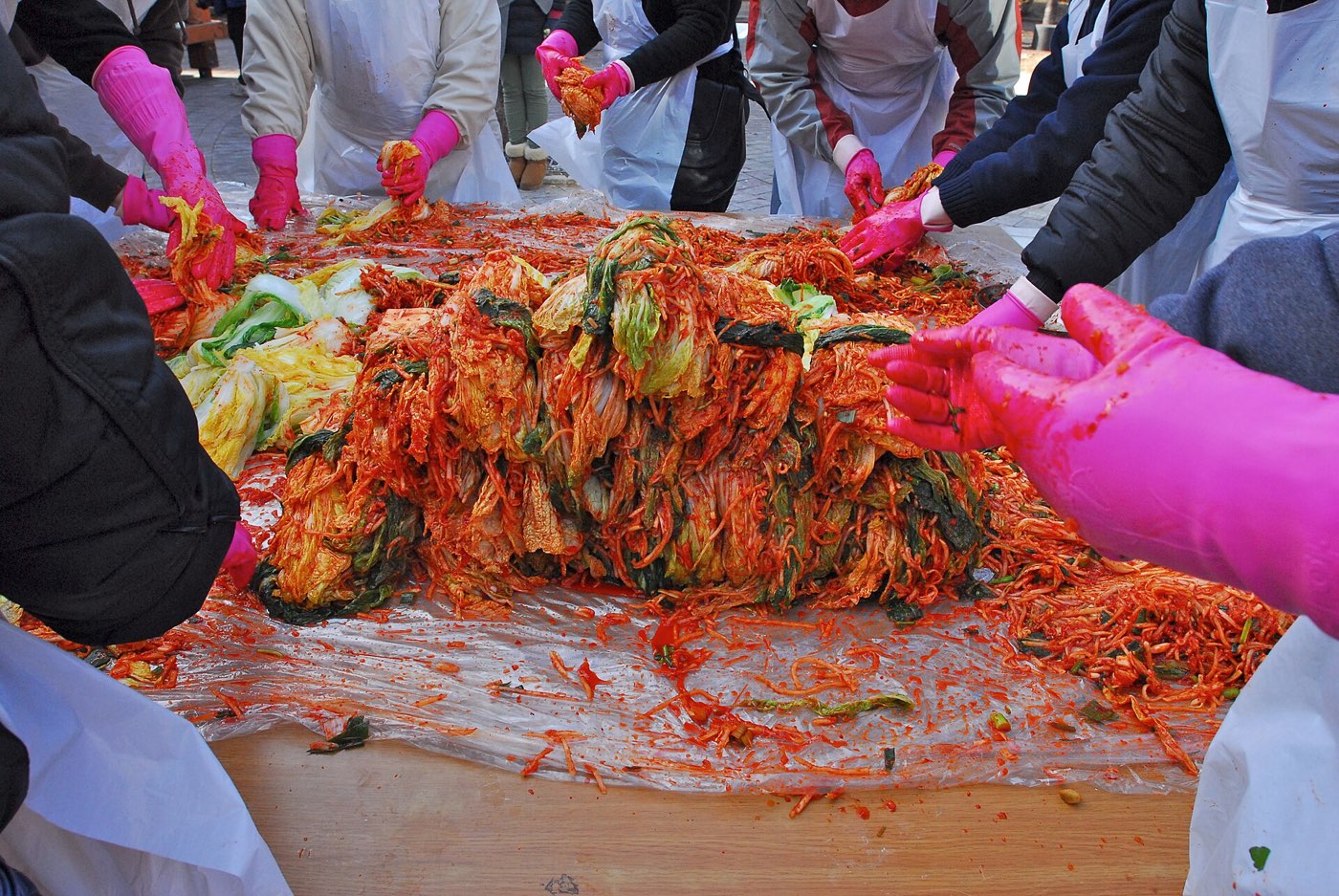
On the day itself the work follows a set order. Whole cabbages are split and salted, often overnight, then rinsed and drained. Meanwhile the filling, 김칫소 (gimchitso), is mixed from radish strips, chili flakes, garlic, ginger, scallions and salted seafood. Everyone then sits around the pile, spreading filling between the leaves of each half cabbage and folding it into a tight bundle for the tub. Boiled pork eaten wrapped in fresh kimchi, bossam (보쌈), is the traditional reward at the end.
That defines a visitor's real position: kimjang is not a show. It happens in homes, apartment courtyards and community halls, among people who know one another, and nobody stages it for tourists. What you can do is notice its traces all over the city in November, learn the technique in a class and eat the results with some understanding of the work behind them, which is a fair way to meet it.
Why November: a calendar set by the thermometer
Timing is about temperature. The Korea Meteorological Administration's rule of thumb is that kimjang suits the stretch when the daily low falls to 0°C or below and the daily mean stays at 4°C or below: cold enough for kimchi to ferment slowly through the winter, not yet cold enough for ingredients to freeze. In 2007, for example, the KMA advised Seoul households that the right moment would come around November 29, and warned that waiting too long risked a late-November cold snap freezing the cabbage and radish.
In practice the season now spreads across November, because many families store kimchi in dedicated kimchi refrigerators rather than in jars buried in the yard. You will see it in the shops: piles of napa cabbage and radish, sacks of chili flakes, garlic and tubs of salted shrimp. In 2025 Seoul's November kimjang event was built around a direct market selling exactly those ingredients to households.
There is also a date on the calendar. Since a 2020 amendment to the Kimchi Industry Promotion Act, November 22 has been Kimchi Day (김치의 날), set by law to promote the kimchi industry, pass on kimchi culture and tell the public about its nutritional value. The act lets national and local governments hold events, classes and campaigns around the day, so late November is when kimchi promotions cluster.
The kimchi you will meet, and how to tell them apart
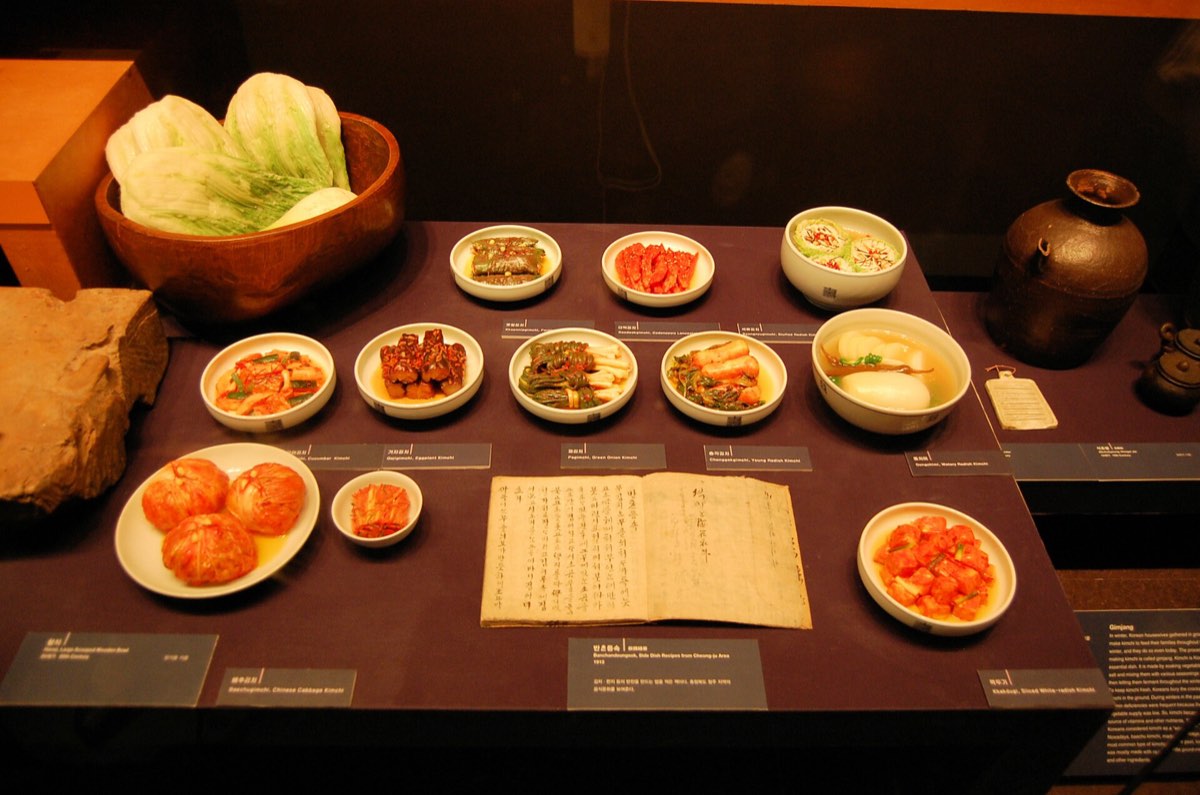
VisitKorea counts more than 100 kinds of kimchi, varying with region, climate and season, but a visitor meets the same handful again and again. These five are worth recognizing on menus, labels and side-dish plates. Kimjang itself is mostly about the first, made in quantity from whole heads of napa cabbage.
Two more words change how kimchi tastes. Fresh kimchi, 겉절이 (geotjeori), is dressed and eaten almost at once, crisp and bright. Long-fermented kimchi, 묵은지 (mugeunji), has been left for many months until it is sour and soft, and it gives the deepest kimchi stew. Kimjang kimchi moves from one state toward the other over the winter, which is why the same batch tastes different in December and in March.
If you avoid seafood, ask before you eat. Ordinary kimchi usually contains salted seafood, 젓갈 (jeotgal), which is part of the definition UNESCO uses. The question 젓갈 들어가요? (jeotgal deureogayo?, 'does it have salted seafood in it?') gets a straight answer, and white kimchi made without chili, 백김치 (baek-gimchi), is the gentlest choice if the heat is the problem.
| Kimchi | What it is | Where you meet it |
|---|---|---|
| 배추김치 baechu-gimchi | Salted napa cabbage with chili powder, garlic and fish sauce, fermented | Almost every meal; the kimjang staple |
| 깍두기 kkakdugi | Cubed radish, crunchy and slightly sweet | Beside soups and stews |
| 나박김치 nabak-gimchi | Thin squares of vegetables in a cool, mild brine | A non-spicy side; good for children |
| 오이소박이 oi-sobagi | Cucumbers slit and stuffed with seasoning | Spring and summer |
| 열무김치 yeolmu-gimchi | Young summer radish with its greens | Summer, with cold noodles or rice |
Museum Kimchikan: where to learn in English
Museum Kimchikan (뮤지엄김치간), run by the food company Pulmuone, fills the fourth to sixth floors of the Insadong Maru main building at 35-4 Insadong-gil. It is about ten minutes on foot from Jonggak Station Exit 3 on Line 1 or Anguk Station Exit 6 on Line 3. It opens from Tuesday to Sunday, 10:00 to 18:00, with last entry at 17:30, and closes on Mondays, January 1, December 25 and the three-day Seollal and Chuseok holidays.
Admission is 5,000 won for adults, 3,000 won for ages 8 to 18 and free for visitors 65 and over with ID. Individuals need no reservation. A free audio guide in English, Japanese and Chinese plays on your own phone after you scan a QR code, so bring earphones; the museum's docent tours are in Korean and only for booked groups of ten or more.
The classes are the reason to go in November. Kimchi! Basic, taught in English, runs from Tuesday to Friday at 10:00 and 14:00 for an hour, and in November and December it makes baechu-gimchi, the kimjang staple. It costs 40,000 won for adults, 38,000 won for ages 8 to 18 and 37,000 won for younger children, admission included. Kimchi All-in-one adds cooking with kimchi over 90 minutes, a cheese kimchi fried rice in this season, for 65,000 won, with at most 12 people.
Read the conditions before you book. A session needs at least four participants or it does not run, so a solo traveler should book early and keep the day flexible. Changes and cancellations close at 10:59 three days before the class; after that you pay for the places reserved, and late cancellers are barred from booking for six months. You must carry your kimchi out in the container and bag provided, because the museum does not ship.
Is there a kimjang festival to join in 2026?
Probably not as a participant. Seoul's big November kimjang event has changed shape over the years. In 2025 the city co-hosted the Korea Kimjang Festival (대한민국 김장대축제) on Saturday, November 22, Kimchi Day, at the aT Center in Yangjae-dong. It had a kimchi culture exhibition, kimchi sales and a direct market for kimjang ingredients, and the city said kimchi-making was not offered to the general public because the space was too small.
As of October 25, 2026, neither Seoul nor its partners had announced a 2026 edition. If one is held, expect it close to Kimchi Day and expect details only shortly before; in 2025 the city's guide was posted days ahead. Check Seoul's news site, news.seoul.go.kr, in mid-November, but do not plan a trip around it, and treat any large kimjang event as a market and exhibition to browse rather than a class.
The dependable options are the scheduled ones: a Kimchikan class, which runs in English every week from Tuesday to Friday, and the National Folk Museum of Korea, whose hall on the Korean year sets kimjang beside the other winter tasks such as making fermented soybean blocks. Our folk museum guide explains that hall, and the museum sits inside Gyeongbokgung's grounds, so it pairs with a palace morning.
Eating kimchi as a guest
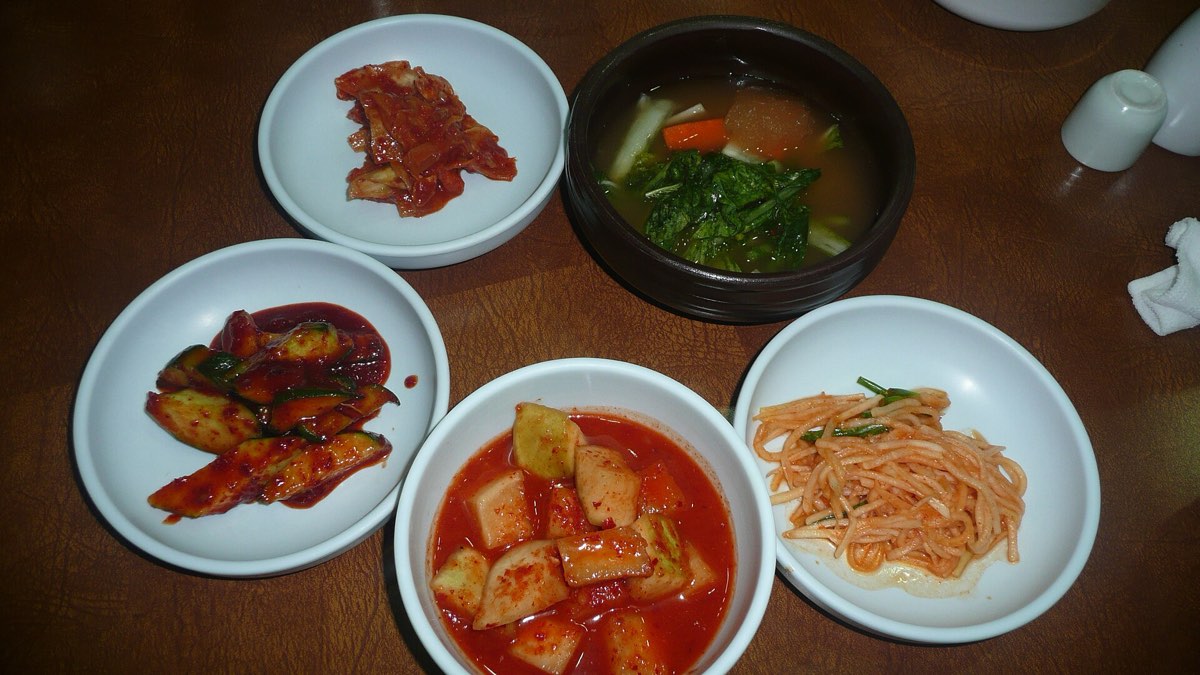
At a Korean table, kimchi is part of the shared banchan (반찬), the side dishes, and refills are free. Ask for more by pointing at the dish and saying 이거 좀 더 주세요 (igeo jom deo juseyo). Take pieces from the side nearest you and do not turn the plate over hunting for the best leaf. Whole-leaf kimchi often arrives uncut; staff will cut it with scissors or hand them to you, which is normal rather than rude.
Restaurants must tell you where their kimchi comes from. Under Korea's origin-labeling rules, places that serve cabbage kimchi have to show the country of origin of both the cabbage and the chili powder, usually on a board by the counter or on the menu: 국산 or 국내산 means domestic, 중국산 means Chinese. Read the board if it matters to you, but there is no need to raise it at the table.
Compliments land well. Many restaurants make their own kimchi and take pride in it, and 김치 맛있어요 (gimchi masisseoyo, 'the kimchi is delicious') is the easiest way to please the cook. Do not leave a refilled dish untouched; take what you will eat. And if you are invited into a home in November, an offer to help carry or wash up will be appreciated far more than a request to film the kimjang.
Buying kimchi to eat in Seoul
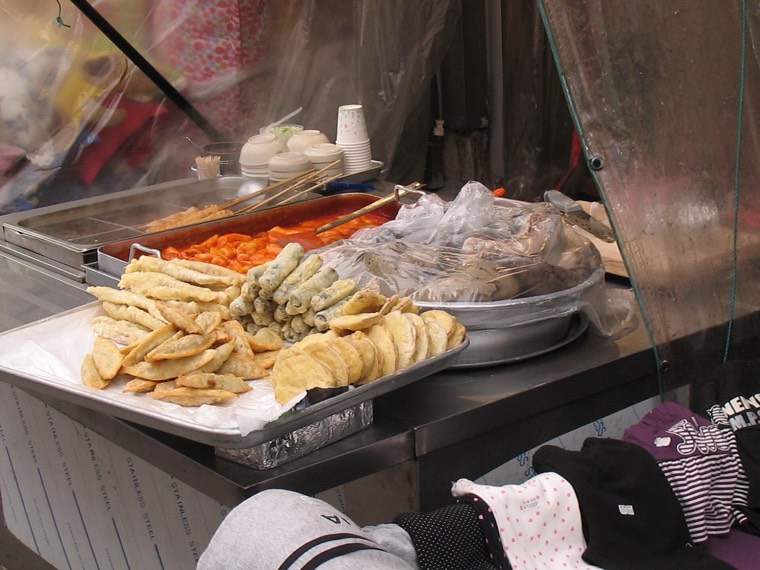
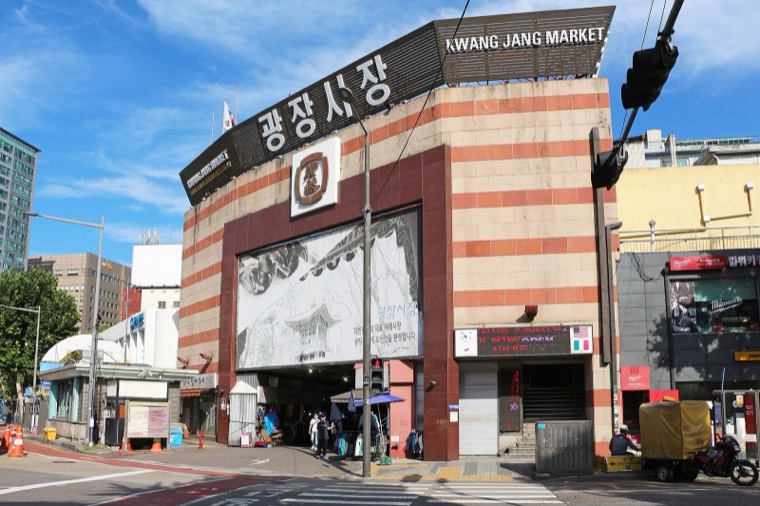
For eating during your stay, supermarkets and department-store food halls sell sealed tubs and pouches in sizes from a few hundred grams, and traditional markets sell kimchi by weight. Ask for 덜 익은 거 (deol igeun geo, less fermented) if you want it to keep, since it sours as it ages, or 잘 익은 거 (jal igeun geo, well fermented) if you want the tangy flavor now. Our Gwangjang Market guide explains how ordering at market counters works.
In November, the season is visible in the produce aisles even if you never buy an ingredient: stacked heads of cabbage, radishes with their greens on, and big bags of red pepper flakes. They show the scale of a household batch better than any museum label. If you have a hotel fridge, a small tub of baechu-gimchi and a packet of instant rice make a cheap breakfast with a sense of place.
Read the back of the pack as well as the front. Packaged kimchi lists its ingredients and the origin of the main ones, so you can check for 새우젓 (saeujeot, salted shrimp) or 멸치액젓 (myeolchi aekjeot, anchovy sauce) if you avoid seafood. Small packs suit a short stay better than a bargain kilo: once opened, kimchi keeps souring in the fridge, and the smell travels to everything around it.
Taking kimchi home: gas, cold and airport security
Kimchi keeps fermenting after you buy it, and fermentation makes gas. A Korea Food Research Institute study of packaged kimchi found that packs began to swell after about 40 hours at 20°C and burst on the third day; at 10°C they swelled after about five days and burst on day eight; at 0°C they took about 30 days to swell and did not burst. The lesson: keep it cold until the last moment and expect the pack to puff.
Pack it in checked baggage. Incheon Airport treats kimchi in a carry-on as a liquid, allowed only in containers of 100 milliliters or less that fit in a single one-liter plastic bag, and it confiscated 10.7 tons of kimchi at security in 2024. Put a factory-sealed pack inside two zip bags with room to swell, wrap it in clothing in the middle of the suitcase and buy it the day before you fly. Check your destination's food-import rules as well.
Kimchi you make in a class comes in a container meant for the trip back to your hotel, not for a long flight. Refrigerate it as soon as you can and eat it during your stay; for the journey home, buy a commercially sealed pack instead.
A November afternoon built around kimchi
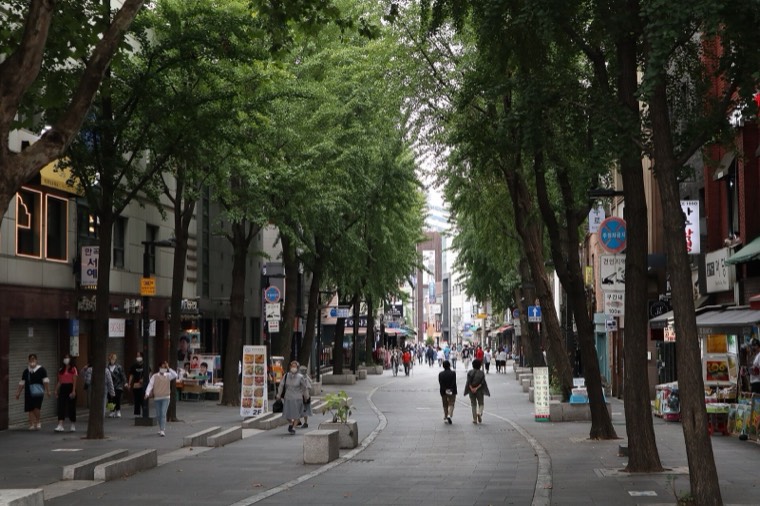
Here is how a Wednesday in mid-November can run. 13:30: reach Insadong and walk up Insadong-gil to the Insadong Maru building; search 뮤지엄김치간 in Naver Map or Kakao Map. 14:00: the Kimchi! Basic class, booked at least a few days ahead, making baechu-gimchi. 15:00: the exhibition floors with the English audio guide on your phone. 16:30: drop your kimchi in the hotel fridge. 18:30: dinner of kimchi-jjigae, or bossam, boiled pork wrapped in fresh kimchi, the dish many families eat on kimjang day itself.
Run through these points before you book a class. They cover nearly every way a kimchi plan goes wrong for visitors, from a session cancelled for lack of numbers to a tub of fresh kimchi with nowhere cold to go, and none of them takes more than a minute to check.
- The class runs only with four or more participants, so book early and keep the day flexible.
- Changes and cancellations close at 10:59, three days before the session.
- You carry your kimchi away in the container provided; the museum does not ship.
- Bring your phone and earphones for the free English audio guide.
- Mention allergies when you book; kimchi usually contains salted seafood.
- Avoid Mondays and the Seollal and Chuseok holidays, when the museum is closed.
Questions visitors ask
Can tourists join a family kimjang in Seoul?
Rarely. Kimjang is a household and community event among people who know one another, and it is not staged for visitors. The practical way to take part is a class: Museum Kimchikan in Insadong teaches Kimchi! Basic in English from Tuesday to Friday, making napa-cabbage kimchi in November and December. In 2025 the city's November kimjang event offered no public kimchi-making.
Do I need to book a kimchi-making class in advance?
Yes. Museum Kimchikan's classes are booked online and need at least four participants to run, so book a few days ahead and keep the date flexible if you are traveling alone. Changes and cancellations close at 10:59 three days before; after that you pay for the places reserved. Museum entry without a class needs no booking.
Can I take kimchi on a plane from Korea?
In checked baggage, yes, well sealed. In a carry-on, Incheon Airport treats kimchi as a liquid, so only containers of 100 milliliters or less in a one-liter bag pass security. Use a factory-sealed pack, double-bag it and leave room for it to swell, because fermentation continues. Check your destination's food-import rules too.
Is kimchi vegetarian?
Usually not. Ordinary kimchi is seasoned with salted seafood such as shrimp or anchovy, which is part of how UNESCO's kimjang listing describes it. Ask 젓갈 들어가요? (jeotgal deureogayo?) before eating, and look for temple-food restaurants or white kimchi, baek-gimchi, if you need a version without seafood or chili.
When is Kimchi Day?
November 22. It was written into the Kimchi Industry Promotion Act in 2020 to promote kimchi culture and its nutritional value, and governments may hold events around it. In 2025 Seoul co-hosted the Korea Kimjang Festival on that day at the aT Center; no 2026 date had been announced by late October.
Sources and method
Written for: Visitors in Seoul in late autumn who want to understand kimjang, make kimchi in an English-language class, eat it with good manners and carry some home without trouble.
Method: Researched from the official sources listed below, checked on October 25, 2026. Class times, prices, festival plans and airport rules can change; the linked official pages are the final word. Spotted something out of date? Tell us.
- UNESCO Intangible Cultural Heritage — Kimjang, making and sharing kimchi in the Republic of KoreaInscribed 2013 (8.COM); kimchi as vegetables with seasonings and fermented seafood; seafood in spring, salt in summer, chilies in late summer; late-autumn kimjang timed by forecasts; sharing between households; mother-in-law to daughter-in-law transmission.
- Korea.kr (KMA news) — When to make kimjang this year (November 13, 2007)KMA rule of thumb: daily low at or below 0°C and daily mean at or below 4°C; Seoul's 2007 timing around November 29; risk of late-November cold snaps freezing cabbage and radish.
- National Law Information Center — Kimchi Industry Promotion Act (김치산업 진흥법), Article 20-2November 22 each year is Kimchi Day, to promote the industry, pass on kimchi culture and its nutritional value; governments may hold events, education and publicity (article added February 11, 2020).
- National Law Information Center — Enforcement Decree of the Act on the Origin Labeling of Agricultural and Fishery Products, Article 3Restaurants must label the origin of the cabbage and chili powder used in cabbage kimchi (Article 3, paragraph 5, item 7, current decree).
- VisitKorea (Korea Tourism Organization) — KimchiMore than 100 kinds of kimchi; baechu-gimchi, kkakdugi, nabak-gimchi, oi-sobagi and yeolmu-gimchi described.
- Museum Kimchikan (official site) — Visit infoTuesday–Sunday 10:00–18:00, last admission 17:30; closed Mondays, January 1, Seollal and Chuseok holidays (3 days) and December 25; admission 5,000 / 3,000 / 2,000 won, free 65+ with ID; free QR audio guide in Korean, English, Japanese and Chinese (own earphones); Korean docent tours for groups of 10+. Address (35-4 Insadong-gil, Insadong Maru main building, floors 4–6) and directions (Jonggak Exit 3, Anguk Exit 6, about 10 minutes) are on the site's /intro/direction page.
- Museum Kimchikan (official site) — 2026 Kimchi! Basic [Individual] programTuesday–Friday 10:00–11:00 and 14:00–15:00; 40,000 / 38,000 / 37,000 won including admission; baechu-gimchi in November–December; English; 4–24 participants, not held below 4; changes by 10:59 three days ahead, six-month restriction for late cancellation; kimchi must be taken away, no shipping. The All-in-one class (PR0006): 90 minutes, 65,000 won adults, up to 12, cheese kimchi fried rice in November–December.
- Seoul Metropolitan Government — 2025 Korea Kimjang Festival event guideNovember 22, 2025 at the aT Center, Yangjae-dong; kimchi culture exhibition, kimchi sales and a direct market for kimjang ingredients; kimchi-making not offered to the general public for lack of space; page last modified November 18, 2025.
- The Korea Herald — Liquid restrictions apply to kimchi packed in carry-on luggage (February 2, 2025)Incheon Airport: kimchi counts as a liquid in carry-on bags (100 ml containers in one 1-liter bag); 10.7 tons confiscated in 2024; larger amounts should go in checked luggage.
- Korean Journal of Food Science and Technology — Fermentative gas pressure and quality of packaged kimchi at different temperatures (Hong, Park and Park, 1994)Korea Food Research Institute study: packs swelled after about 40 hours at 20°C (burst day 3), about 5 days at 10°C (burst day 8) and about 30 days at 0°C (no burst).