In shortJongmyo (종묘) is the Joseon royal ancestral shrine, and its rules depend on the day: closed Tuesdays, guided-tour-only on Mondays, Thursdays and Fridays, and free to wander on Wednesdays, weekends and holidays. Adult admission is 1,000 won (free on Wednesdays), English tours start at 10:00, 12:00, 14:00 and 16:00, and the royal ancestral rite is performed on the first Sunday of May and the first Saturday of November.
Key facts
- Korean name / map search
- 종묘 (Jongmyo)Naver Map
- Closed
- Tuesdays
- Guided-tour-only days
- Monday, Thursday, Friday; about 50 minutes; English at 10:00, 12:00, 14:00, 16:00
- Free-viewing days
- Wednesday, Saturday, Sunday and public holidays (self-guided; fee applies except Wednesday)
- Adult admission
- 1,000 won (foreign visitors 19–64); free on Wednesdays, for 18 and under, and 65 and over
- Royal ancestral rite
- First Sunday of May and first Saturday of November
- Nearest subway
- Jongno 3-ga Station (Lines 1, 3, 5), Exit 11 or 8, about 5 minutes
- UNESCO
- World Heritage 1995; rite and music inscribed as intangible heritage 2001
Checked Oct 20, 2026 against the official sources listed at the end of this guide.
A house for spirit tablets, not a palace
Jongmyo (종묘) is the royal ancestral shrine of the Joseon dynasty. It has no throne and no bedrooms. It holds spirit tablets (신주, sinju), the wooden markers in which, in Confucian belief, the souls of deceased kings and queens can reside during rites. The shrine was established on this site in 1395, within three years of the dynasty's founding, following a classical rule for capitals: the palace in the center, the ancestral shrine to its left, and the altar to the gods of land and grain, Sajikdan (사직단), to its right, as seen by a king facing south.
For a Confucian dynasty this was arguably the most important ground in the capital. A king's legitimacy rested on continuity with his ancestors, and the grandest state ceremony, the royal ancestral rite, was performed by the king himself, attended by the crown prince, the royal family and officials. Today the shrine holds the tablets of Joseon's kings and queens and of the emperors and empresses of the short-lived Korean Empire. Every rite performed here restated a political idea: the state was a family line, and the living ruler answered to the dead.
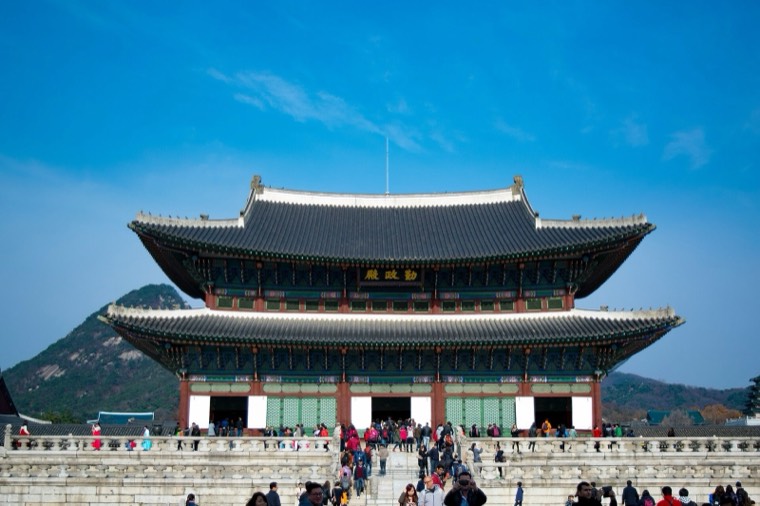
That makes Jongmyo a different kind of visit from the palaces. There is nothing to go inside, no garden to stroll and very little ornament, and visitors who expect another palace can leave puzzled after twenty minutes. Come instead for the scale of the space, the silence and the belief behind it. If you have already seen Gyeongbokgung and want to understand the system it served, Jongmyo is the logical next step. If you have one afternoon and want color, interiors and photographs, a palace will suit you better.
Why Jongmyo is deliberately plain
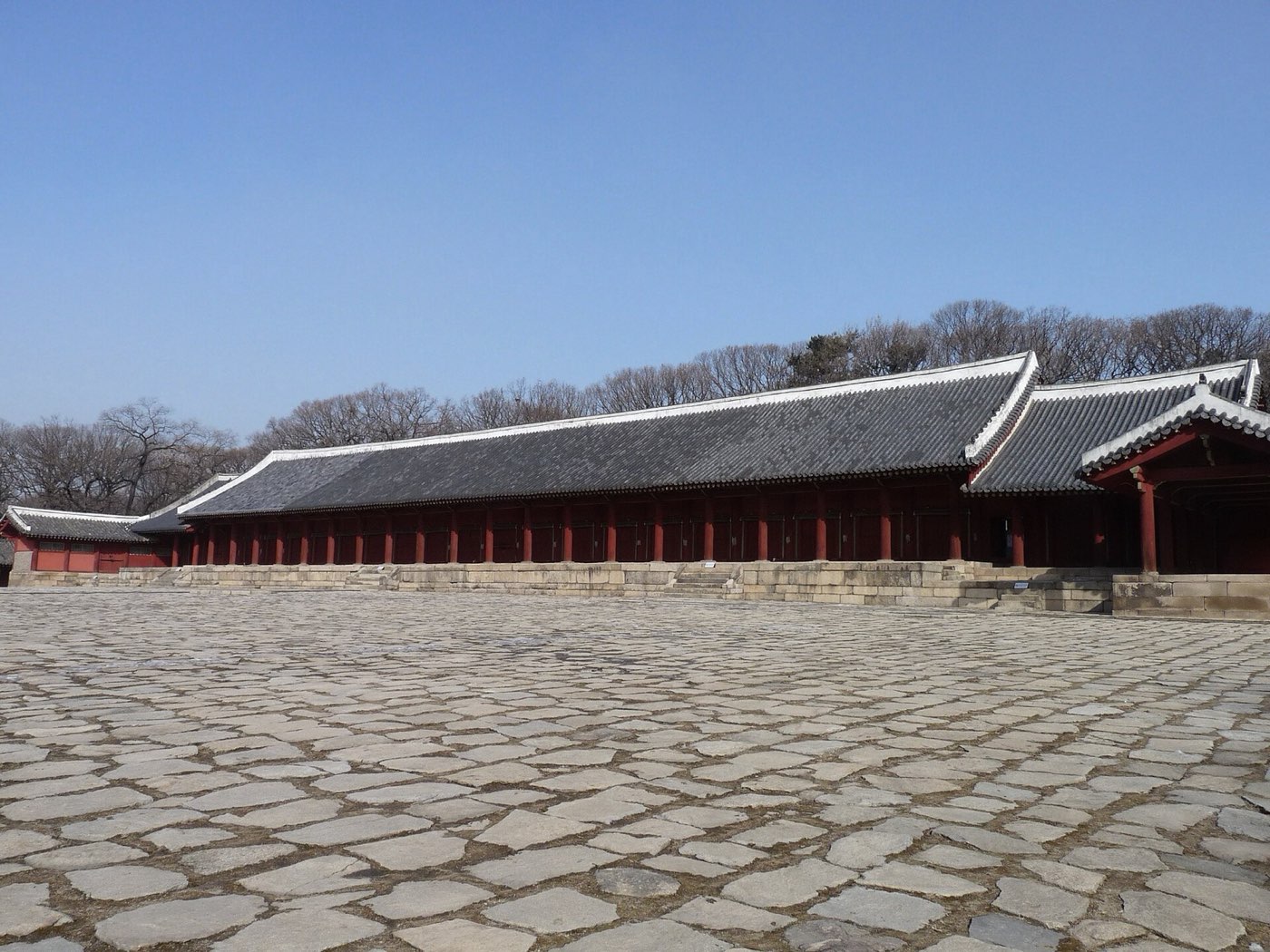
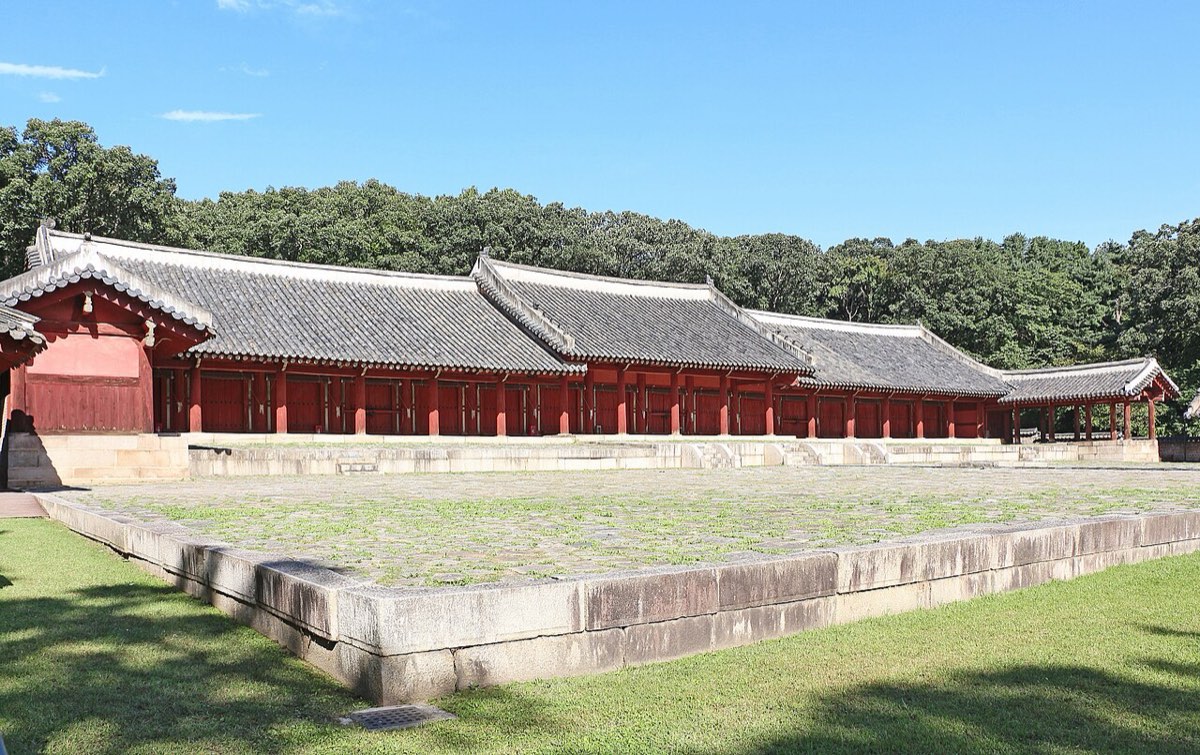
The main hall, Jeongjeon (정전), is a single wooden building roughly 100 meters long: a low roof, a long row of identical red-painted bays with very little carving or decorative color, set on a broad stone platform above a court of rough stone slabs. The austerity is the message. Confucian ritual architecture was meant to express reverence, restraint and permanence rather than wealth, and the repetition of identical chambers presents generation after generation as one unbroken line, each ancestor given the same measure of space.
The building's length is a record of the dynasty itself. Jeongjeon began with seven bays in 1395; as kings died and tablets accumulated, bays were added, reaching 11, then 15 in 1726 and 19 in 1836. Each bay is a chamber, so looking along the facade you are reading a family tree laid on its side. UNESCO inscribed Jongmyo on the World Heritage List in 1995 under its criterion for an outstanding type of building, citing both the distinctive architecture of the ritual space and the survival of the rite and its music in their original forms.
To see what the builders intended, stand at the southern edge of Jeongjeon's stone court and stay still for a minute. The roofline runs out past the edge of your vision in both directions, and there is no tower or central gate to anchor the eye. On a quiet weekday it is one of the most affecting architectural experiences in Seoul. On a busy weekend afternoon the effect is harder to find, which is a good reason to consider a guided weekday visit.
Jeongjeon and Yeongnyeongjeon: two halls, two ranks of memory
Jeongjeon's 19 chambers hold 49 tablets, those of 19 kings and 30 queens. Its side corridors house two smaller shrines: Gongsindang (공신당), honoring 83 meritorious officials of successive reigns, and Chilsadang (칠사당), dedicated to seven deities of everyday life, a sign of how state Confucianism absorbed older folk belief. The present core of the hall dates from a rebuilding completed in 1608 after the Japanese invasion of 1592, with the later extensions added at either end as the dynasty went on.
West of it stands Yeongnyeongjeon (영녕전), whose name means eternal peace, built in 1421 under King Sejong when the main hall ran short of room. It now has 16 chambers holding 34 tablets, largely of kings and queens whose reigns were short or whose standing was lower, and its central section rises above the wings on either side. Smaller and more intimate than Jeongjeon, it is easy to skip in the rush toward the exit. Do not: the contrast between the two halls, one for the main line and one for the rest, is the point of the site.
Jeongjeon has just emerged from its largest repair in generations. Work began in 2020, and during it the tablets were kept at the old Seonwonjeon hall in Changdeokgung. On April 20, 2025, they returned in a hwanan rite (환안제), a solemn procession carrying the tablets home that had last been performed in 1870, 155 years earlier. Some summaries date the reopening to 2024, but the tablets came back in April 2025. If you saw the hall wrapped in scaffolding on an earlier trip, it is worth a second look now.
Walking the grounds in the right order
From the main entrance on Jongno, a stone path runs into the grounds with a slightly raised central strip. This is the sindo (신도), the road for the ancestral spirits, with lower paths alongside for the living king and crown prince. Out of courtesy, walk beside the raised strip rather than on it; Korean visitors and guides will notice. The route mapped by the shrine office runs from that path past the ritual-preparation buildings to the two great halls and back, and takes about an hour at an unhurried pace on a free-viewing day.
The order below follows that official route. On a guided weekday you cover the same ground in about 50 minutes with a docent and cannot wander off on your own, and the guide decides where the group pauses, so use the list mainly on free-viewing days, when you set the pace yourself.
- Sindo, the spirit road, starting just inside the main gate.
- Jaegung (재궁), where the king and crown prince prepared and purified themselves before a rite.
- Jeonsacheong (전사청), the kitchen court where ritual food was prepared.
- Jeongjeon, with Gongsindang and Chilsadang in its side corridors.
- Yeongnyeongjeon, west of the main hall.
- Akgongcheong (악공청), where the ritual musicians waited.
- Hyangdaecheong (향대청), which stored incense and the written prayers.
- Mangmyoru (망묘루), where the shrine's officials worked, and the square pond beside it, near the exit.
Jongmyo Jerye: the rite that still happens twice a year
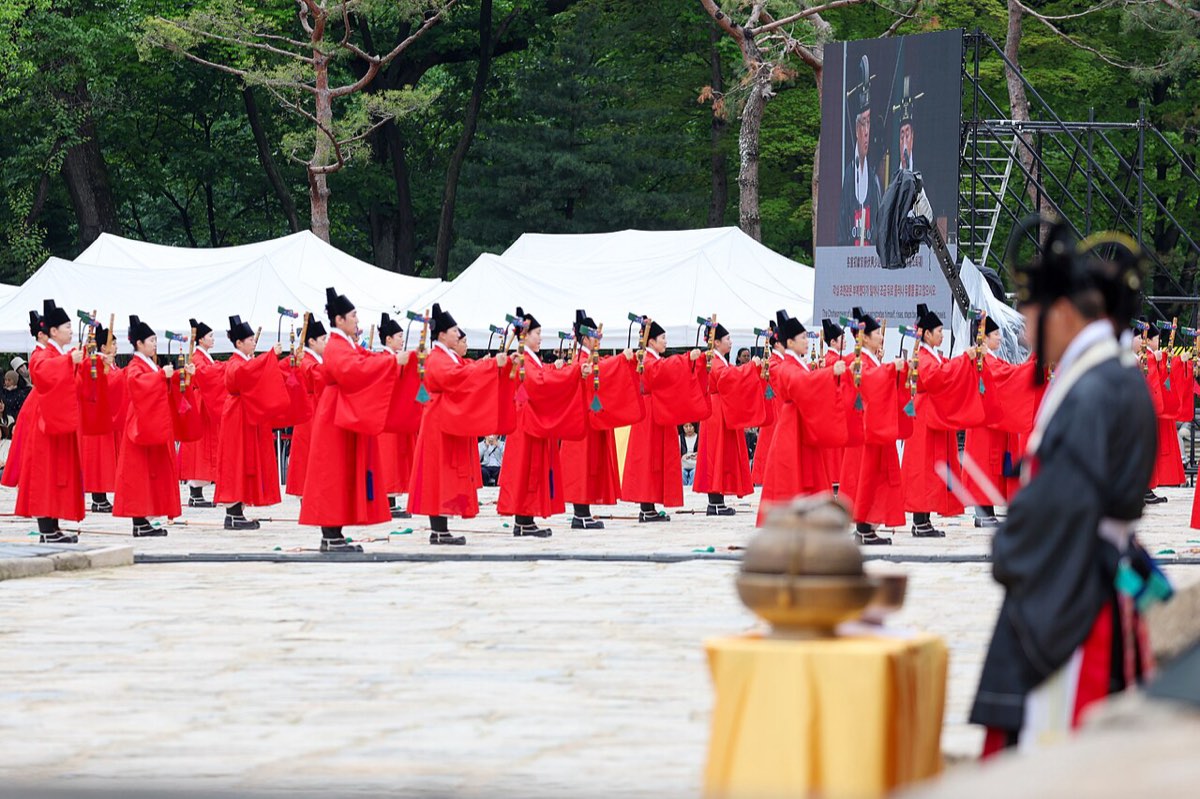
Jongmyo Jerye (종묘제례), the royal ancestral rite, was once performed at Jeongjeon five times a year and at Yeongnyeongjeon twice, with further rites for floods, droughts, epidemics, wars, royal weddings and the naming of a crown prince. Abolished in 1945, it was revived in 1969 and moved in 1971 to the first Sunday of May. Today it is held on the first Sunday of May and the first Saturday of November. It became national intangible heritage in 1975, and in 2001 UNESCO recognized the rite and its music together as intangible heritage of humanity.
The rite follows eight steps: welcoming the spirits with incense, liquor and silk; presenting the sacrificial food; three successive offerings of wine, the first accompanied by a written prayer; the officiants partaking of the sacrificial wine and food; clearing the vessels; and burning the prayer and silk. Offerings include beef, mutton and pork, grains, rice cakes, salted fish and fruit, laid out in prescribed ritual vessels. Nothing is staged for spectators. You are watching descendants and officials honor the dead, slowly and largely in silence.
The music, Jongmyo Jeryeak (종묘제례악), is as old as the rite's present form. King Sejong composed two suites, Botaepyeong and Jeongdaeeop, praising the virtues and achievements of the dynasty's kings; in 1463, under King Sejo, they were adopted for Jongmyo, and each has 11 pieces. Listen for the tuned sets of bronze bells (pyeonjong) and stone chimes (pyeongyeong). Rows of dancers perform ilmu (일무): the munmu, gentle and static, honors learning, and the mumu, strong and forceful, honors military merit.
To attend, watch the shrine's notices from early April for the May rite and from late October for the November one. In May 2026 the rite ran at Yeongnyeongjeon from 10:00 to 12:00 and at Jeongjeon from 14:00 to 16:30, with the chambers open for viewing afterward. Entry to Jongmyo was free that day but regular tours were suspended, and spectator seats were reserved through Ticketlink from about two weeks before. The afternoon Jeongjeon rite is the main event. Bring water and patience, because it lasts more than two hours.
Guided-tour days and free-viewing days
Jongmyo has the most complicated visiting rules of any royal site in Seoul, and misreading them is the most common mistake. It is closed on Tuesdays. On Mondays, Thursdays and Fridays it is open only by timed guided tour: you enter at a set time and stay with a docent for about 50 minutes. On Wednesdays, Saturdays, Sundays and public holidays it is a free-viewing day, when you walk in during opening hours and stay as long as you like. Adult admission is 1,000 won, and Wednesday, the government's weekly Culture Day, is free.
Each timed tour admits up to 200 people per language. Individuals and parties of fewer than ten need no reservation and simply buy a ticket on site; online booking, open from 30 to 4 days ahead, is meant for groups. Arrive early, because latecomers are refused. English tours run at 10:00, 12:00, 14:00 and 16:00 on weekdays and Sundays, while Saturdays and holidays have Korean commentary only. As at the palaces, Korean nationals may join a foreign-language tour only with a foreign companion.
The rules flex with the season and the festival calendar. In July and August 2026 the timed system was suspended for the heat and every open day became a free-viewing day, and during palace festival periods the shrine has also switched to general viewing. Hours run 09:00 to 18:00 from February to May and in September and October, to 18:30 in summer and to 17:30 from November to January, with last entry an hour before closing. Check the Jongmyo notice board in the week of your visit.
| Day | How you enter | English commentary | Adult fee |
|---|---|---|---|
| Monday, Thursday, Friday | Timed guided tour only, about 50 minutes | 10:00, 12:00, 14:00, 16:00 | 1,000 won |
| Tuesday | Closed | None | None |
| Wednesday (Culture Day) | Free viewing, no booking | 10:00, 12:00, 14:00, 16:00 | Free |
| Saturday and public holidays | Free viewing | None (Korean commentary only) | 1,000 won |
| Sunday | Free viewing, no booking | 10:00, 12:00, 14:00, 16:00 | 1,000 won |
How to behave at a place of ancestral rites
Jongmyo is still a working ritual site, so behave as you would at a cemetery or a memorial service. Keep your voice low, especially in the courts of the two halls, and keep children from running across the stone platforms. Save snacks for outside the gates, and do not sit or lean on the halls' doorsteps or railings. Treat the chamber doors as closed: they are opened for rites and special viewings, not for curiosity, and the dim interiors are the dwelling places of the tablets.
Two customs are worth following. Walk beside the raised spirit road rather than on it, and when a guide stops at the edge of a court, stay behind the line the group forms instead of stepping forward for a clearer photograph. There is no dress code beyond ordinary modesty, and hanbok wearers enter free under the same guideline as the palaces. During a rite, switch off flash, stay silent while the music plays, and arrive early for a viewing spot rather than pushing forward once the ceremony has started.
Pairing Jongmyo with Changgyeonggung or Insadong
On free-viewing days the shrine's north gate, Buksinmun (북신문), opens onto the path over Yulgok-ro that links Jongmyo with Changgyeonggung, two sites cut apart by a colonial-era road and reconnected in recent years. Each site needs its own ticket, and Changgyeonggung's gate on that side stops admitting visitors at 17:00 in winter and 17:30 in spring and autumn. On a Wednesday, weekend or holiday, the natural sequence is Changdeokgung and its garden in the morning, Changgyeonggung after lunch, and Jongmyo through Buksinmun in the late afternoon.
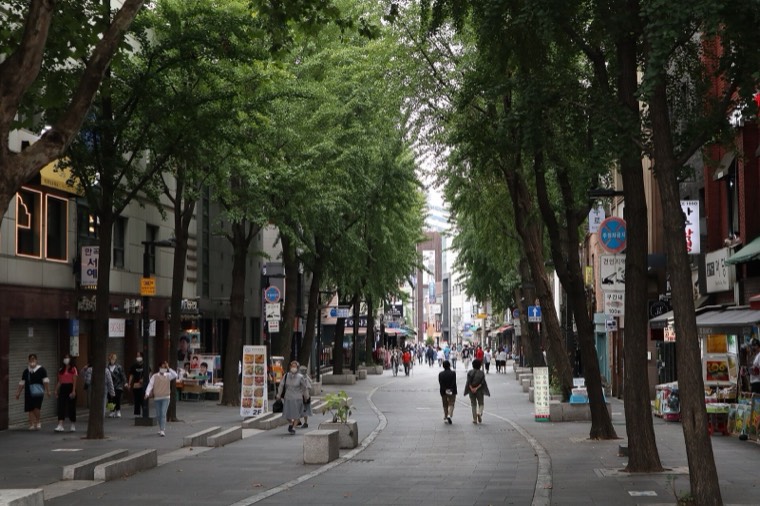
Insadong (인사동) is the easy pairing on any open day. Leave by the main gate onto Jongno, walk west past Tapgol Park, and you reach the start of Insadong-gil in roughly ten to fifteen minutes, with teahouses and craft shops for a slow end to the day. Search 종묘 for the shrine and 인사동길 for the street in Naver Map or Kakao Map. Jongno 3-ga Station on Lines 1, 3 and 5 is about five minutes from the shrine's main gate by Exit 11 or Exit 8.
A Monday plan works when most palaces are closed: Gyeongbokgung, which opens on Mondays, in the morning; lunch around Anguk; the 14:00 English guided tour at Jongmyo; then tea in Insadong. It is also the best way to see Jongmyo as it deserves to be seen, slowly and with a docent explaining what each building was for, without weekend crowds on the stone court.
Questions visitors ask
Can I walk around Jongmyo on my own any day?
Only on Wednesdays, Saturdays, Sundays and public holidays, which are free-viewing days. On Mondays, Thursdays and Fridays you can enter only with a timed guided tour of about 50 minutes, and on Tuesdays the shrine is closed. Summer and festival periods sometimes switch every open day to free viewing, so check the notice board.
Do I need to reserve the English guided tour?
Not as an individual or a party of fewer than ten. Buy a ticket on site and be at the start before 10:00, 12:00, 14:00 or 16:00, because latecomers are not admitted. Groups of ten or more book online between 30 and 4 days ahead. Each session takes up to 200 people.
Is the main hall open again after its restoration?
Yes. Repairs on Jeongjeon began in 2020, and the 49 spirit tablets kept at Changdeokgung during the work were returned in a formal rite on April 20, 2025. Some sources give 2024 for the completion, but the official return took place in April 2025. The chamber doors stay closed except during rites and announced special viewings.
How can I see the Jongmyo Jerye ceremony?
It is held on the first Sunday of May and the first Saturday of November. Watch the Jongmyo notice board on royal.khs.go.kr in the weeks before; in 2026 the May rite had free entry to the grounds and spectator seats reserved through Ticketlink about two weeks ahead. The main Jeongjeon rite takes place in the afternoon.
How long does a visit take?
A guided weekday tour lasts about 50 minutes. On a free-viewing day, allow an hour to walk the full route at a relaxed pace, or 90 minutes if you want to sit for a while in Jeongjeon's court. On a rite day, expect to spend most of an afternoon.
Sources and method
Written for: Visitors who have seen or plan to see a palace and want to understand the Confucian rites behind the Joseon monarchy, and to visit Jongmyo on the right day.
Method: Researched from the official sources listed below, checked on October 20, 2026. Hours, fees and booking rules can change; the linked official pages are the final word. Spotted something out of date? Tell us.
- Royal Palaces and Tombs Center (Korea Heritage Service) — Visiting hoursTuesday closure; free-viewing days (Sat, Sun, holidays, every Wednesday); timed-tour days (Mon, Thu, Fri, about 50 minutes, 200 per session); English times; Korean-only commentary on Saturdays and holidays; seasonal hours; Buksinmun and Changgyeonggung Yulgok-ro gate cut-offs.
- Royal Palaces and Tombs Center — Admission fees1,000-won adult fee, foreign age bands, Wednesday Culture Day free entry, hanbok free entry.
- Royal Palaces and Tombs Center — Jongmyo reservationsTimed tours by language; booking 30 to 4 days ahead; parties under ten buy on site; no booking on general viewing days; late arrivals refused.
- Royal Palaces and Tombs Center — Jongmyo Shrine and its history (English)1395 founding and palace–shrine–altar layout, Jeongjeon bay expansions (7 to 19), Yeongnyeongjeon 1421, 1608 rebuilding, 1969 revival and 1971 move of the rite, ancillary buildings.
- Royal Palaces and Tombs Center — Jongmyo Shrine, UNESCO World Heritage (English)Criterion (iv); tablets of Joseon kings and queens and Korean Empire emperors and empresses; rite and music preserved.
- Royal Palaces and Tombs Center — Jongmyo Jerye and Jeryeak, intangible heritage (English)Eight ritual steps, offerings, historic frequency, current dates (first Sunday of May, first Saturday of November), Botaepyeong and Jeongdaeeop, instruments, munmu and mumu, UNESCO 2001.
- Royal Palaces and Tombs Center — Notice: 2026 palace festival and Jongmyo DaejeMay 3, 2026 rite times (Yeongnyeongjeon 10:00–12:00, Jeongjeon 14:00–16:30, chamber viewing after), free entry with no tours, Ticketlink seat reservations from April 17.
- Royal Palaces and Tombs Center — Jongmyo notice boardJuly–August 2026 switch from timed tours to general admission; festival-period switches to general viewing.
- Seoul Metropolitan Government Media Hub — Jongmyo visiting tips (June 17, 2025)Jeongjeon about 101 m long; 19 chambers, 49 tablets (19 kings, 30 queens); Yeongnyeongjeon 16 chambers, 34 tablets; Gongsindang 83 officials; Chilsadang; official route order; tablets kept at Changdeokgung during repairs and returned April 20, 2025, first such rite in 155 years.
- Royal Palaces and Tombs Center — Jongmyo directionsJongno 3-ga Station Exits 11 and 8, about 5 minutes; address 157 Jong-ro; no shrine parking.
- Royal Palaces and Tombs Center — October–November 2026 free admission noticeJongmyo switches to general (self-guided) viewing with free admission from October 29 to November 15, 2026; Tuesday closure still applies.