In shortWith time for one palace, pick Gyeongbokgung for scale and ceremony or Changdeokgung for beauty and the Secret Garden. Changgyeonggung and Deoksugung stay open until 21:00 for 1,000 won, and Gyeonghuigung is free and nearly empty. Remember the split closing days: Gyeongbokgung (and Jongmyo) close on Tuesdays, the other four on Mondays.
Key facts
- Closed Tuesdays
- Gyeongbokgung (and Jongmyo Shrine)
- Closed Mondays
- Changdeokgung, Changgyeonggung, Deoksugung, Gyeonghuigung
- Adult fees
- 3,000 won Gyeongbokgung and Changdeokgung; 1,000 won Changgyeonggung and Deoksugung; Gyeonghuigung free
- Integrated palace pass
- 6,000 won, valid 6 months; 4 royal palaces + Jongmyo, Secret Garden excluded
- Free entry
- Foreign visitors 18 and under or 65+, qualifying hanbok, and Wednesdays except Gyeongbokgung and the Secret Garden
- Open until 21:00
- Deoksugung and Changgyeonggung (last entry 20:00)
- UNESCO-listed palace
- Changdeokgung (1997)
Checked Oct 20, 2026 against the official sources listed at the end of this guide.
Why one city ended up with five royal palaces
Seoul's palaces are not five copies of the same thing. Gyeongbokgung (경복궁) was the Joseon dynasty's main palace from 1395. Changdeokgung (창덕궁) followed in 1405 as a secondary palace, and Changgyeonggung (창경궁) took shape in 1483, when King Seongjong enlarged an older residence for the senior women of the royal family. The 1592 Japanese invasion burned all of them, and for the next centuries the court lived wherever had been rebuilt, which is how a secondary palace, Changdeokgung, became the real seat of power for about 270 years.
Gyeonghuigung (경희궁) was built between 1617 and 1623 as a further secondary palace on the city's west side. Deoksugung (덕수궁) began in 1593 as a temporary court in a royal relative's manor and, in 1897, became the seat of Emperor Gojong's short-lived Korean Empire, which explains its Western stone buildings. Under Japanese rule every palace was stripped, built over or turned into a public park, and much of what you see is the product of restoration since the 1980s. Each palace therefore tells a different chapter, and that should drive your choice.
It helps to know two Korean terms. A beopgung (법궁) was the official main palace, and an igung (이궁) a secondary palace the king could move to when the main one was damaged, unlucky or simply out of favor. Gyeongbokgung was the beopgung and Changdeokgung its igung, but after 1592 the roles shifted: with Gyeongbokgung in ruins, Changdeokgung and Changgyeonggung served as the main palace and Gyeonghuigung became the secondary one. Kings moved between them for centuries, which is why the buildings feel lived in rather than purely ceremonial.
The short answer in one table
If you remember one thing, make it the closing days. Gyeongbokgung and Jongmyo Shrine close on Tuesdays; Changdeokgung, Changgyeonggung, Deoksugung and Gyeonghuigung close on Mondays. So a Monday is a Gyeongbokgung day and a Tuesday is an everything-else day. When a regular closing day falls on a public holiday, the four royal palaces and Jongmyo open that day and close on the next non-holiday instead. Fees below are adult rates; for foreign visitors that means ages 19 to 64.
Last entry at the four royal palaces is one hour before closing. Gyeongbokgung and Changdeokgung change their hours with the season, while Changgyeonggung and Deoksugung keep the same 09:00 to 21:00 schedule all year, which makes them the only two you can plan for after dark without checking a seasonal calendar. Gyeonghuigung, run by the Seoul Museum of History rather than the national heritage service, keeps museum hours.
| Palace | Best for | Closed | Adult fee | Hours |
|---|---|---|---|---|
| 경복궁 Gyeongbokgung | Scale, the classic axis, guard ceremony, two free museums | Tuesday | 3,000 won | 09:00–17:00/18:00/18:30 by season |
| 창덕궁 Changdeokgung | Architecture fitted to hills; Secret Garden tour | Monday | 3,000 won (+5,000 garden) | 09:00–17:30/18:00/18:30 by season |
| 창경궁 Changgyeonggung | Quiet grounds, 1616 throne hall, glasshouse, evenings | Monday | 1,000 won | 09:00–21:00 |
| 덕수궁 Deoksugung | Korean Empire history, Western halls, evenings, Daehanmun guard ceremony | Monday | 1,000 won | 09:00–21:00 |
| 경희궁 Gyeonghuigung | Free, nearly empty, pairs with Seoul Museum of History | Monday | Free | 09:00–18:00 |
Gyeongbokgung: the palace that explains the others
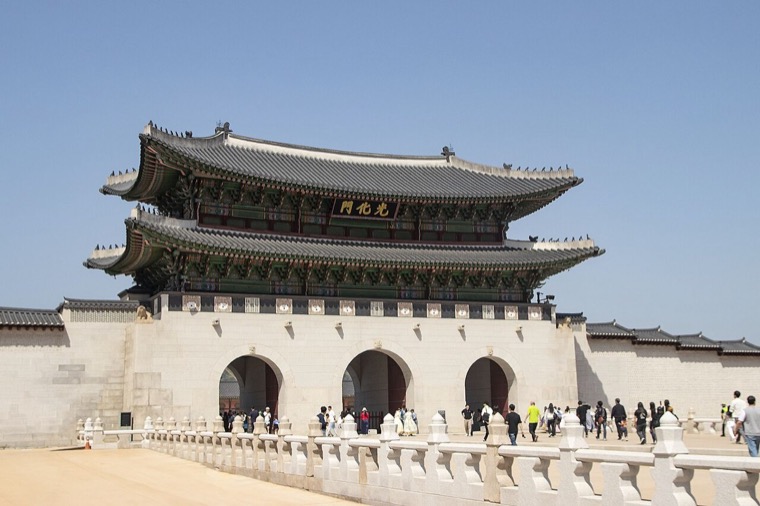
Go here first if you will see more than one palace. Its straight south-to-north sequence of gates, throne hall, office and residences is the template that the others adapt or ignore, and once you have walked it, Changdeokgung's bends and Deoksugung's stone halls make sense. It also stages the Royal Guard Changing Ceremony at 10:00 and 14:00 in front of Heungnyemun gate, and the free National Palace Museum and National Folk Museum sit on its grounds. Give it two to three hours; anything under ninety minutes means seeing little beyond the throne hall.
The trade-off is crowds and cost. Gyeongbokgung is the busiest palace, the most expensive along with Changdeokgung, and the only one excluded from free Culture Day Wednesdays. It is also the palace most affected by seasonal programs, from night openings to closures of the throne-hall platform during peak weeks. Skip it only if you saw it on an earlier trip, or if Tuesday is your single palace day.
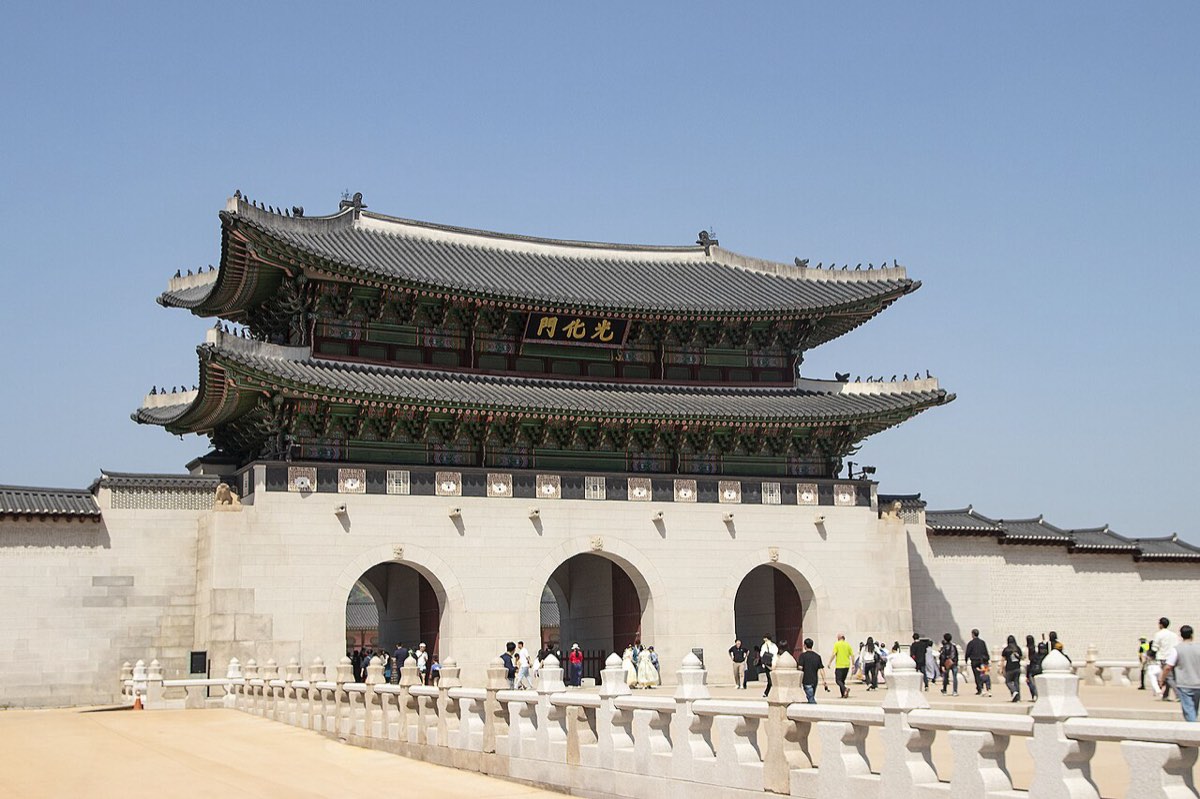
Changdeokgung: choose it for beauty
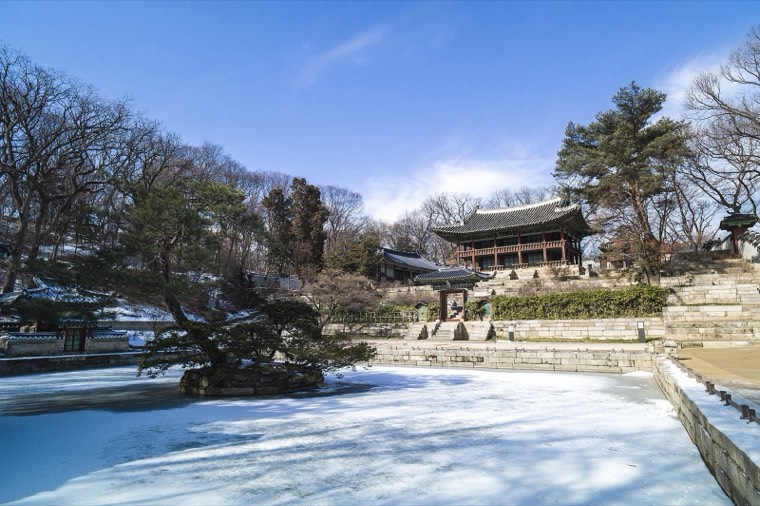
If you will see only one palace and care more about architecture and landscape than pageantry, choose Changdeokgung. It is the only one of the five on the UNESCO World Heritage List, inscribed in 1997, and its halls follow the slope of the hills instead of a ruler-straight axis. Behind them, the Huwon (후원), or Secret Garden, is the finest palace experience in Seoul, but it can be seen only on a timed guided session: 100 places each, half sold online from 10:00 six days ahead and half at the ticket office from 09:00 on the day.
Budget about three hours including the garden, and book the garden before you fix anything else in your itinerary; in April, May, October and November it sells out quickly. Without a garden ticket, the palace halls alone are still worth an hour, especially the scholar-style Nakseonjae compound, and the gate Hamyangmun lets you walk straight on into Changgyeonggung for another 1,000 won. Our separate Changdeokgung guide covers the booking steps in detail.
Changgyeonggung and Gyeonghuigung: the quiet pair
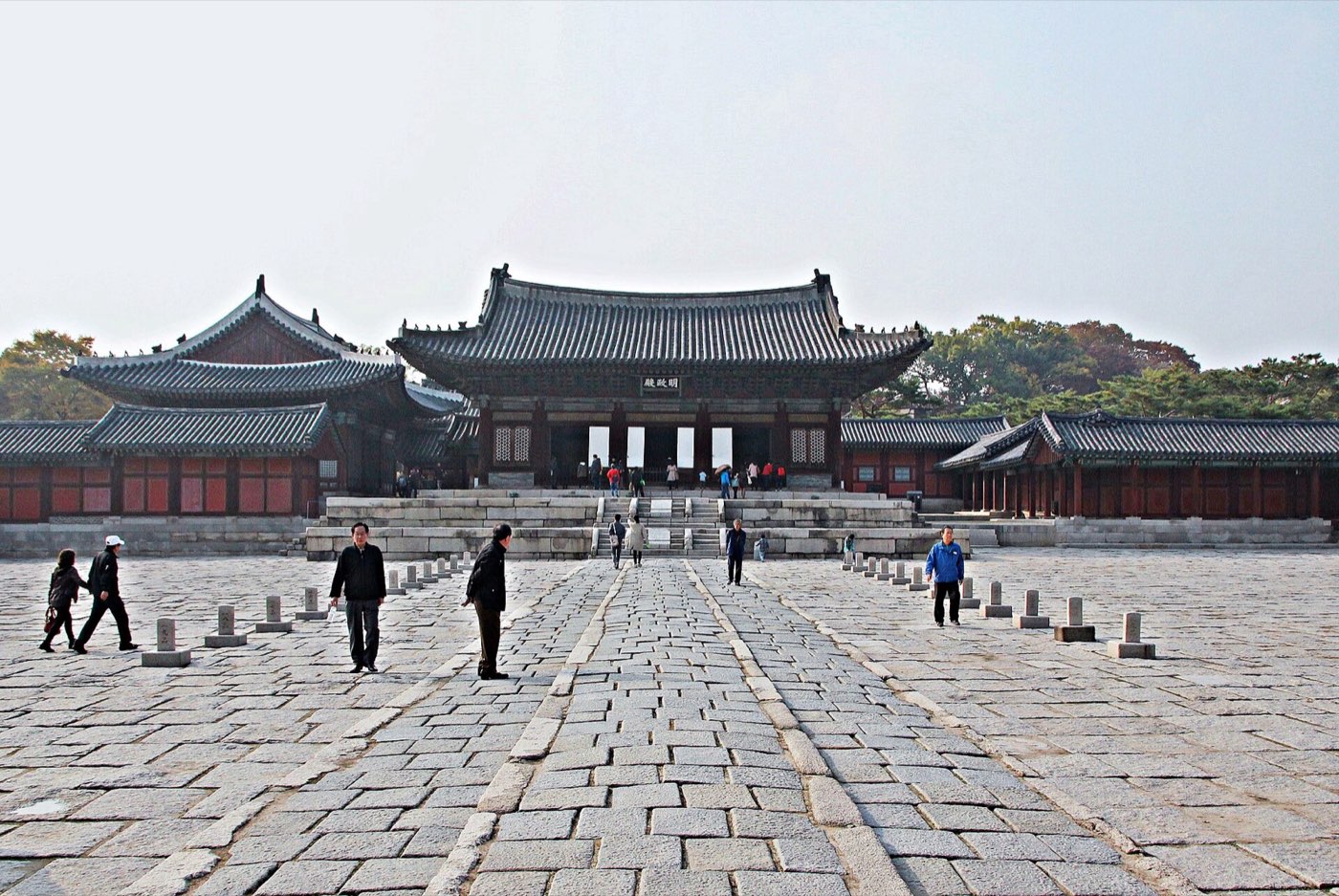
Changgyeonggung has the most poignant story. From 1909 the Japanese-controlled government installed a zoo and botanical garden here, and in 1911 the palace was demoted to a public park called Changgyeongwon. Its name was restored only in 1983, when restoration began. What remains is spacious and calm. Its throne hall, Myeongjeongjeon (명정전), dates from a 1616 rebuilding, centuries older than Gyeongbokgung's, and the white-framed glasshouse Daeonsil (대온실) is a survivor of the botanical-garden years. Open until 21:00 for 1,000 won, it suits an unhurried late afternoon.
Gyeonghuigung is the palace most visitors never hear of. Built between 1617 and 1623 and given its present name in 1760, it lost most of its buildings to reuse elsewhere and to colonial-era construction. Seoul's city government began excavating in 1987, rebuilt halls including the throne hall Sungjeongjeon (숭정전), and opened it in 2002. Its old main gate, Heunghwamun (흥화문), stands slightly out of place because its original site had been built over. Entry is free, it closes on Mondays, and it sits beside the Seoul Museum of History, about seven minutes on foot from Gwanghwamun Station Exit 7 or eight from Seodaemun Station Exit 4.
Neither is a substitute for Gyeongbokgung or Changdeokgung on a first trip. They are what you add when you want space, silence or an extra hour in a neighborhood you are already in: Changgyeonggung straight after Changdeokgung, and Gyeonghuigung on a walk between Gwanghwamun and Seodaemun, perhaps combined with the history museum next door.
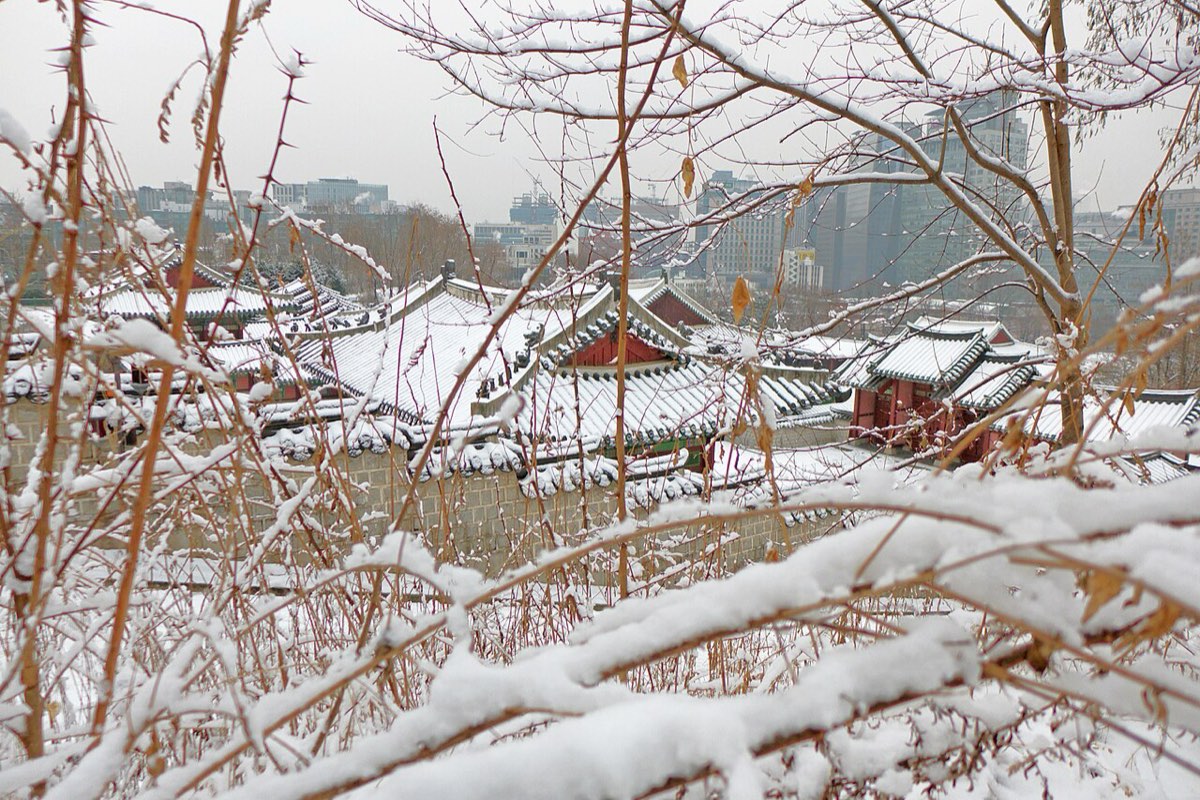
Deoksugung: the evening palace with a Western face
Deoksugung is where Korea tried to become a modern empire. Emperor Gojong moved here in 1897 after a year of refuge in the Russian legation and proclaimed the Korean Empire; the palace gained Western-style buildings, including the neoclassical Seokjojeon (석조전), completed in 1910, beside traditional halls. After his forced abdication in 1907 the palace was renamed Deoksugung, and it shrank drastically under colonial rule. Seokjojeon now houses the Daehan Empire History Museum, entered only on guided sessions booked online in advance.
In practical terms it is the easiest palace to fit in. It sits opposite Seoul City Hall, two minutes from City Hall Station Exit 2 on Lines 1 and 2, costs 1,000 won and stays open until 21:00 every day except Monday, so it works after dinner. In front of its main gate, Daehanmun (대한문), Seoul's city government stages a Royal Guard Changing Ceremony at 11:00 and 14:00 daily except Mondays. It is free and needs no palace ticket. Deoksugung is compact; an hour is enough unless you book Seokjojeon.
Three buildings keep shorter hours than the grounds. Seokjojeon opens 09:30 to 17:30 with the last guided session at 16:30, booked online through the palace reservation pages; Dondeokjeon (돈덕전), a rebuilt reception hall used for exhibitions, opens 09:00 to 17:30; and Jungmyeongjeon (중명전), a short walk away in the Jeong-dong neighborhood, opens 09:30 to 17:30. Dondeokjeon closes periodically between exhibitions, so check the Deoksugung notice board if it is the reason for your visit. After 17:30, plan on the grounds and the traditional halls only.
Passes, free days and the money question
The integrated palace pass (궁궐 통합관람권) costs 6,000 won, is valid for six months from purchase and gives one entry each to Gyeongbokgung, Changdeokgung, Changgyeonggung, Deoksugung and Jongmyo. Bought separately, those five adult tickets total 9,000 won, so the pass saves 3,000 won if you use them all and breaks even with Gyeongbokgung and Changdeokgung alone. It excludes the Secret Garden, is sold at the palace and Jongmyo ticket offices, and can be refunded only at the issuing palace and only if no section has been used.
Before buying anything, check if you pay at all. Foreign visitors 18 and under or 65 and over enter the four royal palaces and Jongmyo free with a passport; anyone in a qualifying hanbok enters free; and every Wednesday is Culture Day (문화가 있는 날), with free entry everywhere except Gyeongbokgung and the Secret Garden, which also has its own, narrower exemptions. Fees have been unchanged for about two decades and the heritage service has been preparing new rates, so recheck the official fee page if you travel in 2027.
Our judgment: the pass is worth it only if you are a paying adult who will visit Gyeongbokgung plus Changdeokgung on days other than Wednesday, ideally with one or two of the cheaper sites added. For a short trip built around one or two palaces, individual tickets are simpler, and the sums involved are small either way.
Half a day, a full day or two days: three plans
Half a day, about four hours: Gyeongbokgung only, from the 10:00 guard ceremony along the throne-hall axis to the Gyeonghoeru and Hyangwonjeong pavilions, finishing in the National Palace Museum. On a Tuesday, swap in Changdeokgung's halls and continue through Hamyangmun gate into Changgyeonggung. Do not try to squeeze two major palaces into one morning. You will rush both and remember neither, and the second will feel like a repeat of the first.
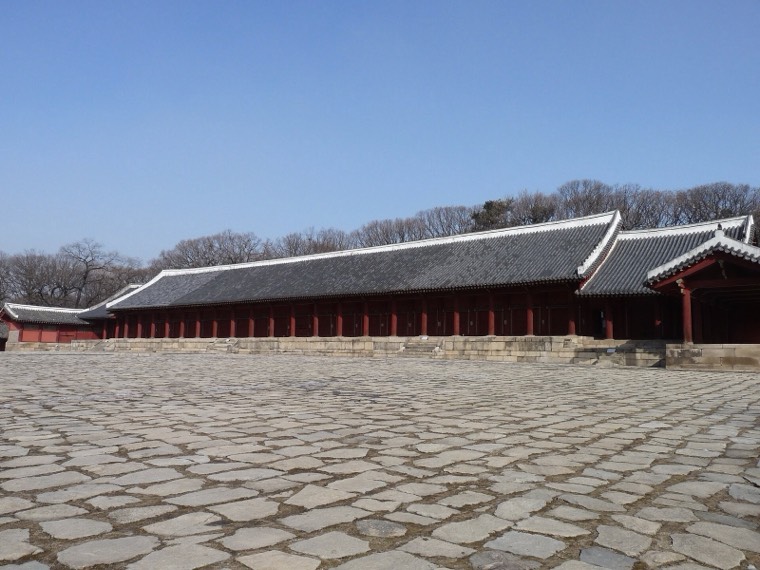
One full day: Gyeongbokgung in the morning, then a walk of roughly 20 to 25 minutes through the Bukchon lanes, or a short taxi ride, to Changdeokgung for a pre-booked 14:30 English garden session, and out through Hamyangmun into Changgyeonggung, which stays open until 21:00. On a Monday, when that plan fails, pair Gyeongbokgung with a timed guided visit to Jongmyo Shrine in the afternoon instead, then end the day in Insadong.
Two days: on day one, Gyeongbokgung with one of its museums, then Deoksugung after dark and the city-hall area for dinner. On day two, which cannot be a Monday, do Changdeokgung with the Secret Garden in the morning and Changgyeonggung after lunch, then continue to Jongmyo through the Yulgok-ro link if it is a Wednesday, weekend or public holiday. Gyeonghuigung fits either day as a free half-hour detour near Gwanghwamun.
Weather should shape the choice as much as the calendar. On a rainy day, Gyeongbokgung paired with the National Palace Museum gives you two hours indoors, and compact Deoksugung with a booked Seokjojeon session works well too. In July and August, go to Gyeongbokgung at opening time and save Changgyeonggung or Deoksugung for the cooler evening. In late October and November, put Changdeokgung's garden and Changgyeonggung's pond first, because autumn color is what they do best.
Seoul palace quiz
Six real planning decisions, from closing days to the palace pass, to test whether you'd ever arrive at a locked gate.
-
Your only free day for palaces is an ordinary Monday. Which plan works?
Show the answer
Gyeongbokgung in the morning, then a timed guided visit to Jongmyo Shrine. Changdeokgung, Changgyeonggung, Deoksugung and Gyeonghuigung all close on Mondays, while Gyeongbokgung and Jongmyo close on Tuesdays. That makes Monday a Gyeongbokgung day, best paired with Jongmyo, which runs timed guided tours that day.
-
You'll have a free evening after dinner on a Thursday. Which palace can you count on being open until 21:00?
Show the answer
Deoksugung, opposite Seoul City Hall. Deoksugung and Changgyeonggung keep 09:00 to 21:00 hours all year, with last entry at 20:00 and Monday closures. Gyeongbokgung opens at night only during announced seasonal runs with separate tickets.
-
You can fit in only one palace, and you care more about architecture and landscape than about ceremony. Which do you choose?
Show the answer
Changdeokgung, booking a Secret Garden session before anything else. Changdeokgung is the only one of the five on the UNESCO World Heritage List, and its halls follow the hills instead of a straight axis. Its Secret Garden can be seen only on timed guided sessions, which sell out quickly in spring and autumn.
-
It's an ordinary Wednesday, which is Culture Day, and you're a paying adult. Where do you still need to buy a ticket?
Show the answer
Gyeongbokgung and the Changdeokgung Secret Garden. Every Wednesday brings free entry to the palaces and Jongmyo, except Gyeongbokgung and the Secret Garden, which charge as usual. Gyeonghuigung is free on any day it is open.
-
You've rented a hanbok skirt but kept your own T-shirt on top. Does that count as qualifying hanbok for free entry to Gyeongbokgung?
Show the answer
No, you need a proper jeogori top as well. Hanbok wearers enter free, foreigners included, but staff check for a jeogori top with the wrap-over collar plus a traditional-shaped skirt or trousers. A hanbok skirt with a T-shirt does not count.
-
As a paying adult, you buy the 6,000-won integrated palace pass. What does it cover?
Show the answer
One entry each to the four royal palaces and Jongmyo, but not the Secret Garden. The pass, valid for six months, gives one entry each to Gyeongbokgung, Changdeokgung, Changgyeonggung, Deoksugung and Jongmyo, and the Secret Garden needs its own ticket. It pays off only if you visit at least Gyeongbokgung and Changdeokgung on days other than Wednesday.
Questions visitors ask
If I can only visit one palace, which should it be?
Gyeongbokgung if you want the grand scale, the guard ceremony and the palace museum in one stop; Changdeokgung if you prefer architecture that follows the landscape and can book the Secret Garden. On a Tuesday the choice makes itself, because Gyeongbokgung is closed; on a Monday the other four are closed.
Which palaces can I visit in the evening?
Deoksugung and Changgyeonggung are open until 21:00 all year, with last entry at 20:00, and both close on Mondays. Gyeongbokgung opens at night only during announced seasonal runs with separate tickets. Changdeokgung's evening programs are special ticketed events, not regular opening hours.
Do I need to book palace tickets in advance?
Not for general entry to any of the five; buy at the gate. Advance booking matters only for special areas: the Changdeokgung Secret Garden, Deoksugung's Seokjojeon museum and Gyeongbokgung's seasonal programs such as night viewing. Gyeonghuigung is free and needs no ticket at all.
Where can I see a royal guard changing ceremony?
At Gyeongbokgung, in the forecourt in front of Heungnyemun gate, at 10:00 and 14:00, not on Tuesdays when the palace is closed. At Deoksugung, in front of Daehanmun gate, at 11:00 and 14:00 daily except Mondays. Both are free to watch, and weather can cancel either.
Is the integrated palace pass worth buying?
Only if you are a paying adult visiting at least Gyeongbokgung and Changdeokgung on days other than Wednesday; those two alone cost 6,000 won, the price of the pass. It does not include the Secret Garden, and it is sold at palace ticket offices, valid for six months.
Sources and method
Written for: Visitors deciding which of Seoul's royal palaces to fit into a half-day, a full day or two days, and in what order.
Method: Researched from the official sources listed below, checked on October 20, 2026. Hours, fees and booking rules can change; the linked official pages are the final word. Spotted something out of date? Tell us.
- Royal Palaces and Tombs Center (Korea Heritage Service) — Visiting hoursMonday and Tuesday closures, holiday rule, seasonal hours, 09:00–21:00 at Deoksugung and Changgyeonggung, Seokjojeon pre-booking, Yulgok-ro gate days.
- Royal Palaces and Tombs Center — Admission feesAdult fees, foreign age bands, hanbok and Culture Day free entry, 6,000-won integrated pass coverage, validity, sale and refund rules, Huwon pricing and booking.
- Royal Palaces and Tombs Center — Changgyeonggung notice: free admission every WednesdayCulture Day free admission changed from the last Wednesday of the month to every Wednesday.
- Royal Palaces and Tombs Center — Directions (per palace)Deoksugung: City Hall Station Exit 2, 2 minutes. The same page with schGroupCode=cdg/cgg gives Anguk Exit 3 for Changdeokgung and Hyehwa Exit 4 for Changgyeonggung.
- Royal Palaces and Tombs Center — Deoksugung Palace and its history (English)1593 temporary court, 1611 Gyeongungung, 1897 Korean Empire, 1904 fire, 1907 renaming, 1910 Seokjojeon, colonial shrinkage.
- Royal Palaces and Tombs Center — Changgyeonggung Palace and its history (English)1483 founding by King Seongjong, 1616 rebuilding of Myeongjeongjeon, 1909 zoo and botanical garden, 1911 Changgyeongwon, 1983 name restored.
- Seoul Museum of History — Gyeonghuigung PalaceHours 9:00–18:00, closed Mondays and January 1, free; 1617–1623 construction, 1760 renaming, 1987 excavation, 2002 opening, relocated Heunghwamun. Walking times (Gwanghwamun Exit 7 about 7 minutes, Seodaemun Exit 4 about 8 minutes) are on the museum's subway directions page.
- Ministry of Culture, Sports and Tourism — Festival listing: Royal Guard Changing Ceremony at Deoksugung2026 schedule: 11:00 and 14:00 in front of Daehanmun, closed Mondays, free; organized by Seoul Metropolitan Government.
- Korea Heritage Agency — Royal guard ceremony program guideGyeongbokgung changing ceremony at 10:00 and 14:00, about 20 minutes.
- The Korea Herald — Palace admission fees to be revised (Sept. 9, 2026)Fees unchanged for about two decades; revised fee guidelines being prepared by the Korea Heritage Service.
- Royal Palaces and Tombs Center — October–November 2026 free admission noticeFree admission at the four palaces and Jongmyo October 29 to November 15, 2026, Secret Garden and closing days excluded. Related notices on the same board: Changgyeonggung night-viewing suspension November 10–15, 2026; Dondeokjeon closed October 13 to November 1, 2026.