In shortA mogyoktang is a single-sex bathhouse where everyone bathes nude; a jjimjilbang adds a shared floor where men and women wear the provided T-shirt and shorts and move between heated rooms, a snack bar and sleeping mats. Shower thoroughly before entering any pool, keep your towel out of the water, and check each venue's own rules on tattoos and overnight stays.
Key facts
- Korean names
- 찜질방 (jjimjilbang); 목욕탕 (mogyoktang); 사우나 (sauna)Naver Map
- Bath areas
- Separated by sex; bathing is fully nude
- Shared jjimjil floor
- Co-ed; uniform T-shirt and shorts provided
- Heat guidance
- Start in 30–40°C rooms; limit rooms above 60°C to about 20 minutes
- Children
- No entry to the opposite sex's bath from 48 months (age 4), since June 22, 2022
- Under-19s
- Kept out 22:00–05:00 at 24-hour venues unless a parent or guardian comes along or consents in writing
- Tattoos
- No national ban; each venue sets its own policy
- Classic snack
- Roasted eggs with sikhye (식혜), a sweet rice drink
Checked Oct 20, 2026 against the official sources listed at the end of this guide.
Bathhouse, sauna, jjimjilbang: three signs, three experiences
Korean has several words for places where you get clean and warm, and they are not interchangeable. A 목욕탕 (mogyoktang) is a neighborhood bathhouse: a men's side and a women's side, each with showers, hot and cold pools and usually a dry sauna, and little else. Many brand themselves 사우나 (sauna) on the sign. A 찜질방 (jjimjilbang) contains a bathhouse too, but adds a shared, clothed floor of heated rooms, a snack bar, TV areas and space to lie down, where families, couples and friends spend hours together.
At the top end are spa complexes with pools, rooftop baths and themed heat rooms, closer to a water park than to a neighborhood bath; VisitKorea's own guide features examples in Goyang and Suwon. One expatriate writer on Korea.net described the ordinary jjimjilbang as part spa, part community center and part budget hotel, which is accurate. People come for a weekly scrub, to sweat out a cold or a hangover, to pass time between trains, or because a night on the heated floor costs a fraction of a hotel room.
Decide which experience you want before you go. If you only want a bath, a mogyoktang is cheaper, quieter and more local. If you want to linger, eat, nap and try the kiln rooms, choose a jjimjilbang. If you are traveling with someone of another sex and want to spend the time together, only the jjimjilbang's shared floor allows that, since the baths are always separate. On Naver Map, search 찜질방 or 사우나 and read recent reviews for hours, overnight policy and whether there is a scrub service.
From shoe locker to hot pool: the first fifteen minutes
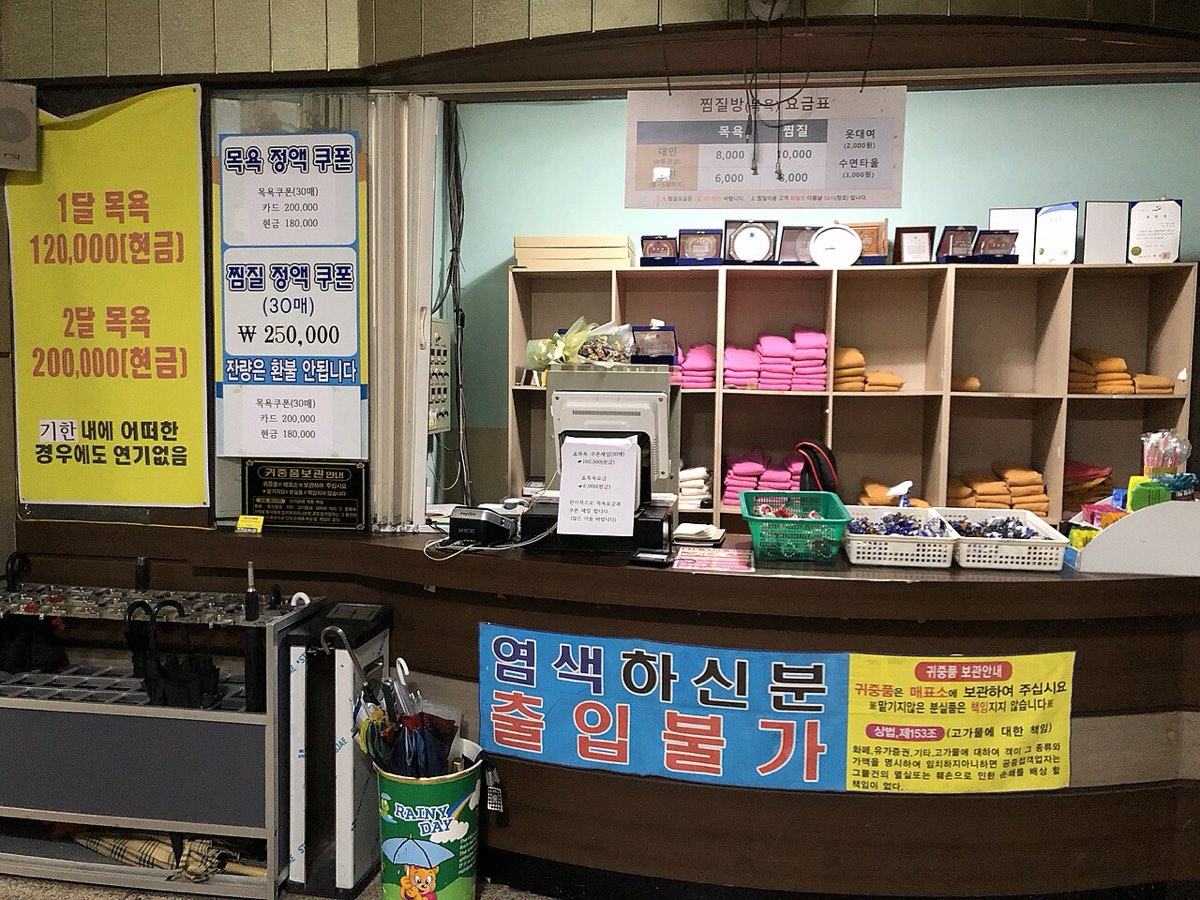
Entry follows a fixed choreography, and most first-time awkwardness comes from not knowing it. Shoes come off at the door and go into a small shoe locker; keep its key. At the counter you pay and receive towels, a uniform for the shared floor, often in different colors for men and women, and a locker key on a wristband. In many places you hand over the shoe key in exchange. The wristband is your wallet for the rest of the visit: snacks, drinks and extras are charged to it and settled when you return it.
Go into your own sex's locker room, put everything in the locker and undress completely. Take only the small towel and any toiletries you want to use; many bathhouses supply soap and shampoo, but bring a comb, lotion and hair ties if you are particular. Your phone stays in the locker. Before you touch any pool, wash thoroughly with soap at a shower station, hair included, and tie long hair up so it does not trail in the water.
Then the pools, typically a hot one around 40°C, a slightly cooler herbal or mineral pool, and a cold plunge. Ease in slowly, do not swim or splash, and keep the towel out of the water; Koreans fold it on their heads or leave it at the edge. When you leave a shower station, rinse the stool and basin for the next person. To move on to the shared floor, dry off, put on the uniform from your locker and follow the signs out of the changing area.
- Shoes into the entrance shoe locker; keep the key
- Pay at the counter; collect towels, uniform and locker wristband
- Undress fully in the single-sex locker room; phone stays locked away
- Wash with soap before entering any pool; tie up long hair
- Keep the towel out of the water
- Put the uniform on before entering the co-ed jjimjil area
- Return the wristband at the counter and pay for extras
Nudity, children and the rules nobody explains
For many visitors the nude bath is the hurdle. It helps to know how ordinary it is: Korean children grow up going with a parent, and in the bath nobody is looking at you, because looking is the one thing you do not do. Bodies of every age and shape share the room. The polite posture is relaxed indifference, with your eyes on your own business and conversation kept low. Holding the small towel in front of you while you walk between stations is normal and goes unremarked.
Some rules are written into law. Under Korea's public hygiene regulations, since June 22, 2022 children aged four (48 months) and over may not enter the opposite sex's bath or changing room, so a father with a five-year-old daughter needs another adult to take her into the women's side. Bathhouses must also refuse entry to visibly drunk customers and to people with infectious diseases. Cameras of any kind are unacceptable in locker rooms and baths, and covert filming is a serious criminal offense in Korea.
The unwritten rules are about sharing space. Sit while you shower where there are low stations, so you do not spray the person next to you. Put basins and stools back where you found them. Do not leave toiletries to claim a shower spot while you soak elsewhere for half an hour. Rinse off sweat before returning to a pool after a heat room. In many bathhouses the showers shut off automatically after a minute or so; just press the button again.
Kiln rooms, salt rooms and the ice room: working through the heat
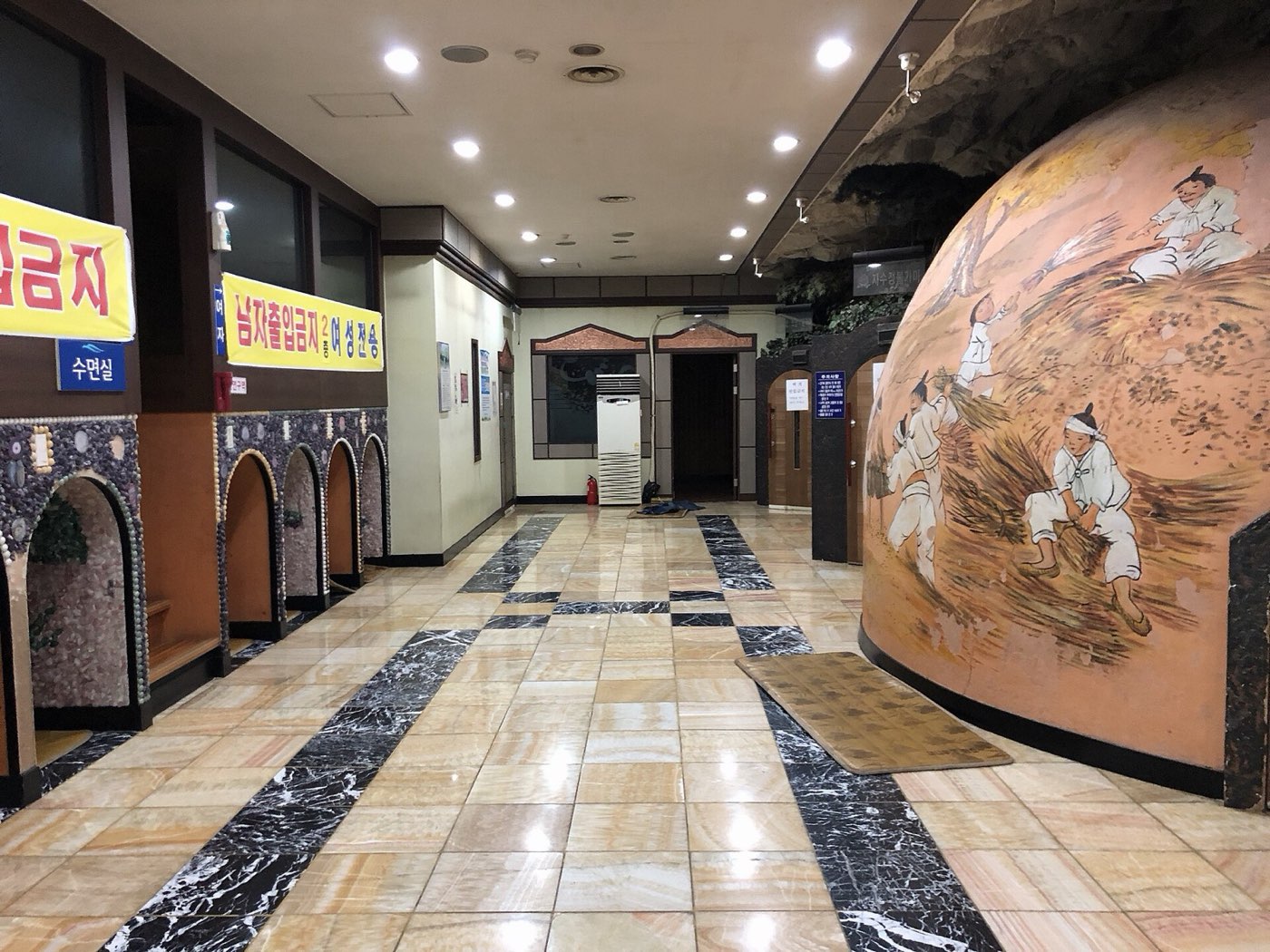
The shared jjimjil floor is what makes a jjimjilbang. Its centerpiece is often a bulgama (불가마), a dome-shaped kiln room lined with clay or stone and run at very high temperatures, sometimes with an hourglass by the door to time your stay. Around it you may find a red clay (hwangto) room, a salt room, a charcoal room, a jade or amethyst room, and an ice room that feels pleasantly mild at first and genuinely cold after a few minutes.
Pace yourself. Korea's tourism organization advises beginners to start in the gentler rooms, around 30 to 40°C, before moving to the hottest ones, and to keep sessions in anything above 60°C to about 20 minutes to avoid burns and dehydration. Lie or sit on a towel rather than bare skin, drink water between rounds, and step out the moment you feel dizzy or your heart is racing. Alternating heat with the ice room, or with a rest on the warm main floor, is the usual rhythm.
You will see towels folded into two rolled 'sheep ears' on people's heads. This is the yangmeori (양머리, sheep head), a style made famous by Korean television; it keeps hair off the face and shields the ears from heat. Any short video shows the fold in a minute, and a photo in one is close to obligatory on a first visit.
Roasted eggs, sikhye and how the snack bar works
Eating is half the visit. The classic pairing is a couple of roasted eggs, their shells browned by slow heat, with a cup of sikhye (식혜), a cold, lightly sweet drink made from rice and malt with soft grains floating in it. After a session in the heat the combination is salty, sweet and cooling at once, and VisitKorea singles it out as the pairing that refreshes a dry mouth. Locals sometimes crack the egg on their own forehead, a joke borrowed from television.
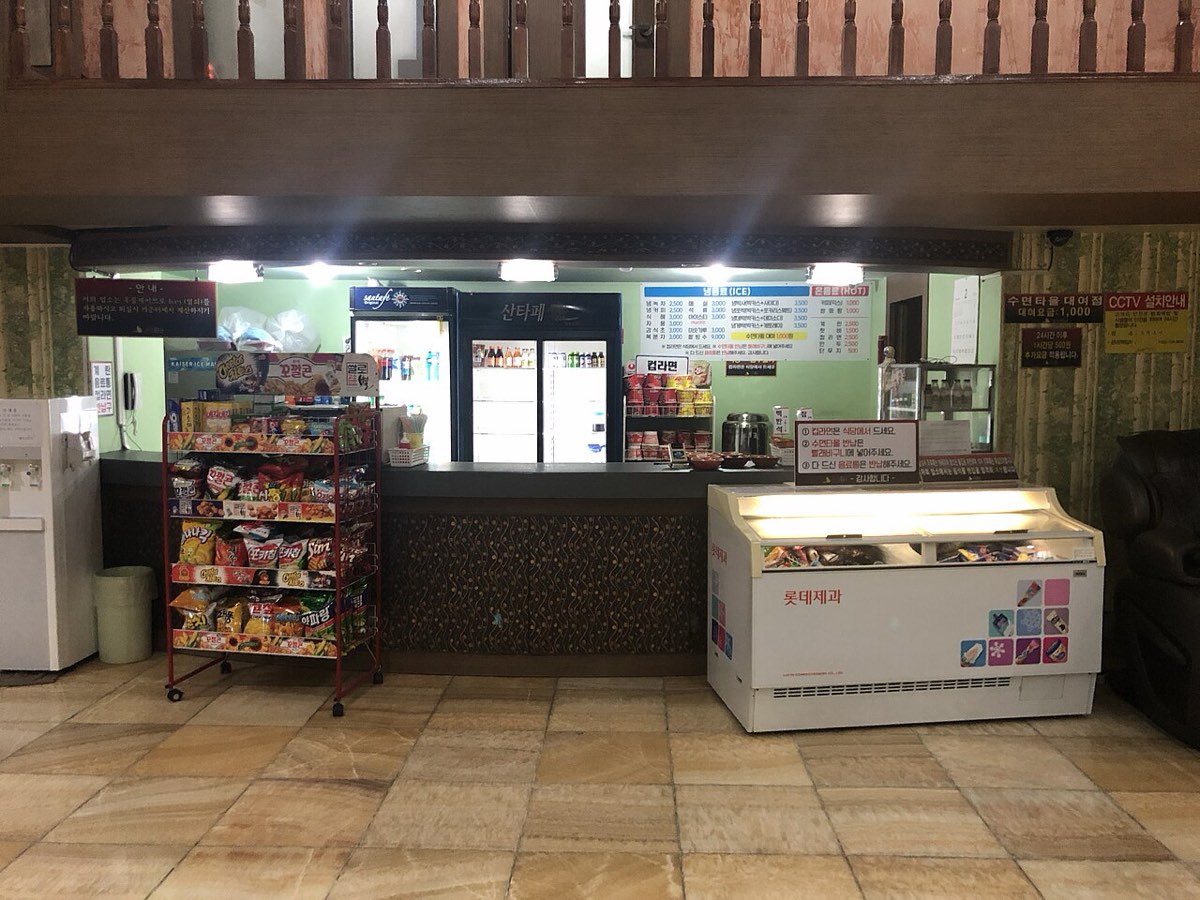
Snack bars sell much more: VisitKorea's list includes fish-cake skewers, fried chicken, tteokbokki, cup noodles, ice cream, seaweed soup (miyeokguk) and misutgaru, a drink of roasted grain powder. Larger places run a proper restaurant with rice and stew dishes. You order at the counter and show or scan your wristband, and the cost is added to your locker key and paid when you leave. Keep a mental tally; it is easy to forget how many drinks you have charged by the end of an afternoon.
Eat in the designated areas, never in the heat rooms, and keep noise down near the sleeping zones. Most places do not want outside food brought in, though a water bottle is fine. Massage chairs, coin karaoke and game corners charge to the same key, so agree on a budget in advance if you are with children who have discovered that the wristband buys ice cream.
Seshin: what the scrub involves and whether to book it
In the bath area you will notice a corner with vinyl-covered tables and an attendant at work. This is the seshin (세신) station, home of the full-body exfoliating scrub that many Koreans consider the main reason to visit. Attendants work only in their own sex's section. They use a coarse mitt known as an Italy towel (이태리타월), and the gray rolls of dead skin that come away are the whole point, not something to be embarrassed about.
Sign up at the station or the front counter, where prices for a basic scrub and add-ons such as massage, a face mask or a hair wash are usually posted. Soak in the hot pool for 20 to 30 minutes first, because softened skin scrubs more easily and less painfully. When your turn comes, lie on the table; the attendant works over your whole body, turns you onto your back, sides and front with taps or one-word instructions, and finishes with a rinse. Payment is made at the station or added to your key.
Book it if your skin is healthy and you want the full local experience. Skip it if you are sunburned, have eczema, broken skin or a fresh tattoo, and speak up if the pressure is too much: 살살 해 주세요 (salsal hae juseyo) means 'gently, please'. Expect your skin to feel tender and look pink for a few hours, so do not schedule a scrub right before a long hike or a day at the beach.
Tattoos, overnight stays and rules that change by venue
Tattoos are handled very differently from Japan. Korea has no national ban on tattooed bathers, and in many neighborhood bathhouses nobody will comment. Individual businesses do set their own rules, however, and Korean newspapers have documented the range: a Gangnam spa refusing guests whose tattoos might bother others, hotel saunas requiring large tattoos to be covered with patches, and gyms asking members to cover up. Hotels and membership venues are the strictest. If your tattoos are large, check the posted rules or ask at the counter before you pay.
Sleeping over is one of the jjimjilbang's oldest functions. At 24-hour places, guests sleep on mats or directly on the heated floor in common halls, with small firm pillows, and some venues set aside darker, quieter sleeping rooms. Expect lights, snoring and late television, and keep valuables in the locker. Overnight stays often cost more than a daytime visit; the price board at the counter will say. Under the public hygiene rules, 24-hour jjimjilbang in Seoul must keep out people under 19 between 22:00 and 05:00 unless a parent or guardian is with them or has signed a consent form, so teenagers traveling without a parent should not plan on staying the night.
Our judgment on the overnight: it is a good fallback after a missed last train or before a very early departure, and an interesting experience once. It is not a substitute for a hotel if you need proper sleep before a demanding day.
Who should sit this one out, and a first visit in three hours
Skip the hot rooms and pools, or ask a doctor first, if you are pregnant, have heart or blood-pressure problems, or have been drinking; heat and alcohol are a bad mix, and bathhouses are required to refuse visibly drunk guests in any case. It is customary to stay out of the shared pools during menstruation and use the showers and clothed heat rooms instead. If public nudity is a firm no for you, a spa complex with swimsuit areas suits you better than a classic jjimjilbang.
For a first visit, allow three hours on a weekday afternoon, when it is quieter. A workable plan: 14:00 check in, wash and soak; 14:30 scrub if booked, or more pool time; 15:00 change into the uniform and go up to the shared floor; 15:10 start in a warm clay room, then step up to the kiln, with ice-room breaks; 16:00 roasted eggs and sikhye; 16:30 a nap on the heated floor; 17:00 back to the bath for a final rinse, dress, return the wristband and pay.
A few words make everything easier: 찜질방 (jjimjilbang), 목욕탕 (mogyoktang), 세신 (seshin, scrub), 수건 (sugeon, towel), 열쇠 (yeolsoe, key), 식혜 (sikhye) and 맥반석 계란 (maekbanseok gyeran, roasted eggs). Pack a small pouch with lotion, a hair tie and a card for the counter. Pointing and a smile cover everything else.
Questions visitors ask
Do I have to be naked at a jjimjilbang?
Only in the single-sex locker rooms and bath areas, where everyone bathes nude. On the shared jjimjil floor with the heat rooms, snack bar and sleeping areas, everyone wears the T-shirt and shorts provided at the counter. You can skip the pools entirely, but you will still change in the locker room.
Can couples or mixed groups go together?
Yes, on the shared jjimjil floor, which is co-ed and clothed. You will separate at the locker rooms and baths, which are always divided by sex, and meet again upstairs or in the common hall once you have changed into the uniforms.
Will I be turned away for having tattoos?
Possibly, but far less often than in Japan. There is no national rule; each business decides. Neighborhood bathhouses are usually relaxed, while hotel saunas and membership venues may require large tattoos to be covered or refuse entry. Check the posted rules or ask at the counter before paying.
Can I sleep at a jjimjilbang instead of booking a hotel?
At 24-hour venues, yes: guests sleep on mats or the heated floor in common halls, sometimes in separate quieter rooms. Expect noise and light, keep valuables locked away, and check the overnight price at the counter. Under-19s are kept out between 22:00 and 05:00 unless a parent or guardian is with them or has given written consent.
Can I bring my child into my side of the bath?
Only if the child is under four. Since June 2022, children aged 48 months and over may not enter the opposite sex's bath or changing room, so an older child needs an adult of the same sex. On the shared jjimjil floor, families stay together.
Does the seshin scrub hurt?
It is vigorous rather than painful if you soak first and your skin is healthy. Attendants use a coarse mitt, and your skin will look pink for a few hours. Say 'salsal hae juseyo' to ask for a gentler touch, and skip it with sunburn, eczema or a fresh tattoo.
Sources and method
Written for: Travelers curious about Korea's bathhouses who want to know exactly what happens inside before they walk in, and whether it suits them.
Method: Researched from the official sources listed below, checked on October 20, 2026. Hours, fees and booking rules can change; the linked official pages are the final word. Spotted something out of date? Tell us.
- VisitKorea — Relax, Eat, and Have Fun at the K-JjimjilbangsWristband locker key used for purchases and settled at the counter; heat-room guidance (30–40°C start, about 20 minutes above 60°C); roasted eggs with sikhye; snack bar items; spa examples in Goyang and Suwon.
- Korea.net — A journey into steam (expat column)Jjimjilbang as spa, community center and budget hotel; uniforms; shower before bathing; pool temperatures; kiln, ice, charcoal and salt rooms; overnight sleeping customs.
- Korea.net — Washington Post picks Korean sauna-spa for beating heatNude bathing in baths, clothed shared rooms, cold room and heat rooms.
- National Law Information Center — Public Health Control Act Enforcement Rule, 2022 amendment reasons (Ordinance No. 890)Amendment in force June 22, 2022: opposite-sex bath age lowered from 5 to 4; people with mental illness removed from the exclusion list.
- Geumcheon-gu Office (Seoul) — Youth access restrictions by business typeBathhouses with jjimjil facilities: youth access restricted 22:00–05:00 under the Public Health Control Act.
- The Korea Herald — 'No tattoos allowed here'Examples of venue-level tattoo policies: a Gangnam spa refusing entry, hotel sauna and pool cover-up rules; no general legal ban on showing tattoos.
- Korea JoongAng Daily — 'Those with tattoos are not allowed to enter'Tattoo restrictions are private business rules, strictest at membership and hotel facilities; examples from Seoul and Busan hotels.
- National Law Information Center — Public Health Control Act Enforcement Rule, Annex 4 (hygiene duties of bathhouse operators, rev. July 14, 2026)Current rules: no mixed-sex entry to baths or changing rooms from age 4 (48 months); entry refused to infectious-disease patients and drunk customers; uniforms required in co-ed heat rooms; 24-hour jjimjilbang keep out under-19s 22:00–05:00 (window set by city/province) unless a parent or guardian accompanies or consents in writing; heat-room warning notices.