In shortLate April to May and the second half of October are the best seasons for Seoul's palace gardens, but they bring sell-out Secret Garden sessions and the short seasonal night openings at Gyeongbokgung. Summer brings the monsoon, normally from about June 25 to July 26 in central Korea, plus heat; winter brings a 17:00 close at Gyeongbokgung but the quietest courtyards. Over Seollal and Chuseok the palaces stay open while the national museum closes on the holiday itself.
Key facts
- Gyeongbokgung closing time
- 17:00 Nov–Feb; 18:00 Mar–May and Sep–Oct; 18:30 Jun–Aug (last entry an hour earlier)
- Open until 21:00 all year
- Deoksugung and Changgyeonggung (closed Mondays)
- Secret Garden English sessions
- Three a day Dec–Feb (10:30, 11:30, 14:30); 15:30 added Mar–Nov
- Jongmyo Jerye (종묘제례)
- First Sunday of May and first Saturday of November
- Buddha's Birthday 2027
- Thursday, May 13 (8th day of the 4th lunar month)
- Monsoon (장마), central Korea
- Normal: about June 25 to July 26
- Seollal / Chuseok 2027
- Holidays Feb 6–9 / Sep 14–16
- Kimjang (김장)
- Late autumn; UNESCO Representative List since 2013
Checked Oct 20, 2026 against the official sources listed at the end of this guide.
A year once organized around rites and harvests
Seoul's heritage sites were built for a society that ran on the seasons, and many still keep its calendar. Seollal and Chuseok, the two great family holidays, follow the lunar calendar, so their dates in the solar calendar move every year. Jongmyo's royal ancestral rite was once performed at the main hall five times a year and now survives twice, in early May and early November. Temples hang lanterns for the Buddha's birthday on the eighth day of the fourth lunar month. And kimjang, the late-autumn making of winter kimchi, is the end of a cycle that begins in spring, when households buy seafood for salting.
Knowing that cycle changes what you notice. The same palace that hosts a festival and evening openings in May is nearly empty and shut by five in January. Treat the season as part of the plan rather than the weather around it. The sections below set out what each season adds, what it takes away and which official notice boards announce the changes, because many seasonal programs are confirmed only a few weeks ahead and should not be planned from a previous year's dates.
Four timetables a year at the palace gates
Palace hours follow daylight, but the palaces do not change on the same dates. Gyeongbokgung (경복궁) switches on the first of March, June, September and November. Changdeokgung (창덕궁) and Jongmyo (종묘) share their own schedule, closing at 17:30 in the darkest months and moving to longer hours a month earlier, in February. Deoksugung and Changgyeonggung ignore the seasons and stay open until 21:00, with last entry at 20:00, every day except Monday. Elsewhere, last entry is an hour before closing, and the Secret Garden's English sessions change with the months as the table shows.
Two months catch people out. In February, Changdeokgung has already moved to its spring hours while Gyeongbokgung still closes at 17:00, so on a winter afternoon see Gyeongbokgung first. In November the garden still runs its 15:30 English session, but Changdeokgung's last entry is 16:30, so see the palace halls before the walk rather than after it. Closing days, by contrast, never change with the season: Gyeongbokgung and Jongmyo close on Tuesdays, and the other palaces on Mondays.
| Months | Gyeongbokgung | Changdeokgung and Jongmyo | Secret Garden English sessions |
|---|---|---|---|
| December–January | 09:00–17:00 | 09:00–17:30 | 10:30, 11:30, 14:30 |
| February | 09:00–17:00 | 09:00–18:00 | 10:30, 11:30, 14:30 |
| March–May | 09:00–18:00 | 09:00–18:00 | 15:30 added |
| June–August | 09:00–18:30 | 09:00–18:30 | 15:30 added |
| September–October | 09:00–18:00 | 09:00–18:00 | 15:30 added |
| November | 09:00–17:00 | 09:00–17:30 | 15:30 added |
Spring: lanterns, the May rite and the first night openings
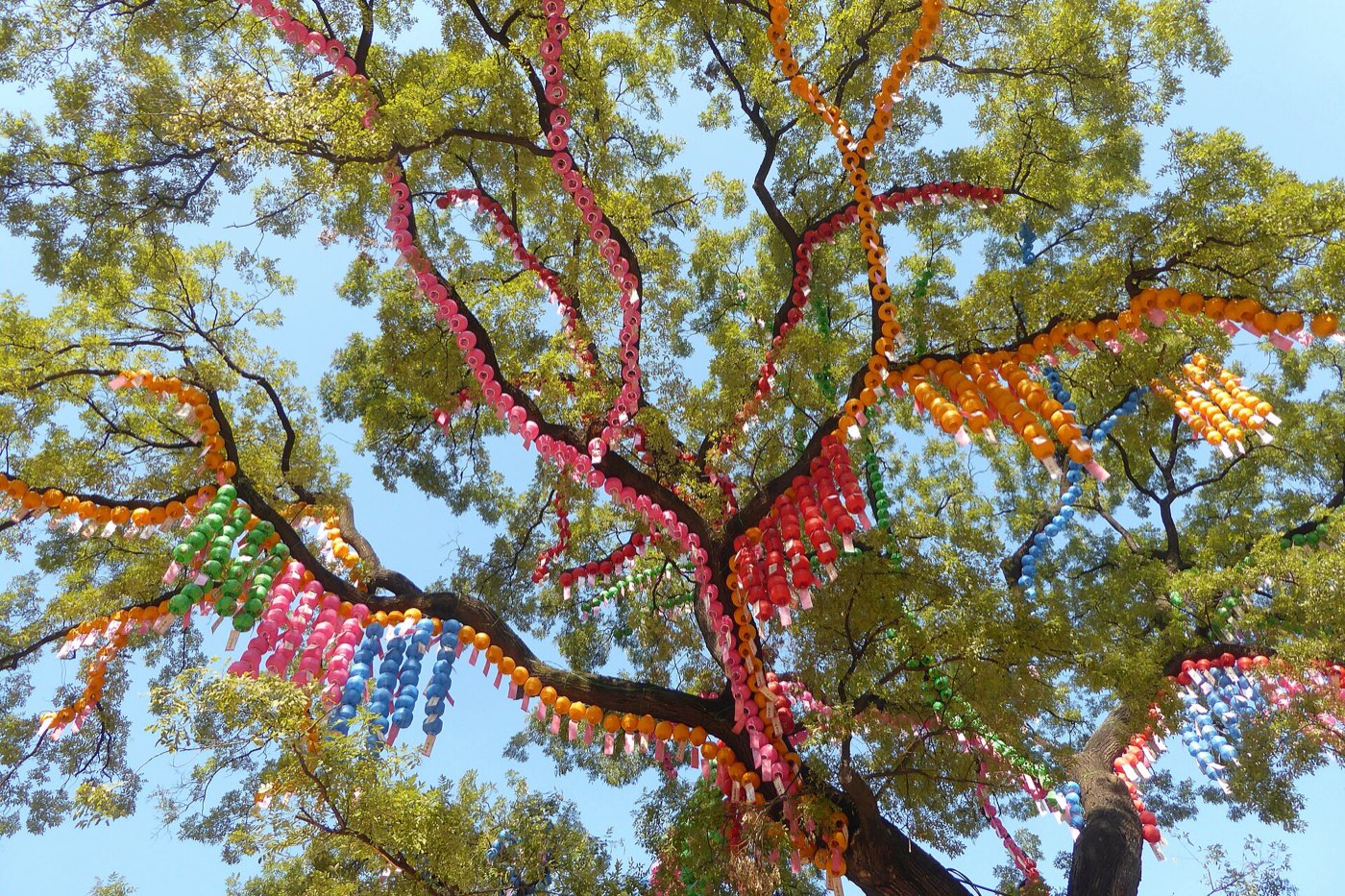
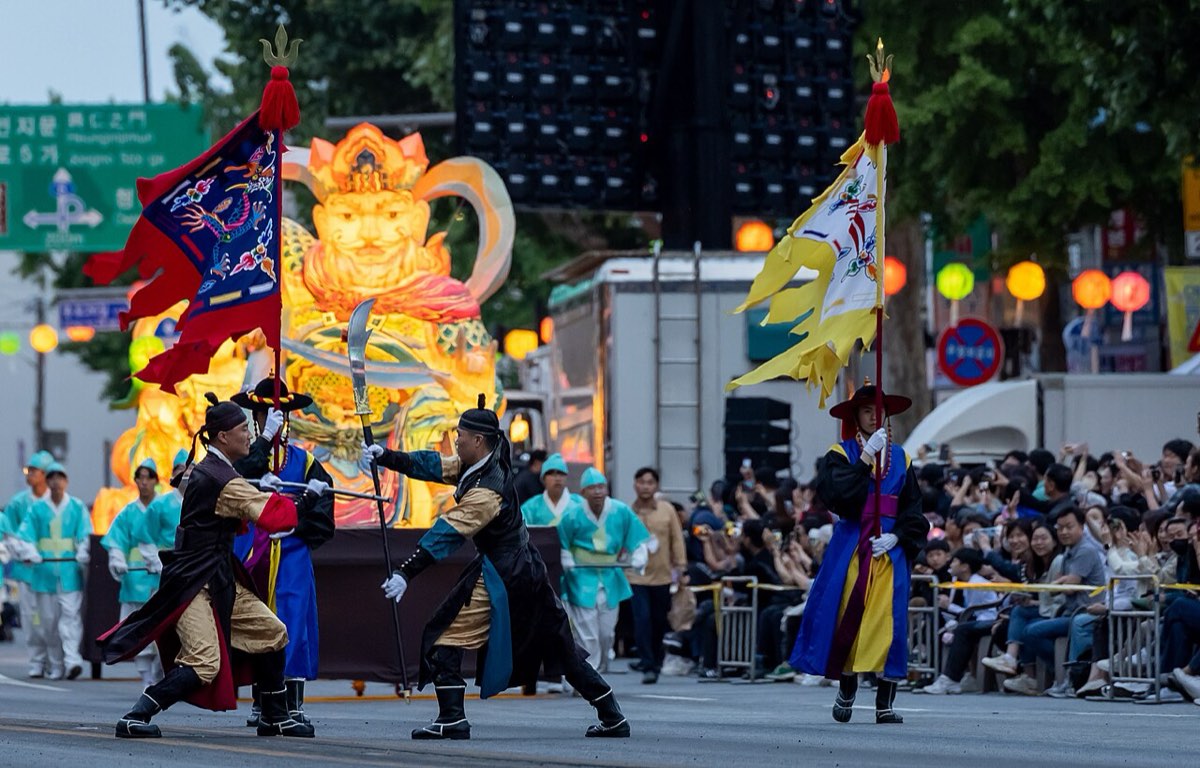
From April, the Buddhist calendar takes over central Seoul. Buddha's Birthday falls on Thursday, May 13, in 2027, and for weeks beforehand temples hang lotus lanterns. The Lotus Lantern Festival, Yeondeunghoe (연등회), peaks on a weekend shortly before the holiday: in 2026 lantern displays filled Gwanghwamun Square, Jogyesa and Bongeunsa from April into May, and the main parade ran along Jongno to Jogyesa on a Saturday evening. The 2027 schedule had not been posted on the festival site, llf.or.kr, by October 20, 2026, so treat 2026 as a pattern rather than a promise.
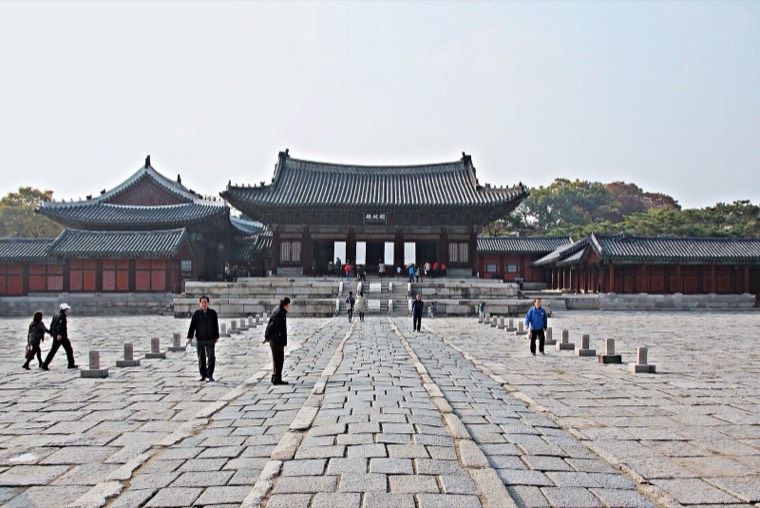
Late April and early May are also festival weeks at the palaces. In 2026 the spring palace festival ran from April 25 to May 3 and ended with Jongmyo Jerye (종묘제례), the royal ancestral rite held on the first Sunday of May, whose ritual and music UNESCO recognized in 2001. That day the rite ran at Yeongnyeongjeon from 10:00 to 12:00 and at the main hall, Jeongjeon, from 14:00 to 16:30; entry to the shrine was free and regular commentary was suspended. The notice went up in early April. If you go, the afternoon rite at the main hall is the one to see.
Spring also brings Gyeongbokgung's first night opening. The 2026 run lasted from May 13 to June 14, from 19:00 to 21:30 with last entry at 20:30, with no night viewing on Mondays or Tuesdays, and it covered the front courts, Gyeonghoeru and the royal residences. Tickets were sold online from early May until the day before each visit, and 300 more a night were sold at Gwanghwamun to foreign visitors only, two per person; the run went ahead in rain. Its notice appeared on April 29, so watch the Gyeongbokgung notice board from late April.
Spring is the Secret Garden's high season, together with autumn: flowering trees and fresh leaves around its ponds, and online sessions that go fast at every release. Gyeongbokgung's special Gyeonghoeru and Hyangwonjeong tour, which in 2026 ran on Wednesdays and Fridays from April to October, takes small groups inside the banquet pavilion, but it is conducted in Korean only. Treat it as a bonus for Korean speakers rather than a reason to choose spring.
Summer: monsoon weeks, heat and the evening shift
Summer in Seoul is two seasons in one. The monsoon, jangma (장마), normally covers central Korea from about June 25 to July 26, roughly 32 days, and the Korea Meteorological Administration's normals put average rainfall in that window at about 378 millimeters, though the actual start and end move from year to year. Heat is the other summer factor, and the agency's heat-wave advisories (폭염특보) are worth checking each morning. Neither closes the palaces, whose summer hours are their longest, but both change what is sensible to attempt in the middle of the day.
The heritage authorities adjust as well. Gyeongbokgung's Gyeonghoeru tour pauses from June to August, and in July and August 2026 Jongmyo set aside its timed-tour system for the heat and let visitors walk in on every open day. The practical answer is to split the day: be at a palace gate at 09:00, move indoors from late morning, and come back out after 17:00 to Deoksugung or Changgyeonggung, both open until 21:00, when the stone courtyards have given up some of the day's heat.
Rain is less of a problem than heat for most cultural sights, provided you choose the right ones. Tiled roofs show what they were designed for in a downpour, with water running down the tile channels and dripping clear of the broad eaves, and Seochon's Suseongdong valley only really flows after rain. What rain spoils is anything on earth or stone: the Secret Garden's slopes turn slippery, and long rental-hanbok hems soak up water from palace courtyards. On the wettest days, the National Museum of Korea, open until 21:00 on Wednesdays and Saturdays, is the natural refuge.
Autumn: maples, Chuseok and the palace festival season
Autumn color reaches its peak across Korea in late October. The Korea Forest Service's 2026 forecast put the national peak, defined as half of a tree's leaves turned, at October 31 for maples and oaks and October 30 for ginkgo, about a day later than the five-year average, with color starting on Seoraksan, forecast to peak on October 20, and spreading into the central and southern regions. The forecast is published each September; check the new one rather than relying on this year's numbers.
Inside the palaces, put the gardens first. The Secret Garden's valleys of maples are the best-known autumn walk in Seoul, and its October and November sessions fill as quickly as spring's. Changgyeonggung next door has more open ground around its pond, needs no booking and stays open until 21:00, which makes it the fallback if the garden is full; at Gyeongbokgung, aim for the island pavilion Hyangwonjeong in the north of the grounds. Gyeongbokgung's second night run also falls in early autumn: in 2026 it lasted from September 2 to October 2 and was announced in mid-August.
Chuseok, the harvest holiday on the fifteenth day of the eighth lunar month, falls on Wednesday, September 15, in 2027, with the holiday running from September 14 to 16. Early November closes the ritual year at Jongmyo with the second ancestral rite, on the first Saturday of the month; its notice tends to appear in late October, as it did on October 27 in 2025. Palace festival programs run through the season too, and in October 2026 the shrine posted special visiting and commentary hours for an autumn palace festival. Expect similar programs in other years, but take the dates only from the notice boards.
Kimjang: the late-autumn ritual you will mostly meet in museums
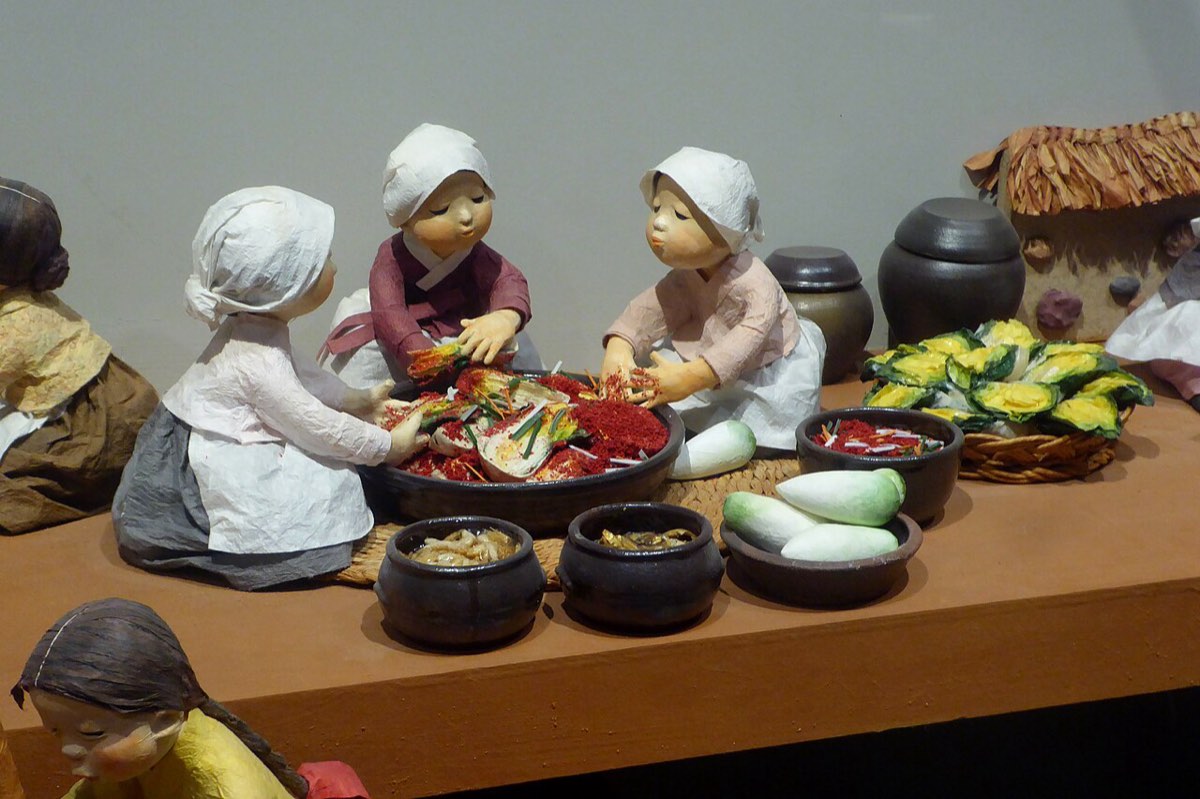
Kimjang (김장), the shared making of a winter's supply of kimchi, is the season's great domestic ritual, and UNESCO added it to the Representative List of the Intangible Cultural Heritage of Humanity in 2013. Its description follows the whole year: households buy shrimp, anchovies and other seafood for salting in spring, sea salt in summer, and red chilies in late summer to dry and grind, then gather in late autumn to make kimchi together, choosing the day by watching the forecast. Batches are shared between households, and methods pass down within families, often from a mother-in-law to a new daughter-in-law.
You are unlikely to be invited into a family kimjang, and the point is that it is not staged for outsiders. A visitor can still read it. The National Folk Museum's hall on the Korean year places kimjang beside the other winter tasks, making fermented soybean blocks called meju (메주) and cooking red-bean porridge at the winter solstice, and Museum Kimchikan in Insadong is devoted to kimchi itself. Both are indoor stops that suit November, when Gyeongbokgung is back to closing at 17:00 and the afternoons shorten fast.
Winter: short days, icy paths and the quietest palaces
Winter is the season most visitors avoid and the one that rewards planning most. With Gyeongbokgung's last entry at 16:00 from November to February, a palace afternoon has to begin by about 14:00. The Secret Garden drops to three English sessions a day from December to February; bare branches open up views of pavilions that summer leaves hide, but paths can be icy, so take the 11:30 slot for the warmest part of the day and wear shoes with grip. After a night of snow, go early, before the courtyards are swept and trodden.
Cold weather also makes sense of Korea's most characteristic indoor culture. Ondol (온돌), the underfloor heating that warms a hanok from below, explains why people traditionally sat and slept on the floor. A teahouse's ginger tea or ssanghwa-cha, a bitter-sweet herbal blend, is a winter order, and a jjimjilbang (찜질방), a bathhouse with heated rooms and a shared floor where everyone wears the T-shirt and shorts provided, is where many Koreans sit out a freezing afternoon. Hanbok rental still works in winter, with thermal layers underneath and a coat on top.
Plan outdoor walks for the middle of the day and keep an indoor fallback in the same district: the national museum in Yongsan, the two museums on Gyeongbokgung's grounds, or Insadong's galleries and teahouses near the palaces. Steep routes such as the Inwangsan wall trail above Seochon need real care in ice, and Bukchon's lanes are steeper than they look when they freeze. Pack shoes with grip, gloves and a layer you can take off indoors, because museums and teahouses are kept warm.
Seollal, Chuseok and the Tuesday that can close everything
The two lunar holidays shape a trip more than any weather. In 2027 Seollal falls on Sunday, February 7, with the public holiday running from Saturday, February 6, to Tuesday, February 9, and Chuseok falls on Wednesday, September 15, with the holiday from September 14 to 16. Many Seoul residents travel to family homes, so the city's sights grow quieter while intercity trains and buses fill, and many family-run restaurants close on the main day. Check opening status in your map app the evening before.
Palaces stay open and museums do not. When a palace's regular closing day falls on a public holiday, the palaces and Jongmyo open that day and close on the next non-holiday instead. In 2027 both Seollal's substitute holiday, February 9, and the first day of Chuseok, September 14, are Tuesdays, so expect Gyeongbokgung to open on those days and close later in the week. The National Museum of Korea, by contrast, closes on January 1 and on the Seollal and Chuseok days themselves; in 2026 those were February 17 and September 25.
The same rule hides a trap. Changdeokgung, Changgyeonggung and Deoksugung normally close on Mondays; when a Monday is a holiday they open and close on the next non-holiday, usually Tuesday, which is already Gyeongbokgung's and Jongmyo's closing day. In 2027 that applies after March 1, May 3, July 19, August 16, October 4, October 11 and December 27, all Monday holidays or substitute holidays. Seollal adds a twist, since February 8 and 9 are both holidays, which pushes several closures onto Wednesday, February 10. Expect such days to close most palaces at once, confirm on the notice boards, and give them to a museum.
Picking your season, and the notice boards to watch
If you can choose, come from late April to May or in the second half of October, and accept that you will be booking the Secret Garden at the release minute and sharing the courtyards. Early June and September give long opening hours with fewer festival crowds, though September can overlap Chuseok. Winter suits travelers who prefer quiet palaces and indoor culture to gardens, and midsummer suits only those willing to split each day around the heat. Whatever the season, the notices below confirm the details that change every year.
- Gyeongbokgung notice board (royal.khs.go.kr): from late April for a spring night run, from mid-August for an autumn one.
- Jongmyo notice board: from early April for the May rite, from late October for the November rite.
- llf.or.kr: in spring, for the Lotus Lantern Festival's exhibitions and parade.
- Korea Forest Service: from late September, for the year's foliage peak forecast.
- Korea Meteorological Administration (weather.go.kr): in the week of travel, for monsoon rain and heat-wave or cold-wave advisories.
- National Museum of Korea: in the week before Seollal or Chuseok, for holiday closures.
Questions visitors ask
What is the best time of year to see Seoul's palaces?
Late April to May and the second half of October, when the gardens are at their best and the weather suits long walks. Both bring crowds and fast-selling Secret Garden sessions. For long hours with fewer festival crowds, try early June or September; for the emptiest courtyards, come in winter and accept a 17:00 close at Gyeongbokgung.
Are Seoul's palaces open at night?
Deoksugung and Changgyeonggung are open until 21:00 all year, except on Mondays. Gyeongbokgung opens at night only in short seasonal runs with separate tickets: in 2026, from May 13 to June 14 and from September 2 to October 2, announced on its notice board in late April and mid-August. No 2027 runs had been announced by October 20, 2026.
Do palace visits stop during the monsoon?
No. The palaces keep their longest hours in summer and stay open in rain, though some programs change: Gyeongbokgung's Gyeonghoeru tour pauses from June to August, and Jongmyo switched to walk-in visits in July and August 2026. The monsoon normally covers central Korea from about June 25 to July 26, so carry an umbrella and keep an indoor alternative in the same district.
When do autumn leaves peak in Seoul's palaces?
Around the end of October in recent years. The Korea Forest Service's 2026 forecast put the national peak at October 30 for ginkgo and October 31 for maples and oaks. In central Seoul, aim for the Secret Garden at Changdeokgung, the pond at Changgyeonggung and Hyangwonjeong at Gyeongbokgung, and check the new forecast each September.
Can visitors take part in kimjang?
Rarely. Kimjang is a family and community practice of making a winter's kimchi together in late autumn, recognized by UNESCO in 2013, and it is not normally staged for outsiders. To understand it, visit the National Folk Museum's hall on the Korean year or Museum Kimchikan in Insadong, both indoors and easy to fit into a short November day.
Sources and method
Written for: Visitors choosing when to come to Seoul, or already booked, who want to know how the season changes palace hours, gardens, temple festivals and day plans.
Method: Researched from the official sources listed below, checked on October 20, 2026. Hours, fees and booking rules can change; the linked official pages are the final word. Spotted something out of date? Tell us.
- Royal Palaces and Tombs Center (Korea Heritage Service) — Visiting hoursSeasonal hours and last entry for Gyeongbokgung, Changdeokgung and Jongmyo; Deoksugung and Changgyeonggung 09:00–21:00; Secret Garden English sessions (three December–February, 15:30 added March–November); Monday and Tuesday closures and the holiday rule.
- Royal Palaces and Tombs Center — Gyeongbokgung spring 2026 night viewing notice (April 29, 2026)May 13–June 14, 2026, 19:00–21:30, last entry 20:30, no night viewing on Mondays and Tuesdays; online sales from May 4 until the day before; 300 on-site tickets a night for foreign visitors, two per person; held in rain; areas covered. The same Gyeongbokgung notice board carries the autumn run (September 2–October 2, 2026, announced August 18) and the 2026 Gyeonghoeru–Hyangwonjeong special tour (Wednesdays and Fridays, April 1–October 30, paused June–August, Korean only).
- Royal Palaces and Tombs Center — Notice: 2026 palace festival and Jongmyo Daeje (April 7, 2026)Spring palace festival April 25–May 3, 2026; Jongmyo Daeje on May 3 (Yeongnyeongjeon 10:00–12:00, Jeongjeon 14:00–16:30), free entry without commentary. The Jongmyo notice board (schGroupCode=jms) also lists the July–August 2026 heat switch to general admission (posted June 5, 2026), the 2025 November rite notice (posted October 27, 2025) and autumn palace festival visiting hours (posted October 7, 2026).
- Royal Palaces and Tombs Center — Jongmyo Jerye and Jeryeak, intangible heritage (English)Rite held on the first Sunday of May and the first Saturday of November; historically performed five times a year at Jeongjeon; rite and music recognized by UNESCO in 2001.
- Lotus Lantern Festival (Yeon Deung Hoe) — official English site and 2026 program2026 lantern exhibitions from April into May at Gwanghwamun Square, Jogyesa and Bongeunsa; Saturday parade along Jongno from Heunginjimun to Jogyesa, 19:00–21:30; 2027 schedule not yet posted as of October 20, 2026.
- Korea AeroSpace Administration (우주항공청) — 2027 calendar almanac (June 29, 2026)Seollal February 7, 2027 (holiday February 6–9, February 9 substitute); Chuseok September 15 (holiday September 14–16); substitute holidays falling on Mondays in 2027.
- National Museum of Korea — 관람안내 (visitor information)Closed January 1, Seollal day and Chuseok day (2026: February 17 and September 25); open until 21:00 on Wednesdays and Saturdays.
- Korea Meteorological Administration, Open MET Data Portal — Rainy season (장마) normalsCentral region normal: June 25 to July 26, 31.5 days, 17.7 rain days, 378.3 mm average rainfall (southern region and Jeju listed separately).
- Korea Forest Service — 2026 foliage peak forecast (press release, September 22, 2026)Peak defined as 50 percent coloring; maples and oaks October 31, ginkgo October 30, about 0.8 days later than the five-year average; color from early October in northern Gangwon; Seoraksan October 20, then central and southern regions.
- UNESCO Intangible Cultural Heritage — Kimjang, making and sharing kimchi in the Republic of KoreaInscribed 2013 (8.COM); late autumn as kimjang season; preparation through the year (seafood in spring, sea salt in summer, chilies in late summer); dates chosen by forecasts; sharing between households; transmission from mother-in-law to daughter-in-law.