In shortGo on a Wednesday. Culture Day makes Changdeokgung's palace halls, Changgyeonggung, Deoksugung and Jongmyo free, though not Gyeongbokgung or the Secret Garden. Add a free national museum, the Gyeongbokgung guard ceremony, Jogyesa and a stretch of Cheonggyecheon or the city wall, and a full culture day costs you only lunch.
Key facts
- Free palace day
- Every Wednesday (Culture Day); Gyeongbokgung and the Secret Garden excluded
- Free at palaces any open day
- Foreign visitors 18 and under or 65+ (show a passport) and hanbok wearers
- Free-for-all windows
- Announced on palace notice boards; in 2026 Seollal, Chuseok and Oct 29–Nov 15
- Free national museums
- National Museum of Korea (permanent galleries), National Palace Museum, National Folk Museum
- Gyeongbokgung guard ceremony
- 10:00 and 14:00, about 20 minutes; the palace closes on Tuesdays
- Deoksugung guard ceremony
- 11:00 and 14:00 at Daehanmun gate; none on Mondays
- Bukchon red zone
- Tourists 10:00–17:00 only; KRW 100,000 fine
- Where free windows are posted
- royal.khs.go.kr notice board, 공지사항 (search 무료)
Checked Oct 20, 2026 against the official sources listed at the end of this guide.
Wednesday opens the palaces, except Gyeongbokgung
Seoul's royal sites are inexpensive even at full price. An adult foreign visitor, which the fee table defines as ages 19 to 64, pays 3,000 won at Gyeongbokgung (경복궁) and Changdeokgung (창덕궁) and 1,000 won at Changgyeonggung (창경궁), Deoksugung (덕수궁) and Jongmyo Shrine (종묘). The free rules therefore matter less for the money than for the planning, because they decide which day suits which site. Three apply all year: a weekday rule, an age rule and a dress rule.
The weekday rule is Culture Day, 문화가 있는 날 (munhwaga inneun nal). The palace fee page now lists every Wednesday as free, so a blog that says only the last Wednesday of the month counts is out of date. Two exclusions catch people. Gyeongbokgung charges its normal fee on Wednesdays, and Changdeokgung's Secret Garden (후원, Huwon) keeps its paid, timed tours. Everything else in the system is free that day, including Changdeokgung's palace halls, and Wednesday is also one of Jongmyo's self-guided days rather than a timed-tour day.
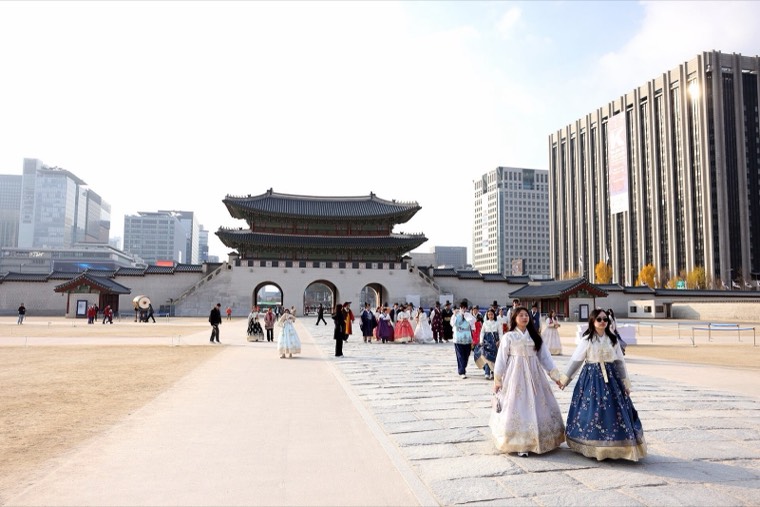
The age rule covers foreign visitors aged 18 and under or 65 and over, and the dress rule covers anyone in hanbok (한복), Korean or foreign. Both work at Gyeongbokgung on any open day, Wednesdays included. The fee page states that visitors claiming free entry must show proof, so carry your passport if age is your reason. What counts as hanbok depends on the outfit's structure, not its style; our hanbok rental guide walks through what passes at the gate. The Secret Garden ignores both rules: its own free list covers children six and under and a few categories of Korean nationals.
One royal landmark is free on every open day without conditions. Sungnyemun (숭례문), the old south gate of the walled city, opens from 09:00 to 18:00 and closes on Mondays. Treat it as a fifteen-minute stop rather than a destination, but it is the simplest way to walk through one of the city's great gates without a ticket, and it sits on the way between Seoul Station and the City Hall area if you are heading to Deoksugung.
Free-for-all windows, and how to spot the next one
On top of the weekly rules, the Korea Heritage Service's palace offices periodically open everything to everyone at no charge. In 2026 free windows were set for Seollal and Chuseok, covering most or all of the palaces, and for the Korea Grand Festival from October 29 to November 15, covering the four palaces, Jongmyo and the Joseon royal tombs. Regular closing days still apply during these windows, so Gyeongbokgung and Jongmyo close on Tuesdays and the others on Mondays, and the Secret Garden's tours stay paid.
The notice for that window, posted on September 22, shows how to read these announcements. One table listed three different things: an opening on the October 5 substitute holiday, openings on normal closing days during the palace culture festival from October 7 to 11, and the free period itself. Being open on a closing day is not the same as being free, so look for the word 무료 (muryo, free) in the row that covers your dates, not just in the headline.
To check for yourself, open the Royal Palaces and Tombs site (royal.khs.go.kr), go to the notice board, 공지사항 (gongjisahang), and filter by palace. The search terms that find these notices are 무료개방 (muryo gaebang, free opening) and 휴궁일 개방 (hyugungil gaebang, opening on a closing day). Holiday periods deserve a look too; our Seollal and Chuseok guide covers what opened over the 2026 holidays. If your trip overlaps a free window, spend the saving on the one thing that stays paid, a Secret Garden ticket, and expect more company everywhere else.
Three national museums with free permanent galleries
The National Museum of Korea (국립중앙박물관, Gungnip Jungang Bangmulgwan) in Yongsan charges nothing for its permanent galleries; only special exhibitions have tickets. It opens from 09:30 to 17:30, until 21:00 on Wednesdays and Saturdays, and admission closes 30 minutes before closing time. Check the museum's notice board for gallery closures before you plan a route. Our National Museum guide builds a visit around what is open.
The National Palace Museum of Korea (국립고궁박물관, Gungnip Gogung Bangmulgwan), at the southwest corner of the Gyeongbokgung grounds, holds the court's own objects and is free. It opens from 09:30 to 17:30, until 21:00 on Saturdays and the last Wednesday of each month, and closes on January 1, Seollal, Chuseok and the last Monday of each month. On weekdays a free English tour starts at 14:00 at the Kings of the Joseon Dynasty gallery on the second floor and lasts about an hour. It is the natural follow-up to a palace visit, because it shows the furnishings the empty halls lack.
The National Folk Museum of Korea (국립민속박물관, Gungnip Minsok Bangmulgwan), on the palace's northeast side, covers how ordinary Koreans lived and marked the year, and all of its exhibitions are free. From March to October it opens from 09:00 to 18:00, until 20:00 on Wednesdays; from November to February it closes at 17:00, and entry always ends an hour before closing. The outdoor buildings' interiors close to visitors on weekends and public holidays.
Do not try all three in one day. Choose by the question you have: the palace museum if you want to know what the king's rooms held, the folk museum if you want the customs behind weddings, holidays and ancestral rites, and the National Museum if you have a rainy half day and want the long arc from prehistory to Joseon. The National Museum sits in Yongsan, away from the palace district, so give it its own morning or a late Wednesday or Saturday.
Guard ceremonies, drills and a Sunday patrol to Insadong
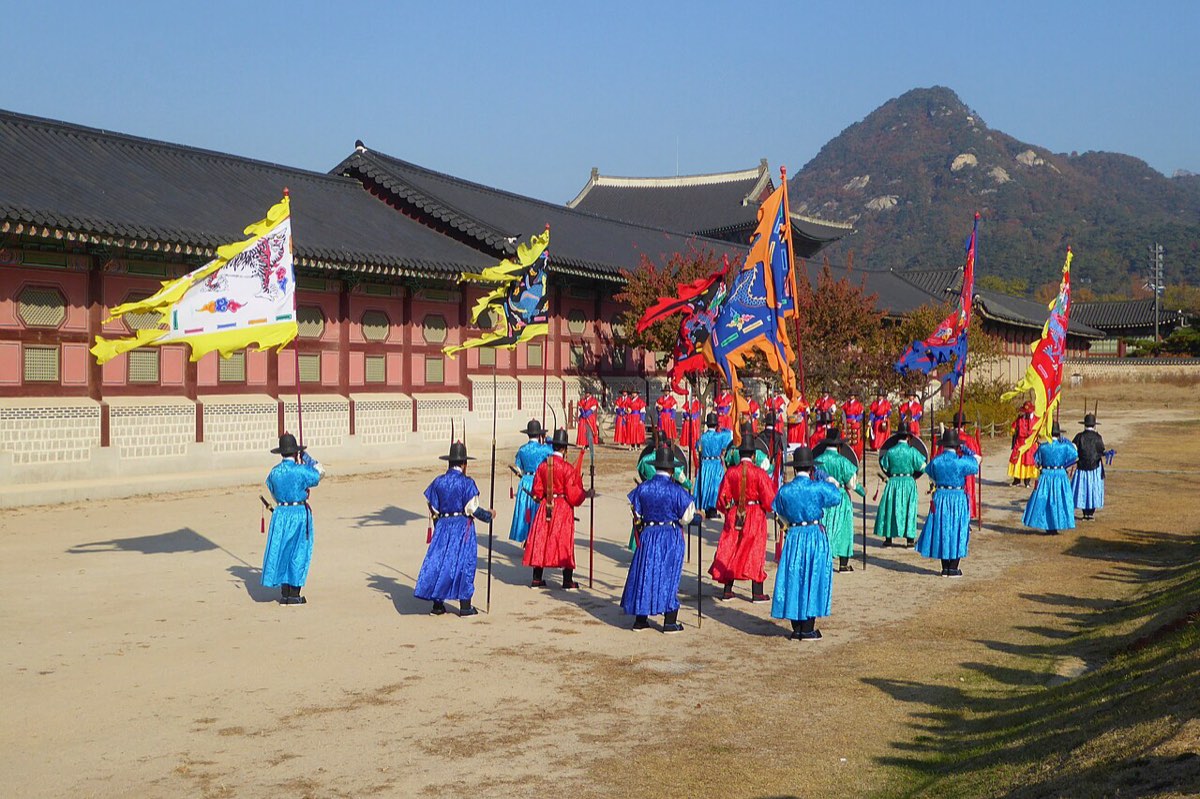
The Korea Heritage Agency stages the changing of the royal gate guard, 수문장 교대의식 (sumunjang gyodae uisik), at Gyeongbokgung at 10:00 and 14:00, about 20 minutes each time. It also runs a shorter Gwanghwamun watch ceremony, 광화문 파수의식 (Gwanghwamun pasu uisik), at 11:00 and 13:00, and a 15-minute public drill at 09:35 and 13:35. All of it happens in the squares in front of Gwanghwamun and Heungnyemun gates, before the ticket barrier, so it costs nothing to watch. The palace itself closes on Tuesdays, so plan the ceremony for another day.
In spring and autumn the guards also leave their posts. From March to May and from September to November, on Saturdays, Sundays and public holidays between 15:00 and 16:00, a patrol procession, 순라의식 (sulla uisik), sets out with its musicians. On Saturdays it stays inside Gyeongbokgung; on Sundays and holidays it starts at the stone platform in front of Gwanghwamun and walks to Insadong's culture street, and you can photograph it along the way. Protests or road conditions can move the street route back inside the palace, so treat it as a likely bonus rather than a fixed appointment.
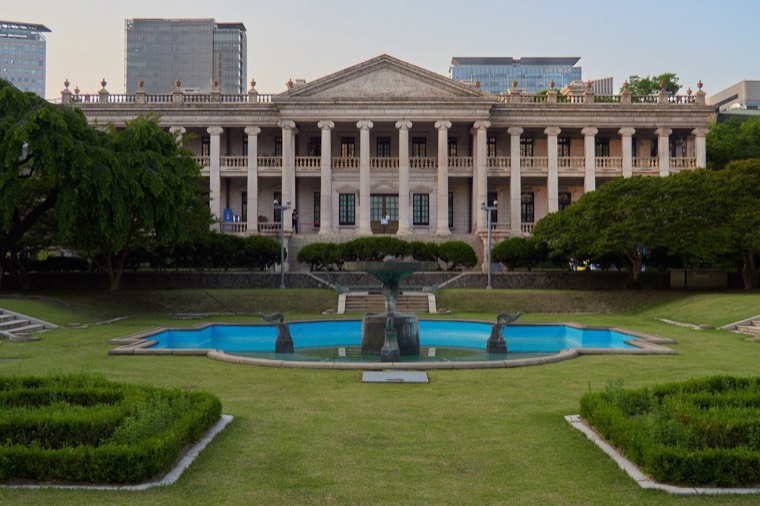
Deoksugung has its own ceremony, run by the Seoul Metropolitan Government in front of Daehanmun (대한문) gate opposite City Hall, at 11:00 and 14:00 every day except Monday. It is free and takes place outside the palace's ticket gate. The Gyeongbokgung organizers ask spectators not to walk between the ranks, not to touch the guards' ceremonial gear or talk to them while posing for photos, and to keep the noise down; the same courtesy suits Daehanmun. One ceremony is enough for most visitors, so watch whichever stands at the palace you are visiting anyway.
Temples and a hanok village that charge nothing at the gate
Jogyesa (조계사), the chief temple of the Jogye Order, which represents mainstream Korean Seon (Zen) Buddhism, stands in central Jongno a short walk from Insadong. Entry is free, and its main hall is open 24 hours a day to locals and foreigners alike. The courtyard asks nothing of you; inside a hall, take your shoes off, use a side door, keep your voice low and never photograph people at prayer. Our guide to Seoul's Buddhist temples explains the bows and why the center door is reserved for monks.
Bongeunsa (봉은사), just north of the COEX complex in Gangnam, is the counterpart south of the river. VisitKorea dates its founding to 794, and its halls climb a wooded slope with office towers behind them. The grounds are open from 05:00 to 22:00 every day and admission is free. Choose Jogyesa if your free day is in the palace district, Bongeunsa if you are staying in Gangnam or want the contrast of temple eaves against glass.
Namsangol Hanok Village (남산골한옥마을, Namsangol Hanok Maeul), below Namsan, is the free place to walk into the hanok courtyards that Bukchon's private homes keep closed. Entry costs nothing. The houses open Tuesday to Sunday, from 09:00 to 21:00 between April and November and to 20:00 from December to March, and stay shut on Mondays unless the Monday is a public or substitute holiday; the traditional garden is open around the clock. Commentary tours of 40 to 60 minutes need no booking for individuals, who join at the guide office by the main gate. English sessions run at 14:00 and 15:30 from Tuesday to Friday, for ages ten and up.
Bukchon, Seochon and the Naksan wall on foot
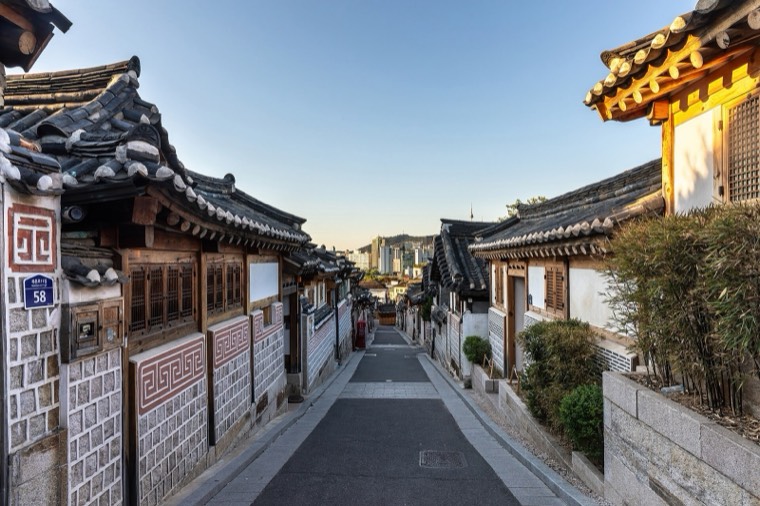
Bukchon (북촌), the hanok neighborhood between Gyeongbokgung and Changdeokgung, has no ticket, but it does have hours. The red zone around Bukchon-ro 11-gil (북촌로11길), about 34,000 square meters, is closed to tourist visits from 17:00 to 10:00 the next morning, and since March 1, 2025 breaking that rule can bring a fine of 100,000 won. The orange and yellow zones around it carry no hour limit, but they are residential streets too. Walk through between 10:00 and noon on a weekday, quietly, and you will see it at its best.
West of the palace, Seochon (서촌) is the quieter counterpart: public lanes of urban hanok and small studios, Tongin Market, and Suseongdong Valley (수성동계곡) at the foot of Inwangsan, all of it free to walk. It makes a good second neighborhood when Bukchon's main lanes feel crowded, though the same courtesy applies, since these are homes as well. Our Seochon guide sequences the stops and notes which of its small museums close on Mondays.
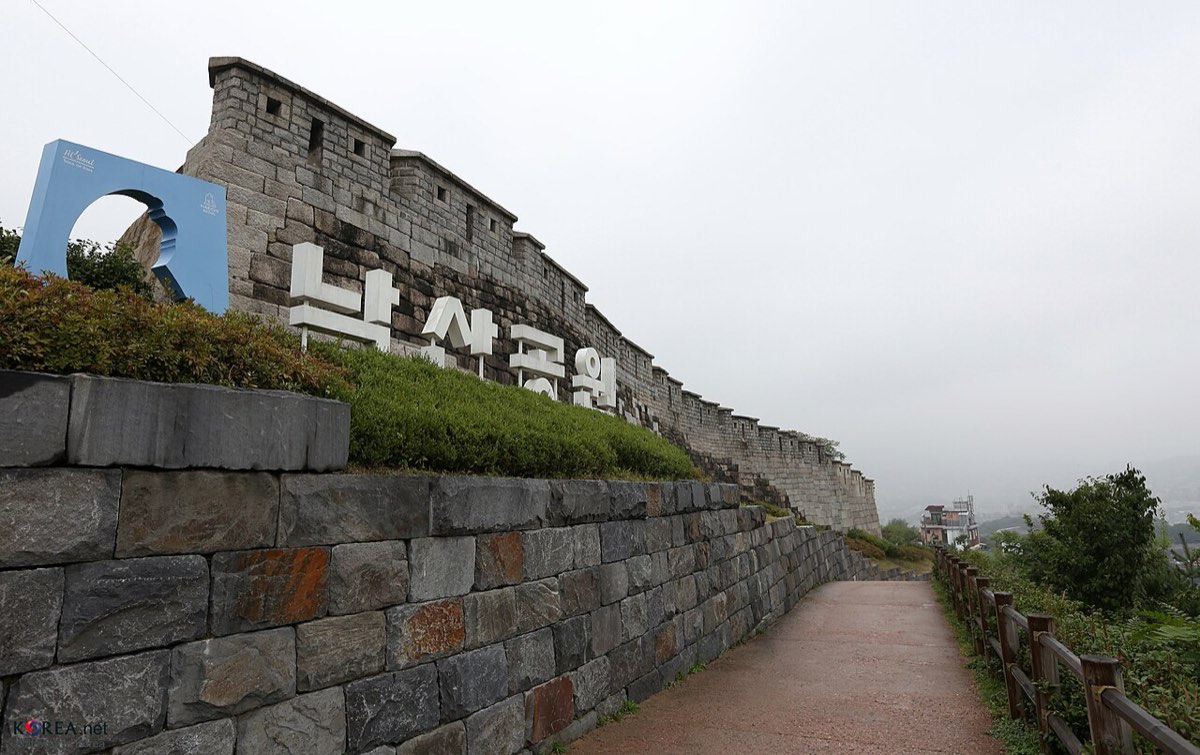
For a walk with history underfoot, take the Naksan (낙산) section of the Seoul City Wall, 서울 한양도성 (Seoul Hanyangdoseong). The official trail runs 3.2 kilometers from Hyehwamun gate to Heunginjimun, the great east gate, in about an hour on a gentle slope, and it is open 24 hours. Start five minutes from Hyehwa Station Exit 1 and finish near Dongdaemun Station, where stones along the wall at Dongdaemun Seonggwak Park carry inscriptions naming the counties that built each stretch or, in later repairs, the supervisors and master builders. Parts of the route pass through residential villages, so keep your voice down after dark.
Cheonggyecheon: a free corridor through the old city
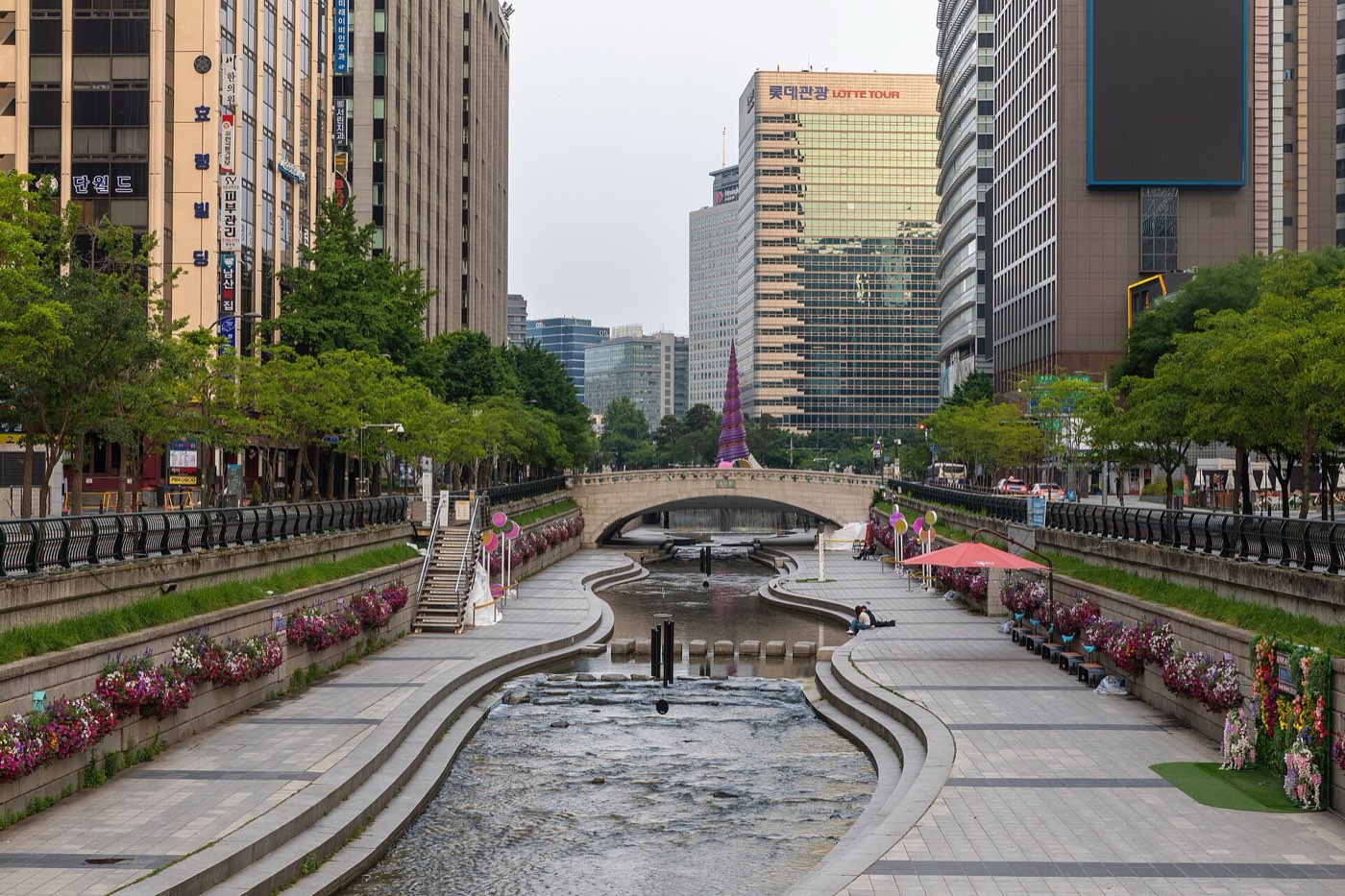
Cheonggyecheon (청계천) is the stream that once ran through the walled city and was later covered over, with a highway overpass built on top. Seoul demolished the covering structures and the overpass and restored a 5.84-kilometer stretch, from the Taepyeong-ro end at Cheonggye Plaza to the Sindap railway bridge, in works that ran from July 2003 to September 2005. Today it is a sunken path with water at your feet and the city's traffic one level up, free and open to anyone.
Use it as a connector rather than a destination. From Cheonggye Plaza the path runs east toward Jongno 5-ga, where Gwangjang Market's food alley makes a natural lunch stop; our Gwangjang guide covers how its counter stalls work. You can climb out at most bridges to reach Jogyesa, Insadong or Jongmyo to the north. In the evening, walk the first stretch and come back west: Cheonggye Plaza is a short walk from City Hall and Deoksugung, which stays open until 21:00.
Every free option, and the catch that comes with it
The table pulls the options together. Closing days cause more wasted trips than fees do, so read the last column before you fix a day, and check the linked official pages for anything that falls on or near a public holiday, when palaces and museums often change their normal schedules.
| Type | Where | When it is free | The catch |
|---|---|---|---|
| Palaces | Changdeokgung, Changgyeonggung, Deoksugung, Jongmyo | Every Wednesday; any open day for foreign visitors under 19 or 65+ and for hanbok wearers | Secret Garden excluded; the three palaces close Mondays, Jongmyo Tuesdays |
| Palace | Gyeongbokgung | Age or hanbok, or during announced free windows | Not free on Wednesdays; closed Tuesdays |
| City gate | Sungnyemun | Every open day | 09:00–18:00; closed Mondays |
| Ceremony | Gyeongbokgung forecourt | 10:00 and 14:00 | Palace closed Tuesdays |
| Ceremony | Daehanmun, Deoksugung | 11:00 and 14:00 | None on Mondays |
| Museum | National Museum of Korea | Permanent galleries | Special exhibitions paid; check for gallery closures |
| Museum | National Palace Museum | Always | Closed the last Monday of each month |
| Museum | National Folk Museum | Always | Outdoor building interiors closed on weekends and holidays |
| Temples | Jogyesa, Bongeunsa | Always | Halls are in use; follow temple etiquette |
| Hanok village | Namsangol | Always | Houses closed Mondays unless a holiday |
| Neighborhood | Bukchon | Public streets | Red zone open to tourists 10:00–17:00 only |
| Wall trail | Seoul City Wall, Naksan section | 24 hours | Hilly; passes residential villages |
| Stream walk | Cheonggyecheon | Always | A connector between sights, not a sight in itself |
A free culture Wednesday, hour by hour
Wednesday is the strongest day for a free itinerary: Culture Day covers most of the palace system, the National Museum stays open until 21:00, and from March to October the Folk Museum stays open until 20:00. This plan suits spring or autumn. From November to January, Changdeokgung's last entry is at 16:30 and daylight goes early, so do not let lunch run long. The only thing you pay for is lunch.
Two swaps cover most situations. On a rainy Wednesday, replace the stream and Deoksugung with the National Museum of Korea, open late. If you are under 19, over 64 or in hanbok, the same day works at Gyeongbokgung itself on any day except Tuesday: go inside after the ceremony, then take the National Folk Museum in place of Changdeokgung after lunch.
- 09:35 Gyeongbokgung forecourt: the public drill, then the 10:00 guard-changing ceremony (about 20 minutes).
- 10:30 National Palace Museum at the southwest corner of the grounds: an hour in the royal galleries.
- 11:45 Walk east through Bukchon, inside the red zone's 10:00–17:00 window, keeping your voice down.
- 12:45 Lunch near Anguk Station, the day's one expense.
- 13:45 Changdeokgung's palace halls, free on Wednesdays (the Secret Garden is not).
- 15:30 Walk south to Jogyesa; look into the main hall from the doorway or sit quietly at the side.
- 16:30 Cheonggye Plaza, then the stream path east for half an hour and back.
- 18:00 Deoksugung, free on Wednesdays and open until 21:00 (last entry 20:00), as the light fades.
Where free ends up costing you
The common mistakes are about days rather than money. Visitors arrive at Gyeongbokgung on a Wednesday expecting Culture Day, plan a palace Monday when Changdeokgung, Changgyeonggung and Deoksugung are all shut, or assume a Secret Garden slot is included on a free day. Others leave the passport at the hotel and pay the adult fee at a gate where their age would have got them in. Read the closing days first, then the free rules.
The other cost is time. Seoul's free sites fall into separate clusters, the palace district, Yongsan and Gangnam, and crossing between them eats more of a day than any ticket saves. Build the day around one cluster, take free entry where it falls, and pay the 1,000 or 3,000 won when a paid site is the better choice. Do not rent hanbok just to save a palace fee either: the rental costs many times more. A 5,000-won Secret Garden ticket on a free Wednesday is still money well spent.
Questions visitors ask
Is Gyeongbokgung free on Wednesdays?
No. Culture Day makes the other palaces and Jongmyo free every Wednesday, but Gyeongbokgung is specifically excluded, as is the Secret Garden at Changdeokgung. You still enter Gyeongbokgung free if you are a foreign visitor aged 18 or under or 65 or over, if you wear hanbok, or during a free-for-all window announced on the palace notice boards.
Do I need ID for free palace entry by age?
Yes. The palace fee page says visitors claiming free entry must show proof, and for a foreign visitor that means a passport showing you are 18 or under or 65 or over. Without it, expect to pay the adult fee of 1,000 or 3,000 won, depending on the palace.
Are Seoul's national museums really free?
Their permanent galleries are. The National Museum of Korea charges only for special exhibitions, and the National Palace Museum and National Folk Museum charge for nothing. Each has its own closing days and current renovation closures, so check its official site for the week you visit.
When are the palaces free for everyone?
Only during windows the heritage service announces on each palace's notice board at royal.khs.go.kr. In 2026 they were set for Seollal, Chuseok and October 29 to November 15, with regular closing days and the Secret Garden excepted, and the autumn window was posted five weeks before it began.
Can I watch a royal guard ceremony without buying a ticket?
Yes. At Gyeongbokgung the ceremony takes place in front of Gwanghwamun and Heungnyemun, before the ticket barrier, at 10:00 and 14:00. At Deoksugung it runs in front of Daehanmun gate at 11:00 and 14:00 every day except Monday. Both are free.
Can I walk around Bukchon in the evening?
Not in the red zone around Bukchon-ro 11-gil, which is closed to tourist visits from 17:00 to 10:00, with a 100,000-won fine for breaking the rule. Plan Bukchon for late morning and spend the evening at Deoksugung or Changgyeonggung, which stay open until 21:00.
Sources and method
Written for: Independent first-time visitors who want a full day of Korean culture in Seoul without entry fees, and want to know where each free rule has a catch.
Method: Researched from the official sources listed below, checked on October 20, 2026. Hours, fees and booking rules can change; the linked official pages are the final word. Spotted something out of date? Tell us.
- Royal Palaces and Tombs Center (Korea Heritage Service) — 관람요금 (admission fees and free categories)Adult fees and foreign age bands; free entry for foreign visitors 18 and under or 65+ and for hanbok wearers; proof required; every Wednesday Culture Day excluding Gyeongbokgung and the Secret Garden; Secret Garden free list (6 and under) and 5,000-won fee; Sungnyemun free.
- Royal Palaces and Tombs Center — 관람시간 (visiting hours and closing days)Tuesday closure for Gyeongbokgung and Jongmyo, Monday closure for Changdeokgung, Changgyeonggung, Deoksugung and Sungnyemun; Deoksugung and Changgyeonggung 09:00–21:00; Changdeokgung last entry 16:30 November–January; Sungnyemun 09:00–18:00; Jongmyo self-guided on Wednesdays, weekends and holidays.
- Royal Palaces and Tombs Center — 2026년 10~11월 궁능유적 휴무일 개방 및 관람객 무료입장 안내 (notice, Sept. 22, 2026)October 5 substitute-holiday opening, October 7–11 openings on closing days, and free admission October 29–November 15, 2026 at the four palaces, Jongmyo and royal tombs, with closing days and the Secret Garden excluded and Jongmyo on general viewing.
- Korea Heritage Agency — 수문장 교대의식 프로그램 안내 (royal guard ceremony program)Changing ceremony 10:00 and 14:00 (20 minutes), Gwanghwamun watch ceremony 11:00 and 13:00, public drill 09:35 and 13:35; patrol procession March–May and September–November on weekends and holidays, 15:00–16:00, Saturday inside the palace and Sunday from Gwanghwamun to Insadong. Visitor etiquette is on the sibling page view/223.
- Ministry of Culture, Sports and Tourism — Festival listing: Seoul Royal Palace Gatekeeper Changing Ceremony2026 schedule at Deoksugung's Daehanmun: 11:00 and 14:00, six days a week, closed Mondays, free, organized by the Seoul Metropolitan Government.
- National Museum of Korea — English homepageHours (09:30–17:30; Wednesdays and Saturdays to 21:00; admission closes 30 minutes before), free admission with charges for special exhibitions, and the gallery-closure notice (painting, sculpture and crafts rooms closed July 6, 2026–January 28, 2027).
- National Palace Museum of Korea — General informationFree admission; hours with Saturday and last-Wednesday late opening; closures including the last Monday of each month; weekday English tour at 14:00 from the Kings of the Joseon Dynasty gallery, about one hour.
- National Folk Museum of Korea — Visiting (English)Free admission to all exhibitions; seasonal hours with Wednesday opening to 20:00 March–October; last entry one hour before closing; outdoor building interiors closed on weekends and holidays; Permanent Exhibition Hall 1 closed September 30–December 21, 2026.
- Seoul Metropolitan Government — Notice on Restrictions for Tourist Visits to Bukchon Special Management AreaRed zone on Bukchon-ro 11-gil (about 34,000 m²) closed to tourists 17:00–10:00; KRW 100,000 fine; guidance from November 1, 2024 and enforcement from March 1, 2025; orange and yellow zones under guidance and monitoring.
- Jogyesa (official English site) — HistoryChief temple of the Jogye Order; main hall open 24 hours to local and foreign visitors.
- VisitKorea (Korea Tourism Organization) — Seoul Bongeunsa TempleLocation north of COEX, founding in 794, hours 05:00–22:00 and free admission.
- Namsangol Hanok Village (official site) — Visit GuideFree admission; house hours April–November 09:00–21:00 and December–March 09:00–20:00; Monday closure with holiday-Monday opening; garden open 24 hours; 40–60 minute commentary tours, walk-in for individuals, English sessions Tuesday–Friday at 14:00 and 15:30, ages 10 and up.
- Seoul City Wall (Seoul Metropolitan Government) — Naksan Mountain TrailHyehwamun to Heunginjimun, 3.2 km, about one hour, gentle slope, open 24 hours; Hyehwa Station Exit 1 five minutes to the trail; inscribed stones near Dongdaemun Seonggwak Park.
- Seoul Facilities Corporation — 청계천 복원사업 개요 (Cheonggyecheon restoration overview)Restoration works July 2003–September 2005 over 5.84 km from the Taepyeong-ro start to the Sindap railway bridge; removal of the covering structures and the Cheonggye overpass is described on the companion page intro/completion.jsp.